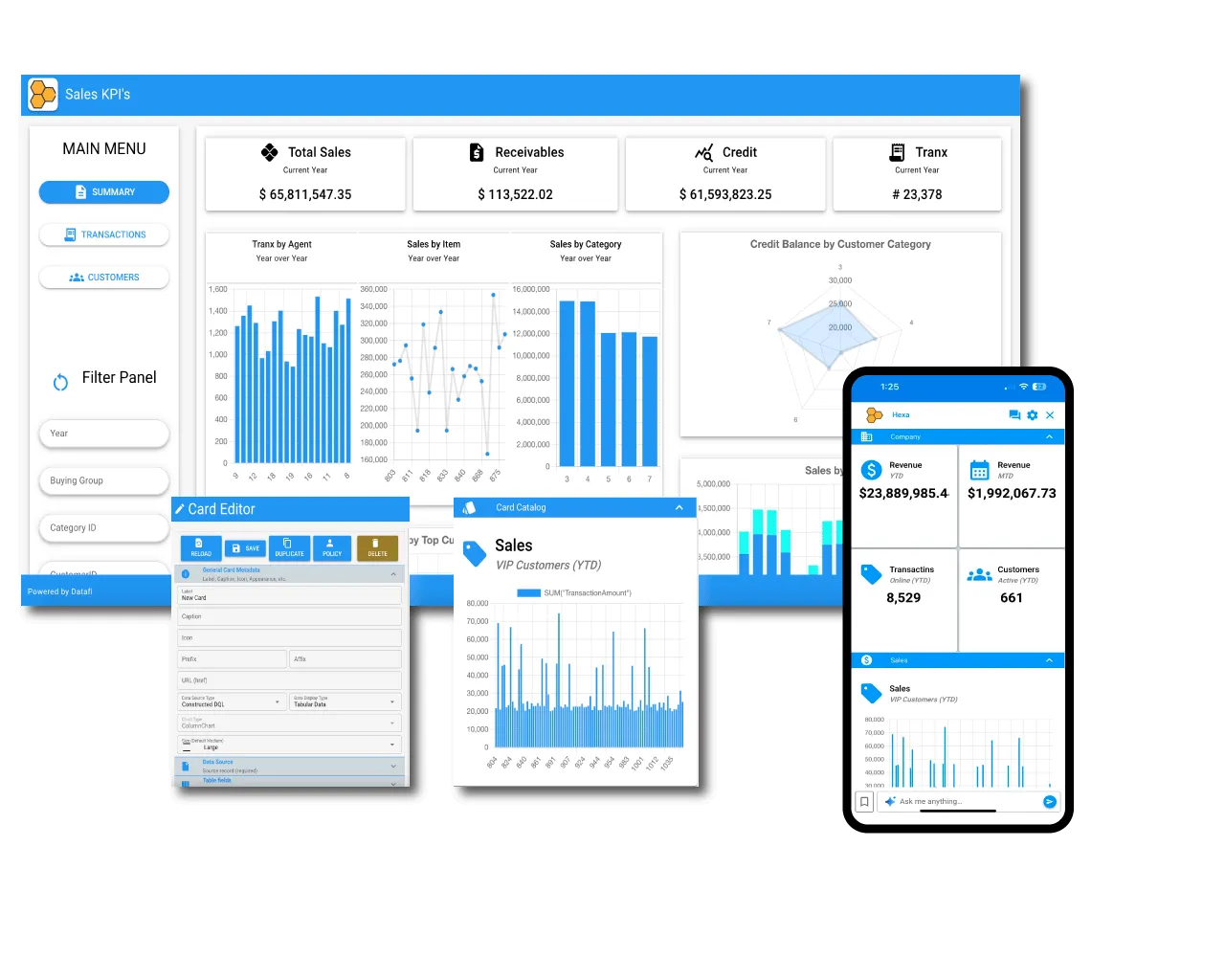


Vaughan Emery
168 stories
Connect ChatGPT to Business Data Through One Governed Layer
Connect ChatGPT to business data and your ERP over MCP. Each user sees only their own rows, read live, nothing copied. Start with a launch workshop.
AI that solves problems: the Datafi advantage
Datafi bridges the gap between AI tools and business data, delivering governed, context-aware AI that solves real operational problems. See how.
From Answers to Action: The Case for Datafi
Datafi's integrated data and AI platform helps enterprises move beyond pilots to governed, action-oriented AI across every system, team, and workflow.
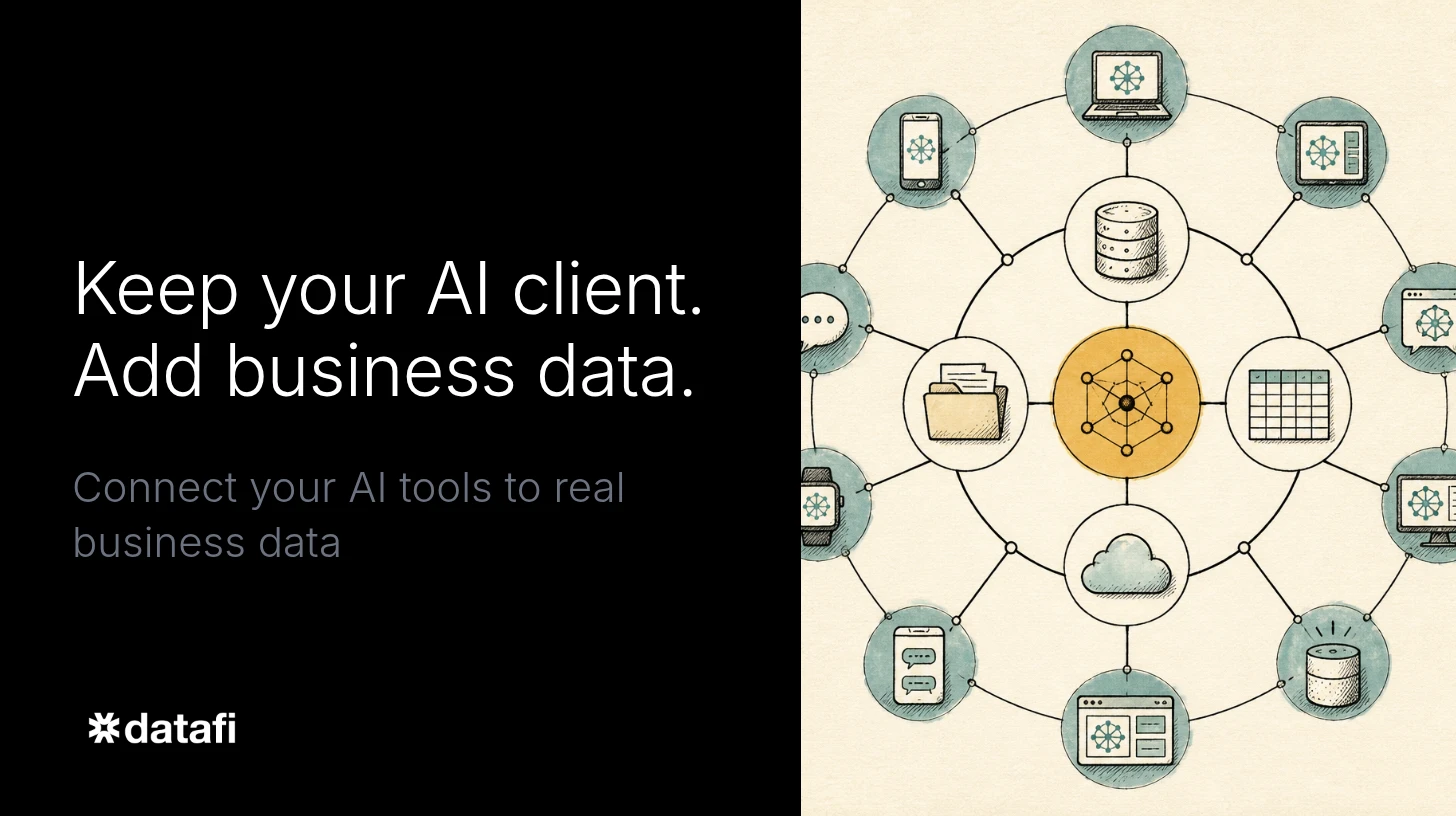
Keep your AI client, add business data
Keep the AI tools your team already uses. Datafi connects Copilot, ChatGPT, and Claude to your business data safely, with governance built in.
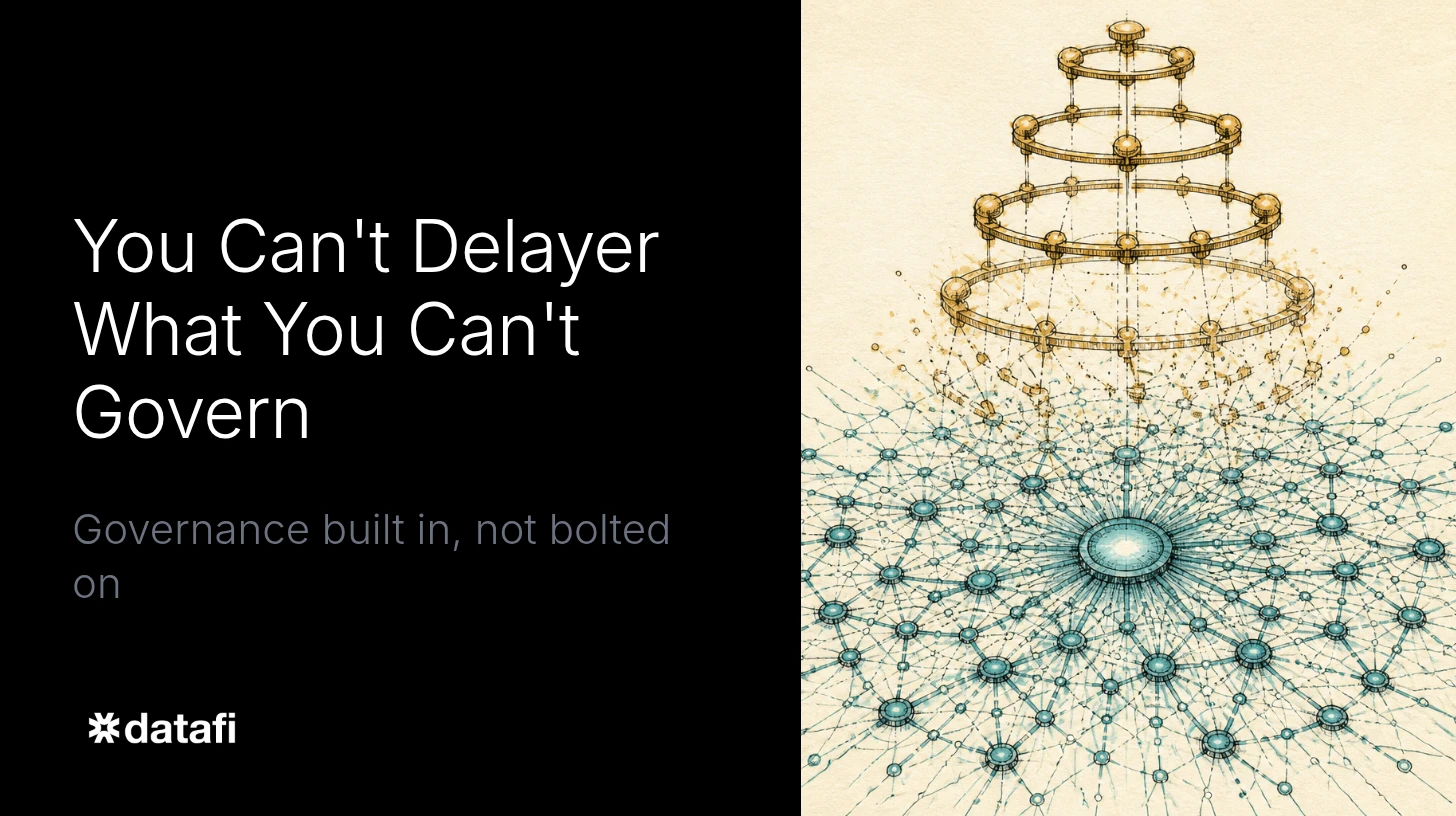
You Can't Delayer What You Can't Govern
McKinsey says the AI operating system will flatten organizations and replace calendar-driven management. That only works when governance is built into the system as infrastructure, not added as a layer of approvals.
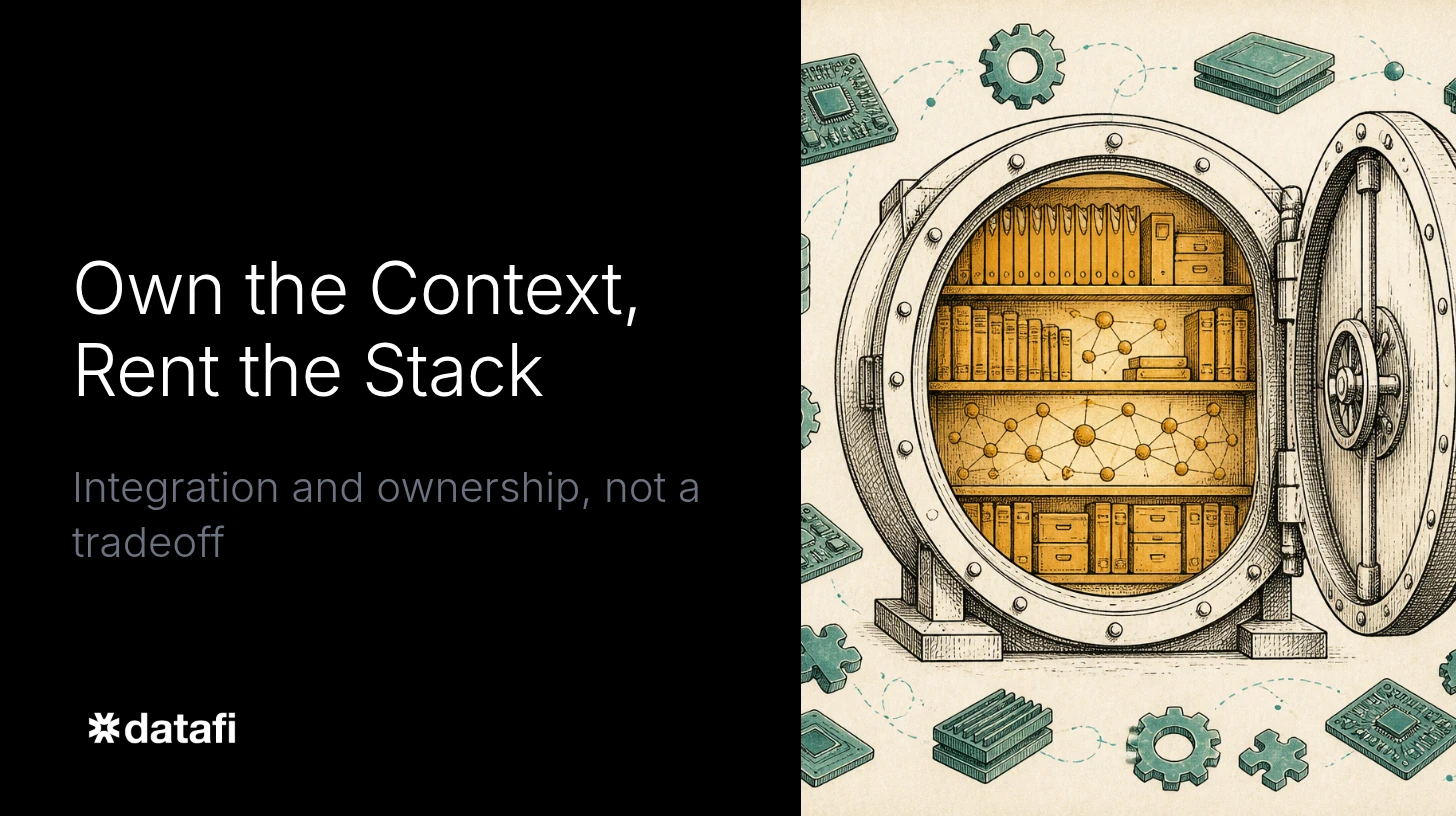
Own the Context, Rent the Stack
McKinsey's rule for the AI operating system is to own the context and rent the technology. For mid-enterprise companies, that means integration and ownership must be separated, not traded against each other.
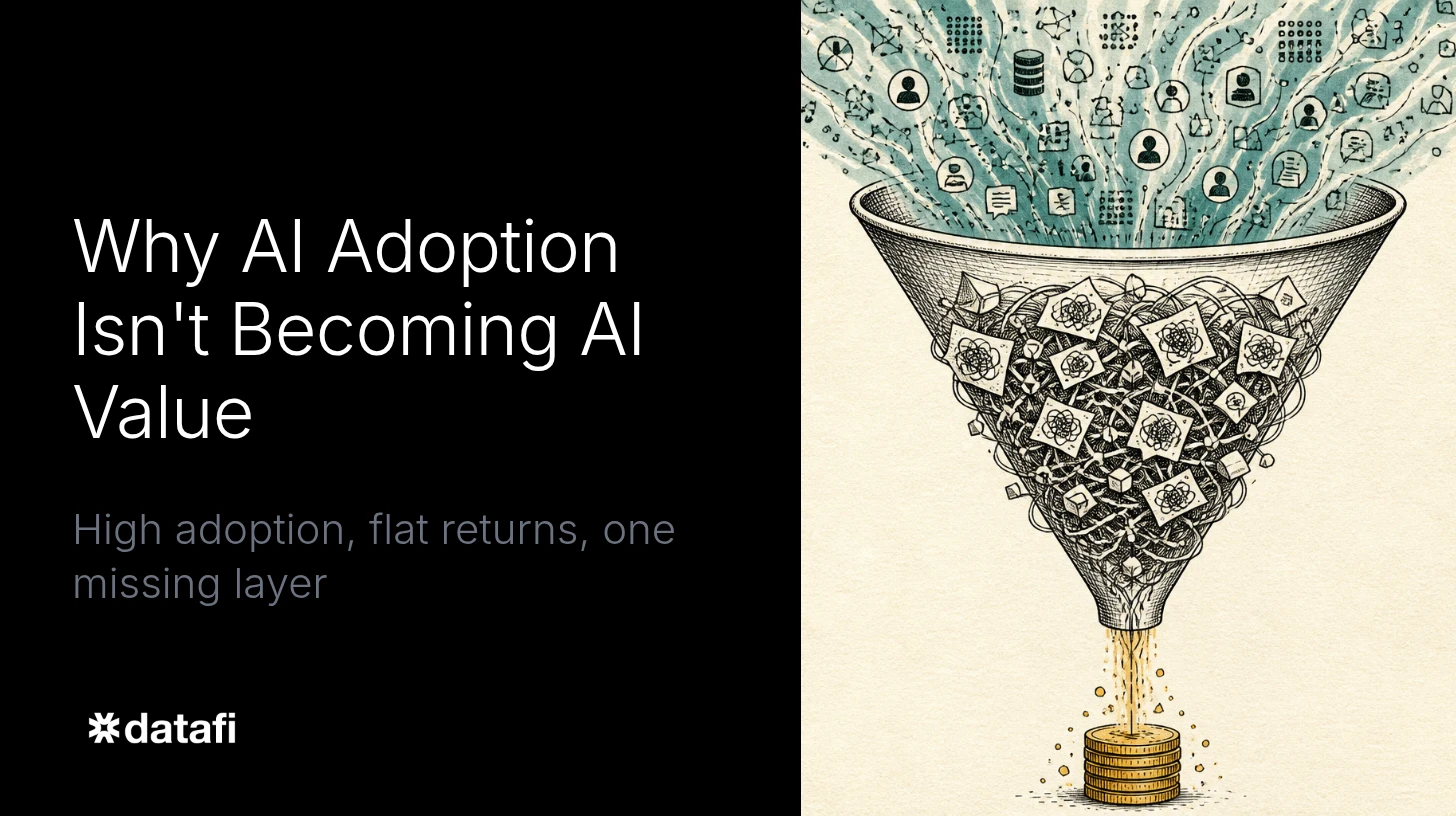
Why AI Adoption Isn't Becoming AI Value
Forty percent of large companies have scaled AI agents, but only 6 percent see meaningful EBIT impact. The gap is not about models or adoption. It is about missing business context.
Guardrails First, Foundations As You Go
Most health systems reverse the order: data first, governance last. McKinsey argues guardrails must come first. Here's why the sequencing changes everything.
Health Systems Aren't Short on AI. They're Short on Impact.
Health systems have plenty of AI pilots but few results. Learn why AI architecture, not adoption, is the real barrier to impact in clinical and revenue cycle operations.
Rewire the Domain, Not the Task
McKinsey says pick one domain and rebuild it end to end. Here's the technical and strategic case for why task-level AI won't move the needle in health systems.
The Agent That Isn't: Why a Chatbot Is Not an Agent
Chatbots answer. Agents act. Learn why the enterprise AI market conflates the two, what it costs, and what a real agentic AI platform requires.
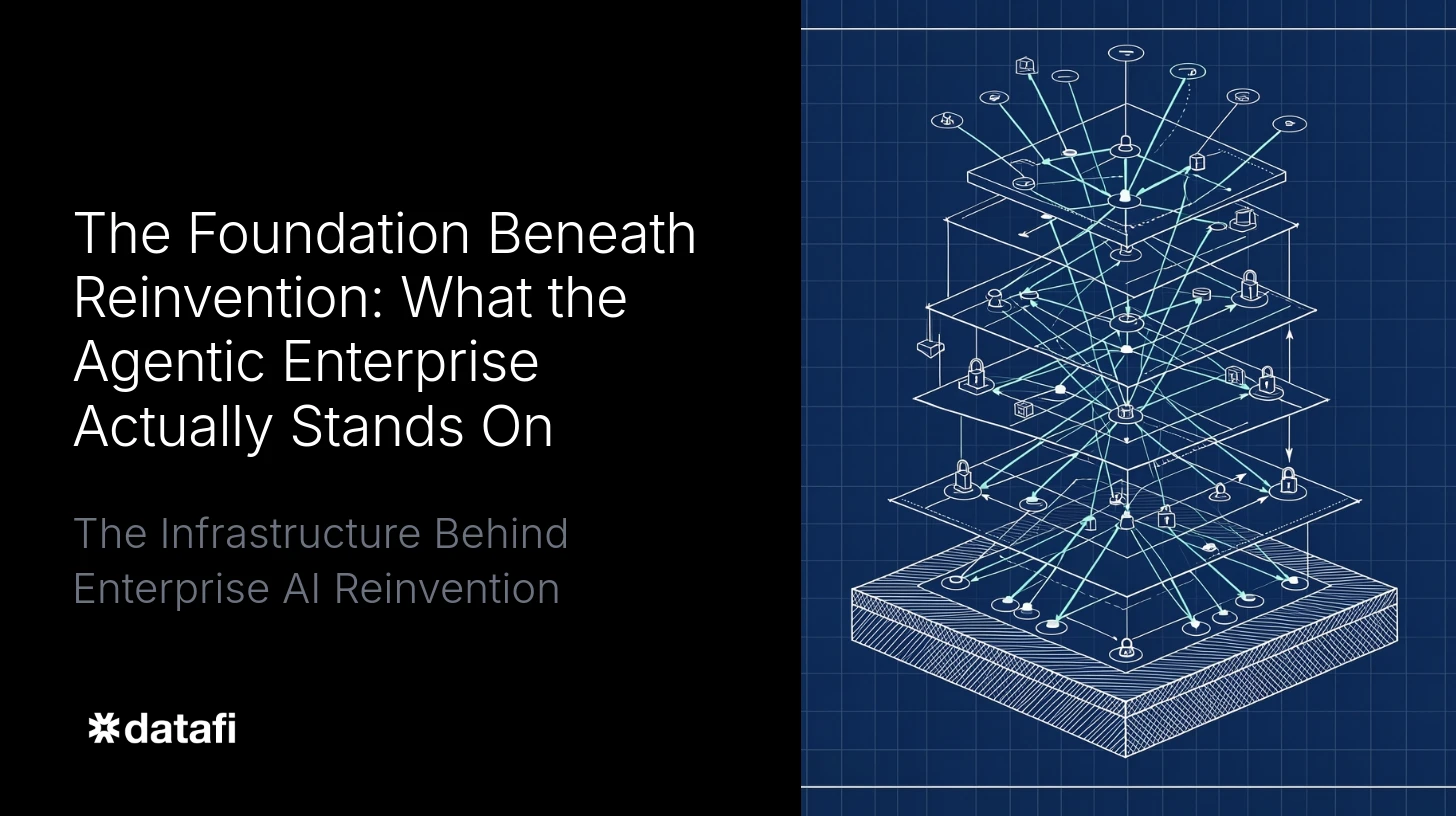
The Foundation Beneath Reinvention: What the Agentic Enterprise Actually Stands On
Only 11% of organizations reach AI reinvention. Discover the infrastructure foundation, governance, and culture that separate leaders from the rest.
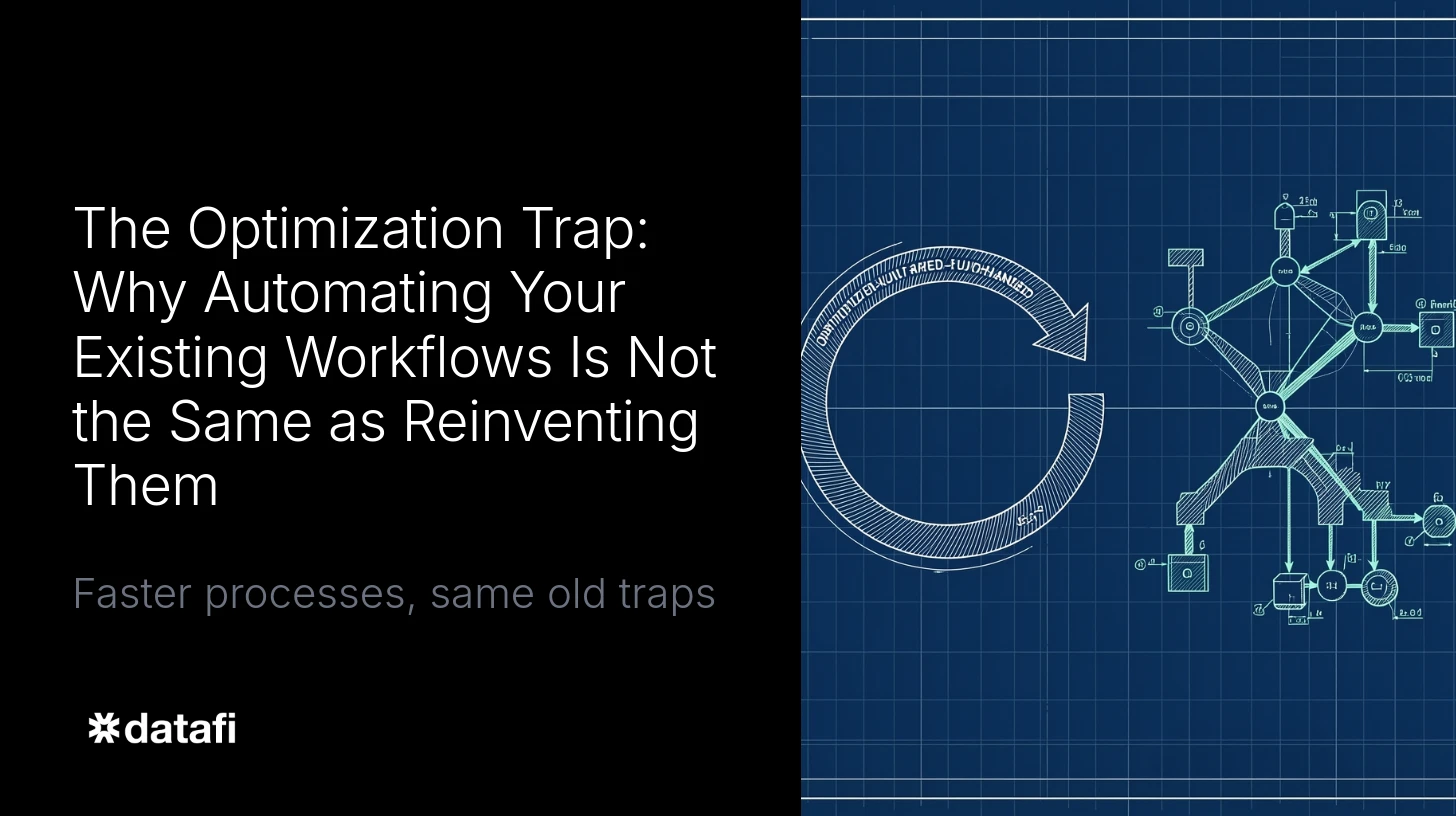
The Optimization Trap: Why Automating Your Existing Workflows Is Not the Same as Reinventing Them
Most enterprises automate existing workflows and call it transformation. McKinsey's data shows why that's a trap, and what actually drives enterprise AI value.
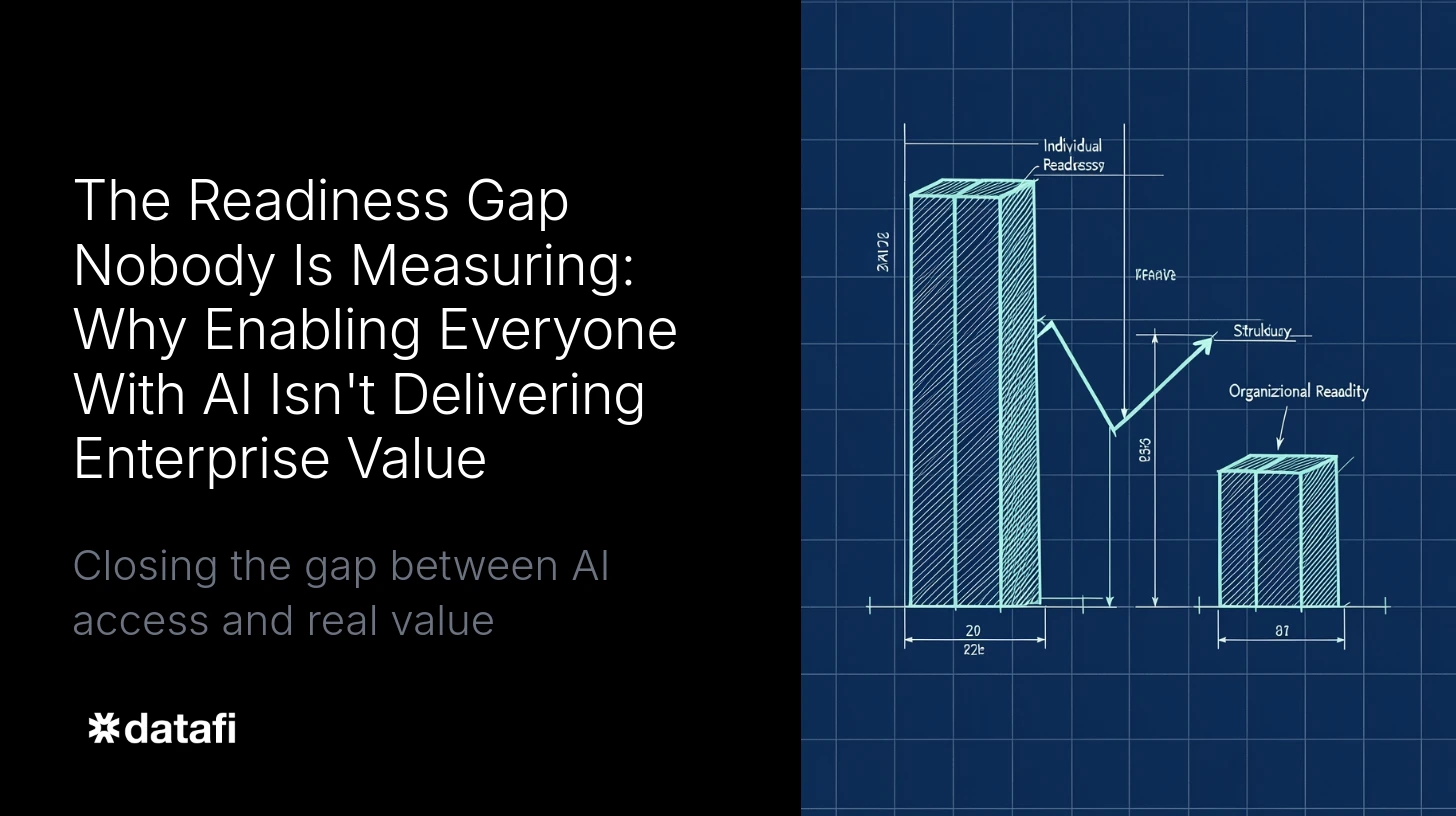
The Readiness Gap Nobody Is Measuring: Why Enabling Everyone With AI Isn't Delivering Enterprise Value
70% of employees are AI-ready, but only 27% of organizations are. Discover why the readiness gap is an architecture problem, not a training problem.
The activity trap: why your AI pilots feel productive and change nothing
Most AI pilots show green dashboards but zero P&L impact. Learn why point solutions create an activity trap and what architecture actually drives transformation.
The compounding cost of a fragmented stack
Discover how fragmented AI tool stacks create compounding costs in governance, context, and agentic risk, and what a unified architecture solves.
The operating system alternative: integration and ownership are separable
Integration and ownership are separable. Discover how a Business AI Operating System unifies enterprise AI without migration, lock-in, or surrendering control.
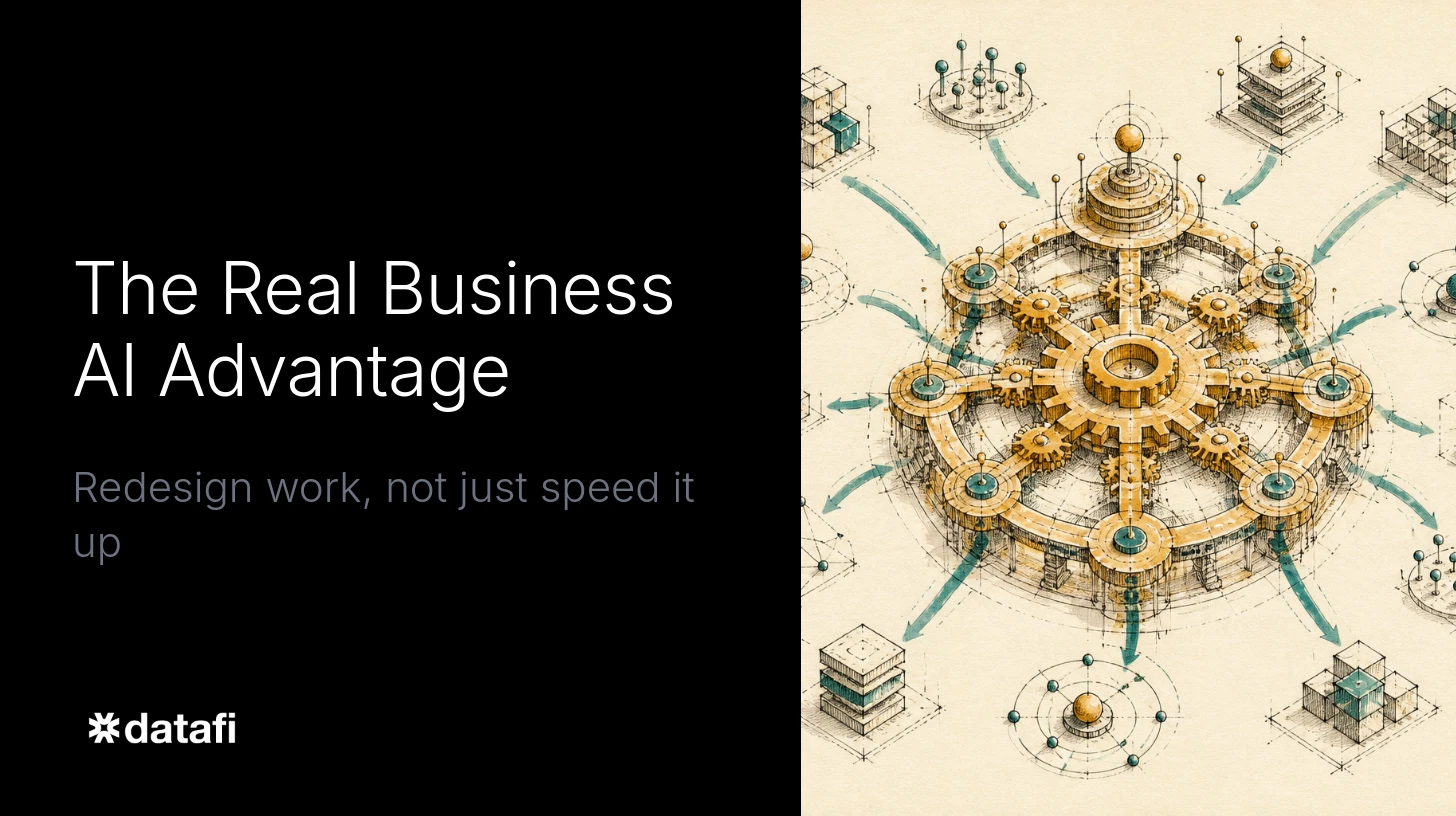
The Real Business AI Advantage
Efficiency gains are table stakes. Discover why the real AI advantage comes from redesigning work, not just speeding it up, with governed agentic AI.
Build, Buy, Of Get Locked In, The False Choice In Enterprise AI
Build vs. buy is the wrong AI question. Discover the third path that gives enterprises speed, control, and optionality without vendor lock-in.
Owning Your AI Future, The Case For An Open Contextual Layer
Discover how an open contextual layer lets enterprises own their AI future, keeping data, context, and governance yours while models stay interchangeable.
Governance You Cannot Take With You Is Not Governance
Proprietary AI governance gives you operational control while costing you architectural freedom. Discover why governance you can't take with you isn't really governance at all.
The Model Is Not The Moat, Why Betting On One LLM Is A Losing Strategy
Why betting your enterprise AI strategy on a single LLM is a losing move, and what the real moat looks like in a world of converging models.
Five Ways AI Vendor Lock-In Shows Up In Your Data Layer
Discover the 5 hidden layers where AI vendor lock-in really accumulates, from proprietary embeddings to trapped business context, and how to protect your architecture.
The Hidden Cost of The All-In-One AI Platform
Discover why all-in-one AI platforms trade fragmentation for dependency, and how enterprise leaders can get integration without surrendering ownership.
Governance as Architecture vs. Governance as a Feature: The Horizon vs. Datafi Comparison
Governance as a feature vs. governance as architecture: how Snowflake Horizon and Datafi differ, and why it matters for enterprise AI compliance.
Snowflake Sells Infrastructure. Datafi Sells Outcomes. Here Is Why That Difference Matters to the CFO.
Snowflake sells data infrastructure. Datafi sells business outcomes. See why that distinction is the most important ROI question a CFO can ask in 2026.
Text-to-SQL Is Not a Business AI Strategy
Text-to-SQL tools like Snowflake Cortex Analyst answer questions fast, but they're not a Business AI strategy. Here's why the gap between data access and outcomes matters.
The Control Plane Problem: Why Snowflake's Agentic Vision Still Stops at the Data Layer
Snowflake's agentic vision is bold, but a control plane built on data isn't the same as a Business AI OS. Here's why the starting point matters.
The Missing Layer: Why Enterprises Need an OS Between Their Data and Their AI
Discover why enterprises need a Business AI Operating System between their data and AI models to close the gap between investment and real ROI.
Your Data Is in Snowflake. Why Can't Your Business Act on It?
Your data is in Snowflake, but your business still waits. Learn why the gap between data and action requires a Business AI Operating System.
A Pragmatic Modernization Roadmap: Activate Now, Replace Selectively, Retire Deliberately
A practical 3-step modernization roadmap: activate legacy systems with AI now, replace only what's truly failing, and retire deliberately. No rip-and-replace required.
SOC2: Compliance Is The Precondition For Autonomous AI
Discover why SOC 2 compliance is the architectural foundation that makes autonomous, governed AI deployable at enterprise scale, not just a checkbox.
From Answering Questions to Solving Problems: What Modernization Is Actually For
Discover why most AI modernization stops at answers instead of action, and what it takes to build enterprise AI that actually solves operational problems.
Governance Without a Rebuild: How Sentinel Lets You Modernize Capability, Not Infrastructure
Discover how Datafi's Sentinel enforces AI governance at the action layer, enabling autonomous AI across legacy systems without costly rebuilds.
From Answering Tickets to Solving Problems: The Ceiling on ServiceNow AI
ServiceNow AI excels at workflow efficiency, but proactive enterprise intelligence requires a different foundation. Learn where the ceiling is and what lies beyond it.
Governance-by-Architecture vs. Governance-by-Addition: A Security and Compliance Comparison
Discover how governance-by-architecture differs from governance-by-addition in enterprise AI, and why the distinction matters for security and compliance.
Platform Lock-In vs. Data Portability: The Real TCO of Choosing ServiceNow for AI
Discover the real TCO of choosing ServiceNow for AI: hidden costs, platform lock-in risks, and how data portability changes your negotiating position.
Systems of Record Aren't the Enemy: Reframing Legacy as the Data Layer
Legacy systems aren't obstacles; they're your most trusted data asset. Learn how activating systems of record in place beats costly migration every time.
The Data Access Gap: Why ServiceNow's Workflow Fabric Is Not the Same as Full Business Context
ServiceNow's workflow fabric captures process data, but full business context requires more. See why Datafi's direct-connect architecture closes the gap.
The Hidden Costs of Modernization: Migration Risk, Data Loss, and Operational Disruption
Replacement programs hide their true costs. Discover the migration risks, data loss, and operational disruption that business cases rarely price before the decision is made.
The Modernization Trap: Why Ripping and Replacing Legacy Systems Rarely Delivers
Why enterprise modernization programs fail, and how activating legacy systems with AI beats ripping and replacing them. A smarter path to transformation.
Who Gets to Use the AI? Democratizing Intelligent Access Across the Enterprise
Most enterprise AI only reaches technical users. Learn how Datafi democratizes intelligent data access for every employee, not just platform power users.
Workflow Automation vs. Business AI: Why the Difference Determines Your Outcomes
Discover why the difference between workflow automation and Business AI determines your enterprise outcomes, and where ServiceNow ends and Datafi begins.
Answering Questions vs. Solving Problems: The Autonomy Gap
Discover why autonomous AI fails without complete data context and how the autonomy gap between answering questions and solving real business problems gets closed.
The Real Total Cost of Intelligence: Agentforce Add-Ons vs. Datafi's Unified Stack
Discover the hidden scope tax in Salesforce Agentforce pricing and how a unified AI data platform like Datafi delivers lower total cost of intelligence at enterprise scale.
Who Is This Actually Built For? Salesforce Admins vs. Business Users
Discover why enterprise AI accessibility depends on who it's built for, and how Datafi Chat reaches every employee, not just Salesforce experts.
Governed Agents vs. Governed Data: Two Very Different Things
Agent governance controls what AI does. Data governance controls what AI sees. Learn why the difference defines your enterprise risk posture.
Salesforce-Native Is a Feature and a Ceiling
Salesforce-native AI offers fast adoption, but its platform boundary limits enterprise ambition. Learn why your AI strategy needs to sit above all your data.
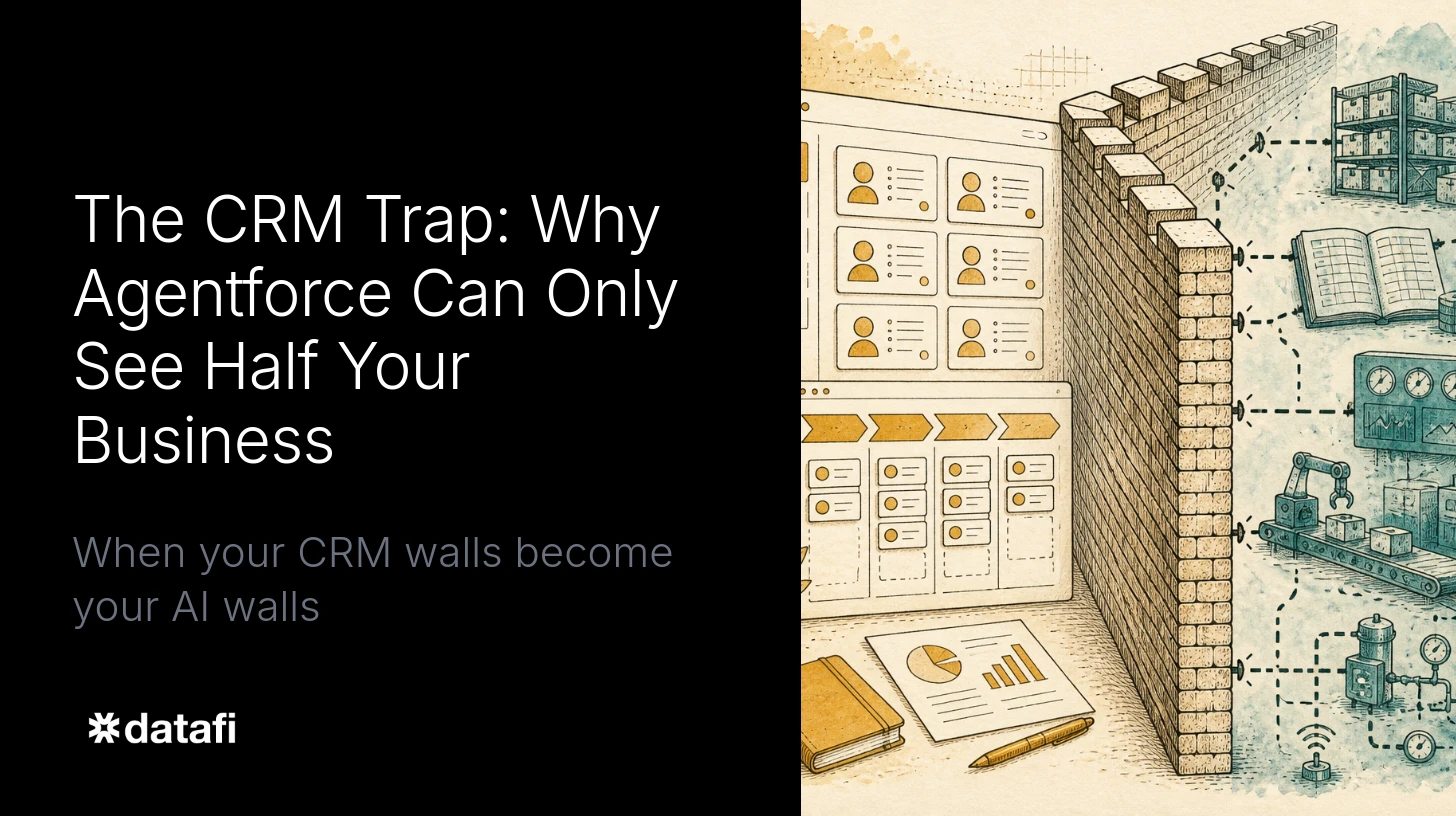
The CRM Trap: Why Agentforce Can Only See Half Your Business
Agentforce is powerful inside Salesforce, but most enterprise data lives elsewhere. Discover the CRM trap and why AI architecture determines your real AI potential.
Answering Questions vs. Solving Problems: The Enterprise AI Gap Nobody Talks About
Discover why enterprise AI deployments fail after the demo: the gap between answering questions and solving problems, and the infrastructure needed to close it.
Built for the Few vs. Built for the Many: Who Actually Owns AI in Your Organization?
Databricks serves data specialists. Datafi serves every employee. Discover why AI platform design determines who actually benefits from your investment.
Data Intelligence vs. Business Intelligence: Why the Distinction Matters
Databricks vs. Datafi: understand why data intelligence for specialists and business AI for everyone require fundamentally different platforms.
Governance by Policy vs. Governance by Architecture: The Coming Compliance Reckoning
Policy-based AI governance can't keep pace with autonomous agents. Learn why governance by architecture is the only sustainable path to enterprise AI compliance.
The Lakehouse vs. the Business Context Layer: Where Does AI Actually Get Its Smarts?
Discover why a business context layer outperforms a lakehouse for enterprise AI, turning raw data access into reliable, grounded business intelligence.
The Real Cost of Enterprise AI: What TCO Comparisons Miss and What They Reveal
Discover what enterprise AI TCO comparisons miss: staffing costs, time to value, and organizational reach. See how Databricks vs. Datafi stacks up.
Context Is Not Enough: Why Enterprise Knowledge Graphs Still Leave Decisions Half-Made
Knowledge graphs improve enterprise search, but they can't act on live data or trigger workflows. Discover why operational AI needs more than context.
From Knowledge Worker to Knowledge Business: The ROI Case for a Business AI Operating System
Discover why enterprise AI ROI depends on your investment thesis: productivity gains from search tools vs. structural transformation from a Business AI Operating System.
Governed by Architecture vs. Governed by Policy: A Fundamental Difference in Enterprise AI Safety
Discover why enterprise AI governance requires architectural design, not just policy layers, to safely manage autonomous agents in regulated industries.
SaaS Sprawl Is the Symptom. Fragmented AI Is the Disease.
SaaS sprawl isn't your real AI problem. Fragmented data architecture is. Learn why enterprise search layers fall short and what a semantic operating layer enables.
The Coworker Illusion: AI Assistants vs. AI Agents That Actually Execute
AI assistants help you work faster, but AI agents actually execute. Discover the action gap separating proactive assistants from autonomous enterprise AI.
The Search Trap: Why Knowing Where the Answer Is Isn't the Same as Acting on It
Enterprise search AI finds answers fast, but acting on them is where value is created. Discover why the search trap limits transformation and what replaces it.
Shadow AI Is Now a Board-Level Risk. Here Is What That Means for How Enterprises Deploy AI.
Shadow AI just triggered the first SEC 8-K disclosure from unauthorized AI use. Here's what enterprises must do now to govern AI before it becomes a crisis.
Choosing Your Enterprise AI Operating System: A Framework for the Decision You Cannot Afford to Get Wrong
A five-question framework for choosing the right enterprise AI platform. Cut through vendor noise and make the decision your organization cannot afford to get wrong.
Chat for Every Employee: Why the Last Mile of Enterprise AI Is the Most Important One
Discover why enterprise AI fails at the last mile and how Datafi's Chat UI delivers governed, agentic AI to every employee, not just technical teams.
Palantir for the Fortune 500. Datafi for the Companies That Actually Drive the Economy.
Palantir serves the Fortune 500. Datafi's Business AI OS is built for the mid-market organizations that actually drive the economy, faster, leaner, and at real scale.
The Governance Question: Lock-In as Architecture vs. Governance as Architecture
Is your AI governance protecting your organization or your vendor's position? Learn why governance architecture, not features, determines real enterprise AI control.
Total Cost of Ownership: Building the Honest TCO Model for Enterprise AI
Build an honest enterprise AI TCO model that survives a 3-year audit. Compare Palantir vs. Datafi costs across licensing, implementation, and ongoing operations.
AI That Answers vs. AI That Acts: Autonomous Agents in Palantir AIP and Datafi
Discover what separates genuine agentic AI from marketing hype, and how Palantir AIP and Datafi's contextual-first architecture stack up for enterprise autonomy.
Enterprise Software Procurement Reality: Palantir's Defense DNA vs. Datafi's Commercial Enterprise Focus
Palantir's defense roots vs. Datafi's commercial-first design. Discover which enterprise AI platform is actually built for your organization's real operating needs.
Ontology vs. Business Context: Why the Intelligence Layer Is the Whole Game
Ontology vs. contextual layer: discover why the intelligence layer is the defining architectural decision in enterprise AI and how each approach compares.
Palantir's Deployment Model: The True Cost of AI Implementation
Discover the true total cost of Palantir's 18-month deployment model: hidden professional services, Ontology maintenance, and strategic dependency that never appear on the invoice.
Two Operating Systems, Two Philosophies: How Palantir and Datafi Define Enterprise AI Differently
Palantir and Datafi both call themselves enterprise AI operating systems. Here's how their architectures, philosophies, and deployment models fundamentally differ.
The Freight Industry's AI Inflection Point: From Answering Questions to Solving Problems
Discover how a vertically integrated AI operating system is transforming freight logistics from question-answering tools to autonomous problem-solving at scale.
Growth Theater vs. Real Adoption: Why Enterprise AI Numbers Don't Match Reality
Why enterprise AI adoption numbers mask a deeper problem, and what real adoption actually requires from architecture, data, and leadership.
The assembly problem: why an integrated business AI operating system beats a Databricks plus Claude build
Why connecting Databricks and Claude isn't enough: the real enterprise AI challenge is the contextual layer, governance, and orchestration in between.
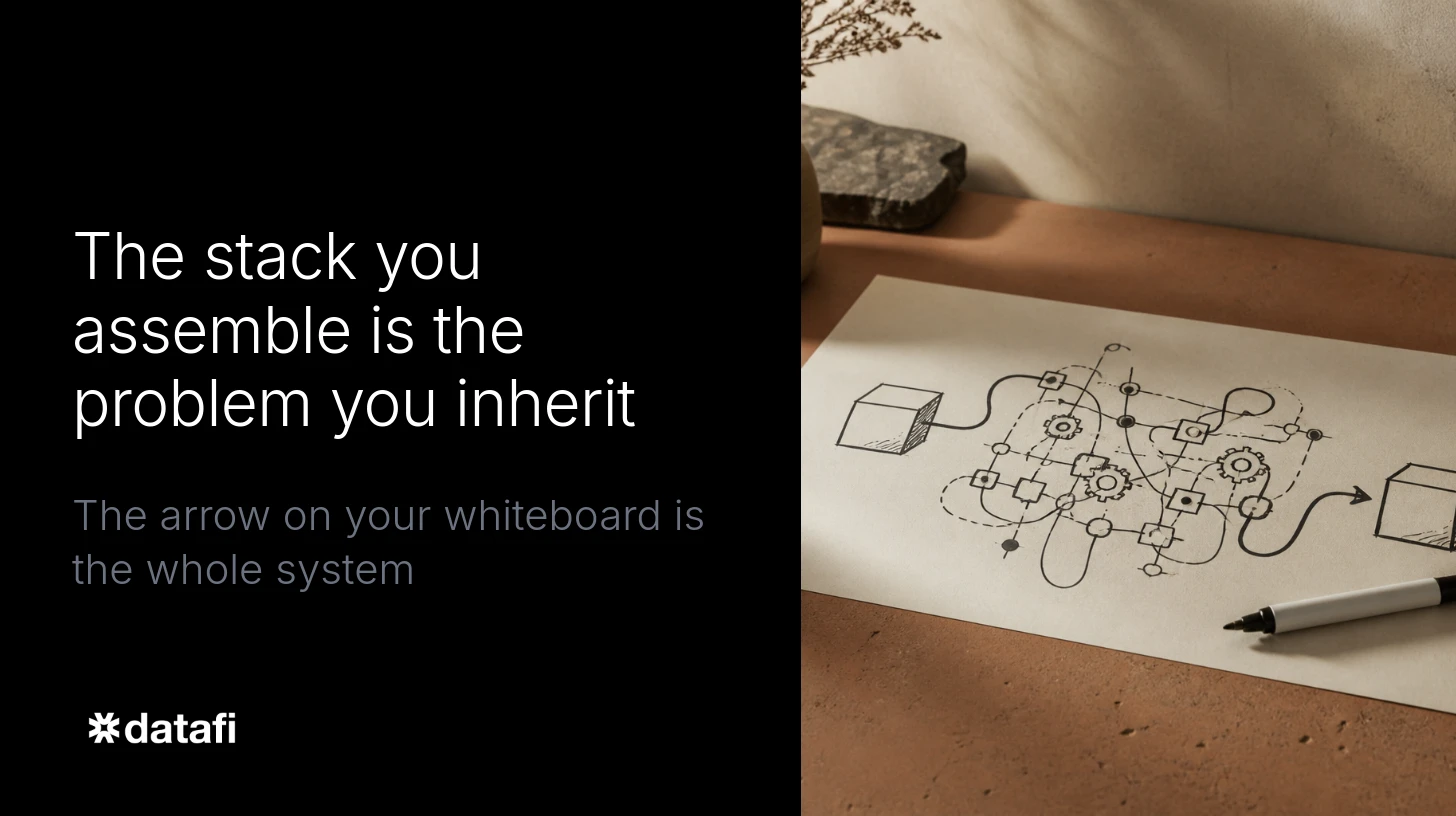
The stack you assemble is the problem you inherit
Assembling Databricks and ChatGPT is the easy part. The connective tissue between them is where AI projects succeed or silently fail.
The integrated advantage: why an operating system for business AI beats assembling Snowflake plus Claude
Discover why assembling Snowflake plus Claude falls short of a true enterprise AI platform and how an integrated AI operating system delivers faster, governed results.
The parts you assembled versus the system you needed
Snowflake plus ChatGPT sounds like a winning AI stack, but assembled parts can't replace an integrated system. Here's what enterprise AI actually requires.
Why Financial Services Leaders Are Replacing Dashboards with AI That Acts on Risk
Discover why financial services leaders are moving from passive dashboards to AI that actively monitors, interprets, and acts on risk in real time.
Claims Leakage Has Always Been a Data Problem. AI Is Finally the Right Tool to Solve It
Claims leakage costs insurers 20-30% of claims spend. Learn how AI, built on a unified data ecosystem, is finally the right tool to close the gap.
Underwriting AI Will Make the Most Accurate Risk Decisions
Discover why AI underwriting decisions depend on complete data context, not speed, and how a vertically integrated AI platform delivers the underwriting edge.
From Freight Visibility to Freight Intelligence: The Operational Leap That Is Separating Leading Logistics Organizations
Freight visibility has hit its ceiling. Discover how leading logistics organizations are making the leap to freight intelligence with AI that acts, not just shows.
The AI Operating System - Why the Future of Enterprise AI Is a Platform, Not a Project
Discover why the future of enterprise AI is an operating system, not a project. Learn how platform-first architecture compounds competitive advantage at scale.
From Pilot to Production in 90 Days - What "Buy" Actually Looks Like With Datafi
See exactly what a Datafi deployment delivers in 90 days: governed AI in production, real users, measurable outcomes, and a compounding advantage your build team can't match.
Governance Is Not a Feature - It Is the Foundation
Discover why AI governance must be built into your platform architecture from day one, not added later, and what it costs when enterprises get this wrong.
Supplier Risks and Data Platform Challenges
Supplier risk failures aren't sourcing problems; they're data synthesis failures. Learn how a purpose-built AI operating system transforms fragmented signals into resilient supply chains.
The Contextual Layer - Why Your Internal Team Cannot Build the Moat That Matters
Discover why the contextual layer is the true moat in enterprise AI, and why internal build teams consistently underestimate what it takes to create it.
Why Your Data Platform Can't See Your Next Disruption
Supply chain disruptions hide in plain sight. Learn how AI synthesis across your full data ecosystem can turn fragmented signals into decisive, autonomous action.
Building AI Systems for the AI-Native Enterprise
Discover why the global contextual layer, not models or data lakes, is the true intelligence backbone powering autonomous, agentic AI in the enterprise.
The Intelligent Marketplace: How AI Is Reshaping Specialty Insurance for Ryan Specialty and Beyond
AI is transforming specialty insurance. See how Datafi's autonomous agent architecture helps firms like Ryan Specialty close the underwriting capacity gap at scale.
Adverse Event Signals Are Already in Your Data. The Question Is Whether Your AI Can Find Them Before It Is Too Late
AI-powered adverse event signal detection requires full data context, not just retrieval. Learn how Datafi transforms pharmacovigilance intelligence before regulators act.
AI That Answers Questions vs. AI That Solves Problems
Discover why most enterprise AI deployments answer questions but fail to solve problems, and what architectural choices determine which AI you actually build.
Build vs. Buy - A Scoring Framework for Mid-Enterprise AI Decisions
A rigorous 5-dimension scoring framework to help mid-enterprise organizations make smarter build vs. buy AI platform decisions, with honest TCO analysis.
What Palantir's Deployment Model Teaches Us About the Wrong Way to Scale AI
Palantir works, but not for everyone. Discover what its builder-dependent deployment model reveals about scaling AI in mid-enterprise organizations.
AI Systems for Every Employee
Discover why enterprises choose Datafi's unified Business AI OS over fragmented Azure and Databricks stacks to deploy autonomous AI across every business function.
Hidden Cost of Building Your Own AI Platform: Build vs Buy AI
Discover the true cost of building an enterprise AI platform in-house. The real 3-year TCO is 3-7x the initial estimate. Here's what your spreadsheet misses.
The Seven Layers Most AI Builders Forget to Budget For
Discover the 7 architecture layers enterprise AI builds forget to budget for, why they compound in cost, and what a realistic build timeline actually looks like.
Why Most Enterprise AI Projects Stall Before They Scale
Discover the 5 organizational patterns that cause enterprise AI projects to stall before they scale, and what it actually takes to reach production.
The Hidden Data Integration Platform Problem in Life Sciences
Regulatory submission delays aren't documentation failures; they're data intelligence failures. Learn how integrated AI changes the game for life sciences.
The JARVIS Principal — AI Systems as a Colleague, Not a Calculator
Discover why enterprise AI needs a vertically integrated architecture, not point solutions, to deliver JARVIS-level intelligence across your entire organization.
AI Data Analysis for Clinical Teams
Discover how AI synthesis engines close the patient outcome gap by connecting siloed clinical data your teams cannot see, transforming fragmented signals into actionable insight.
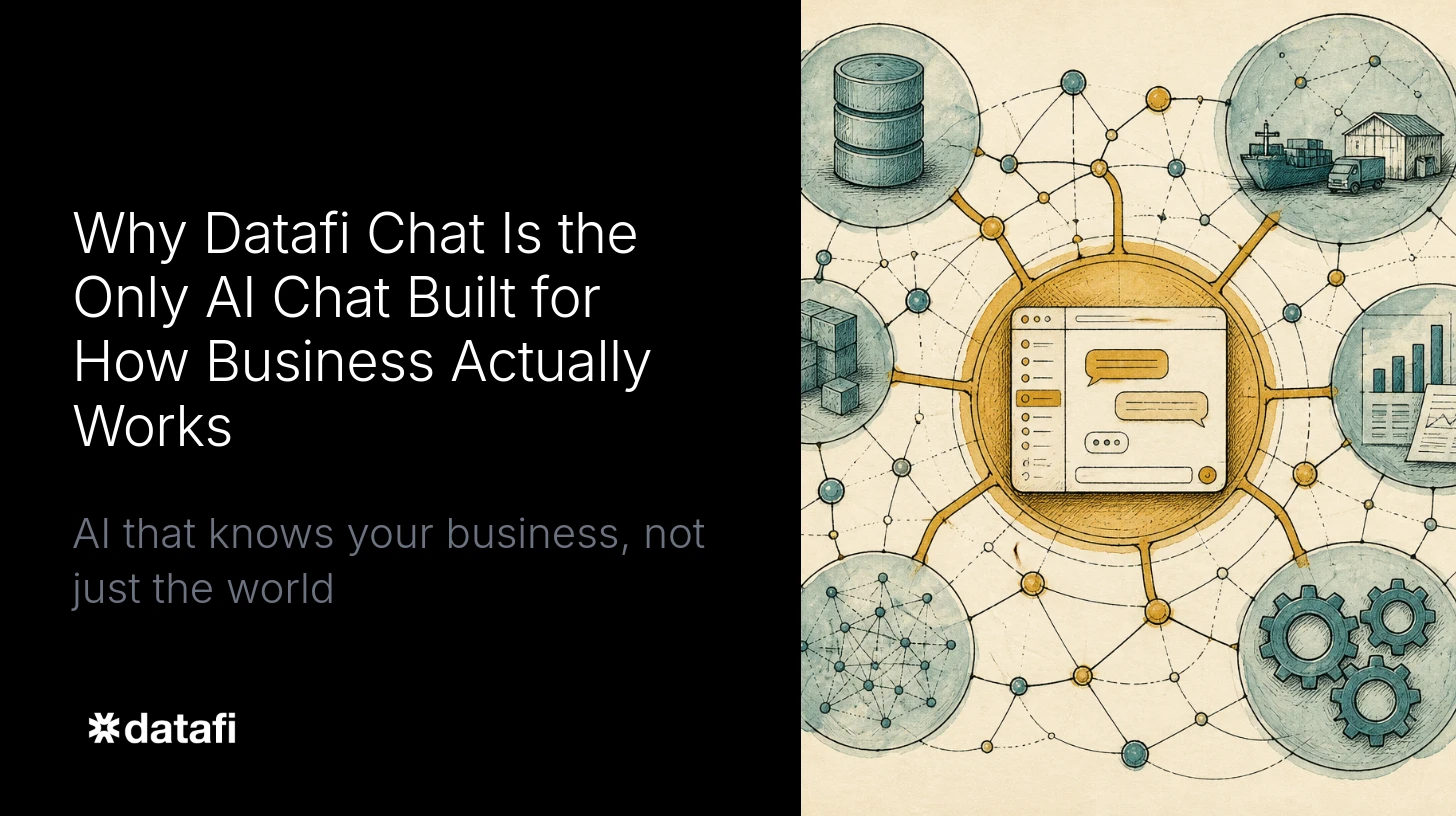
Why Datafi Chat Is the Only AI Chat Built for How Business Actually Works
Datafi Chat is the only AI chat built on a Business AI Operating System, delivering governed, context-aware intelligence to every employee in the enterprise.
Why Integrated AI Security Wins: Datafi Cyber and the End of the Point Solution Era
Discover why integrated AI security beats point solutions. Datafi Cyber governs AI agents, data access, and workflows from within the stack that makes AI effective.
Datafi Cyber and the Case for Contextual Cyber Intelligence
Datafi Cyber delivers contextual cyber intelligence by embedding governance and AI reasoning natively into your data platform, not bolted on top.
How Oak Harbor Freight Built a Smarter Operation with Datafi
Discover how Oak Harbor Freight Lines unified fragmented data with Datafi to accelerate decisions, automate workflows, and build a governed AI operating system.

The Foundation Always Wins: Why Agentic AI at Scale Demands a Different Kind of Infrastructure
McKinsey says 80% of enterprises cite data limitations as the AI scale barrier. Datafi explains why agentic AI demands a unified data foundation, not better models.
How Oak Harbor Freight Turned Abandoned Quotes Into a Revenue Recovery Engine
See how Oak Harbor Freight used a Datafi AI sales agent to recover abandoned shipping quotes, deepen customer relationships, and surface strategic market insights.
How Oak Harbor Freight Lines Transformed Freight Scheduling with Datafi
See how Oak Harbor Freight Lines used Datafi's AI agent to automate bill of lading entry, eliminate scheduling blind spots, and cut labor costs.
The Business AI Operating System: Why Datafi Outperforms ServiceNow for the AI Era
Discover why Datafi's vertically integrated AI platform outperforms ServiceNow for the AI era, delivering autonomous business AI at every scale.
The Operating System for Business AI: Why Datafi Outperforms Contextual.ai Where It Counts
Discover why Datafi's vertically integrated AI platform outperforms contextual retrieval tools, delivering governed, agentic AI across your entire data ecosystem.
Used Inventory Aging and Cross-Store Rebalancing
See how Datafi's agentic AI helps dealer groups stop inventory aging losses by rebalancing used vehicles across rooftops with full data context.
Why Retail Needs an Operating System for Business AI
Discover why retailers need a unified AI operating system, not more pilots, to drive margin decisions, governance, and enterprise-scale execution.
The Business Context Layer: The Missing Foundation of Enterprise AI
Discover why business context is the missing foundation of enterprise AI and how a unified, governed context layer unlocks true agentic capability.
Orchestrate Cocreation: The Principle That Puts Human Judgment at the Center of AI
Discover how orchestrating cocreation puts human judgment at the center of AI, transforming enterprise workflows from task automation to genuine collaboration.
The Store Scorecard: How Datafi Gives Dealer Groups a Fair Ranking of Every Rooftop
Discover how Datafi's AI platform gives dealer groups a fair, context-normalized scorecard that ranks every rooftop on what operators actually control.
Built for Depth: Why AI That Only Answers Questions Will Never Transform Your Business
Discover why enterprise AI must go beyond single interactions. Learn how depth-oriented, multistep AI workflows drive real business transformation.
The OS for Business AI: Why a Unified Data and AI Stack Is the Next Enterprise Imperative
Discover why a unified data and AI stack is the enterprise imperative, and how building the right foundation transforms AI from a curiosity into operational infrastructure.
The AI Operating System Imperative: Why Technology Leaders Are Rethinking Everything
Technology leaders face a gap between AI ambition and outcomes. Discover why an AI operating system, not search tools, drives real enterprise transformation.
Design for Continuity: Why AI That Remembers Is AI That Transforms
Discover why AI that remembers transforms enterprises. Learn how continuity, context, and governed memory turn AI from a search tool into a true business partner.
Why Licensing Datafi’s Business AI Operating System Beats Building One Internally
Discover why licensing Datafi's Business AI Operating System beats building internally: faster deployment, lower risk, and better long-term ROI for enterprises.

Why AI Clarity Is the New Competitive Advantage
Discover why AI clarity is the new competitive advantage and how transparent, governed AI architecture drives trust, adoption, and real business outcomes.
Service Retention Recovery for Multi-Franchise Dealer Groups: How Datafi Turns Lapsed Customers Back Into Service Lane Revenue
Discover how Datafi's AI Operating System helps multi-franchise dealer groups recover lapsed service customers and protect fixed operations revenue.
Service Retention Recovery: How Datafi Turns Lapsed Customers Back Into Service Lane Revenue
Discover how Datafi's AI Operating System helps multi-franchise dealer groups recover lapsed service customers and protect fixed operations revenue.
Transforming Public Sector Rail with Datafi’s Operating System for Business AI
Discover how Datafi's AI operating system unifies rail data, empowers non-technical users, and enables autonomous AI agents for public sector rail transformation.
The Operating System for Business AI: Why Datafi Is Built for What Comes Next
Datafi is the operating system for business AI, built for full data context, governance, and autonomous agents that go far beyond productivity tools like Copilot.
From Submission Bottleneck to Competitive Advantage: How Datafi Transforms Regulatory Dossier and Lifecycle Management in Life Sciences
Discover how Datafi's unified AI platform transforms regulatory dossier and lifecycle management in life sciences, turning submission bottlenecks into competitive advantage.
Life Sciences Needs More Than AI Tools. It Needs an Operating System for Business AI
Discover how Datafi's business AI operating system unifies data, governance, and workflows for life sciences organizations driving real enterprise value.
From Fragmented Data to Financial Control: How a Multinational Corporation Transforms Treasury and Accounting Operations with Datafi
See how a multinational corporation uses Datafi to unify treasury data, automate reconciliation, and turn fragmented financial data into real-time control.
How Datafi’s OS for Business AI Powers Supply Chain Operations
Discover how Datafi's OS for Business AI unifies data, governance, and agentic workflows to solve real supply chain operational challenges at scale.
M&A Due Diligence Acceleration
See how Datafi's agentic AI platform accelerates M&A due diligence, cutting weeks of manual analysis into hours with governed, connected data intelligence.
Attrition Risk Early Warning
Discover how Datafi's AI platform unifies fragmented HR data to detect attrition risk early, trigger coordinated retention actions, and stop losing top talent.
Executive Decision Intelligence Briefing
See how Datafi's Executive Decision Intelligence Briefing delivers governed, AI-synthesized insights across all data sources before every high-stakes meeting.

Securing the Mission: How Datafi Transforms Cybersecurity and Defense Operations Through Unified AI
Discover how Datafi's unified AI platform transforms cybersecurity and defense operations with governed intelligence, agentic workflows, and mission-speed decision velocity.
ESG Reporting Compilation
See how Datafi's agentic AI platform transforms ESG reporting from a manual data burden into a fast, traceable, and strategic intelligence asset.
Dynamic Markdown and Pricing Optimization
See how Datafi connects fragmented pricing data into AI-driven markdown decisions that recover margin, reduce clearance risk, and optimize the full pricing lifecycle.
From Alert to Answer: How Datafi Transforms Quality Deviation Root Cause Analysis
See how Datafi connects fragmented manufacturing data to accelerate quality deviation root cause analysis from days to minutes with governed AI.
Pharmacovigilance Signal Detection
See how Datafi's governed AI platform unifies PV data sources to enable real-time pharmacovigilance signal detection, faster assessments, and regulatory-ready narratives.

Regulatory Change Management
See how Datafi's AI platform transforms regulatory change management from reactive scrambling to proactive, governed compliance intelligence across any industry.
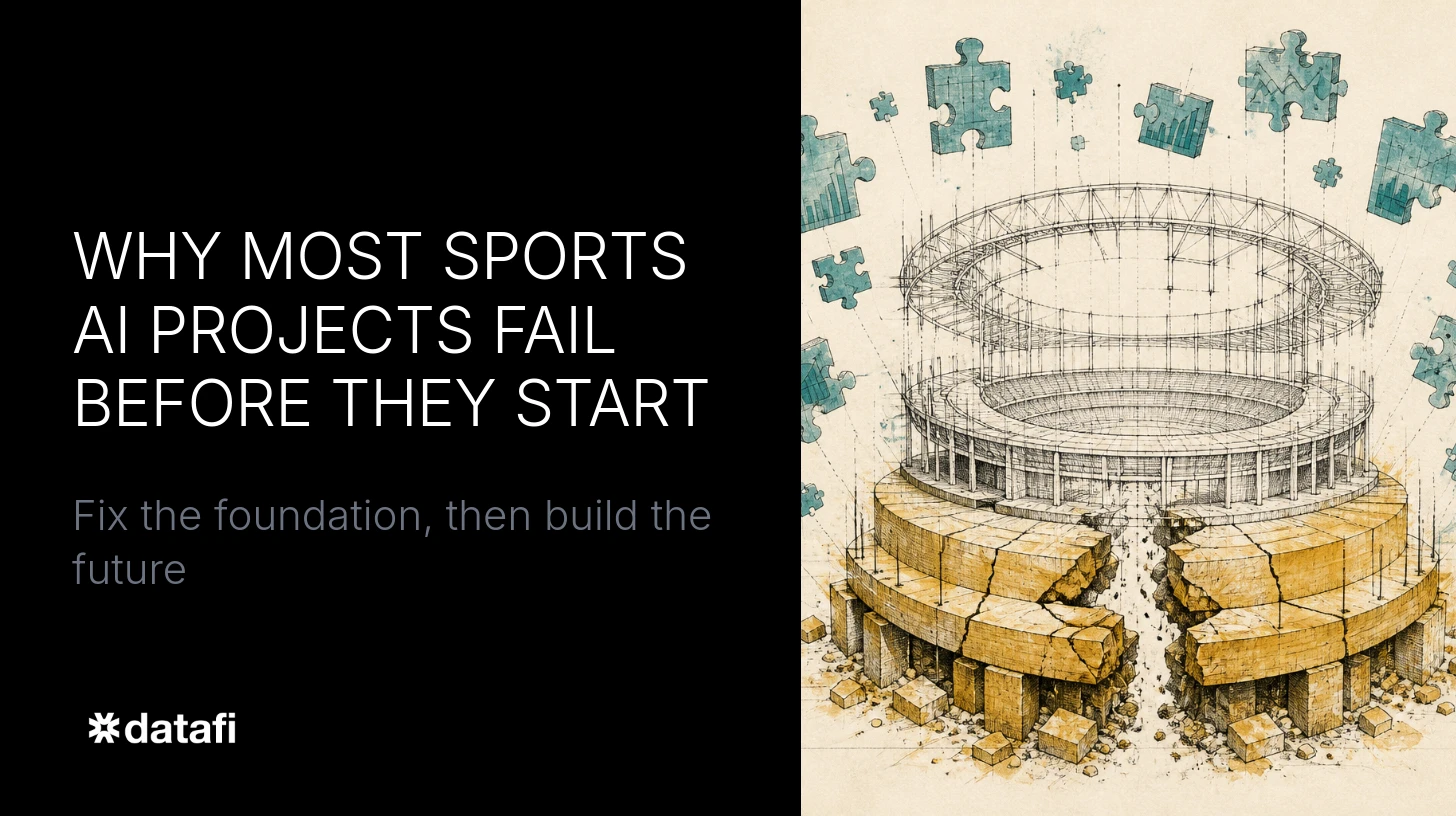
Why Most Sports AI Projects Fail Before They Start
Most sports AI projects fail not from bad technology, but from broken foundations. Learn why connectivity, governance, and accessibility determine AI success.
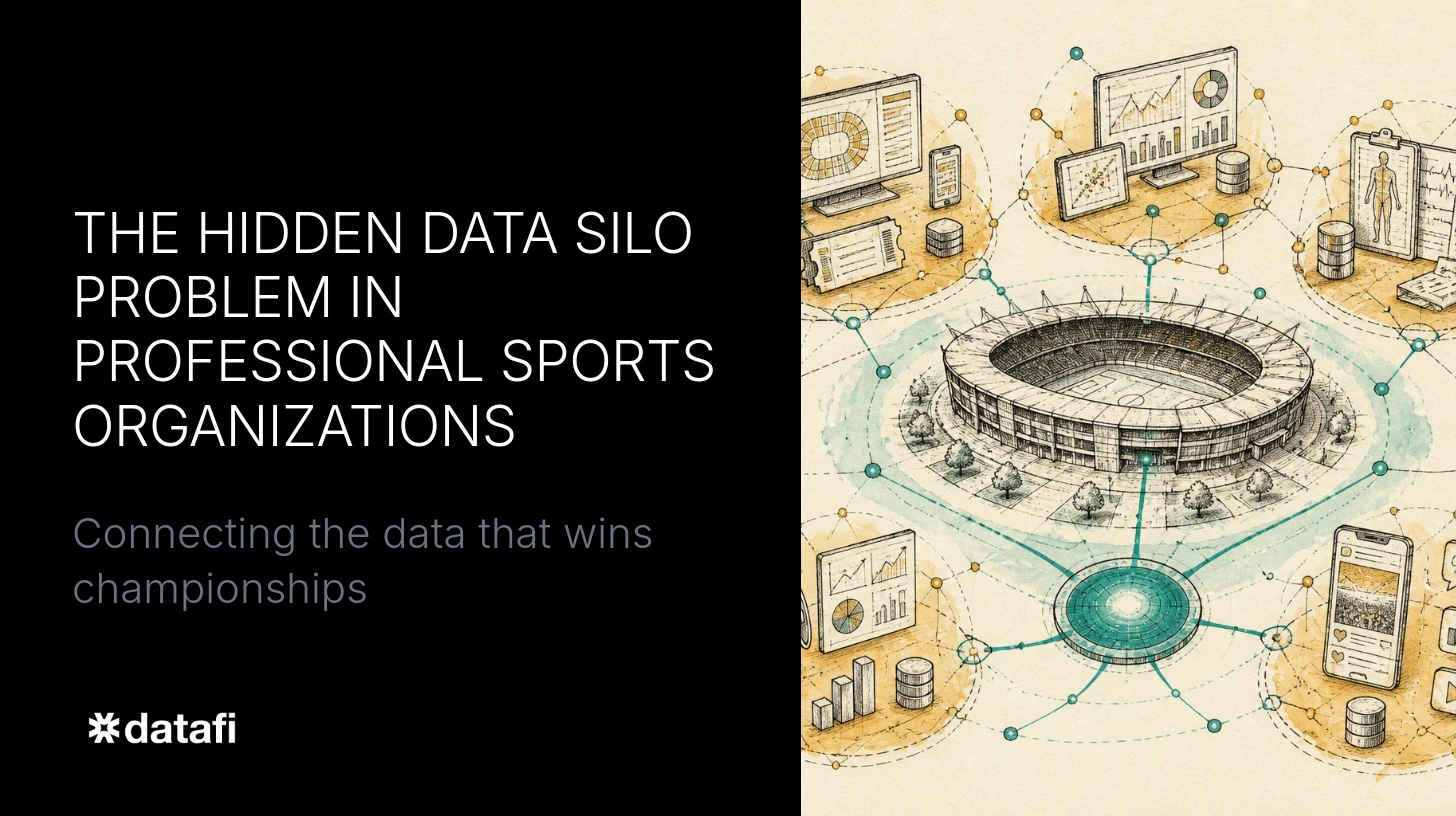
The Hidden Data Silo Problem In Professional Sports Organizations
Discover how data silos are costing professional sports franchises millions and how a unified AI platform can connect fragmented systems into real competitive advantage.
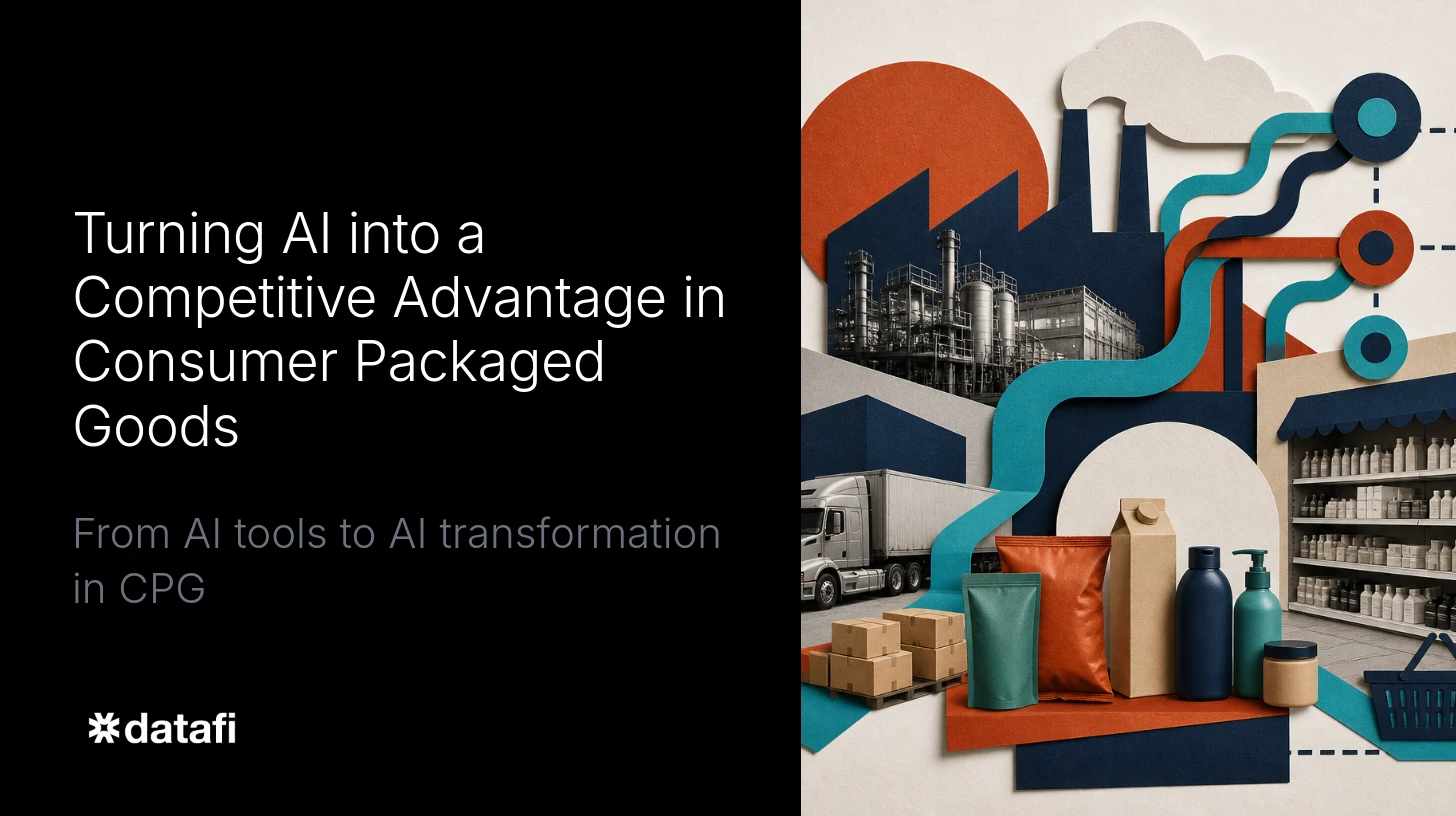
Turning AI into a Competitive Advantage in Consumer Packaged Goods
Discover how CPG leaders use Datafi's AI Operating System to transform demand sensing, trade promotion, and supply chain operations into competitive advantages.
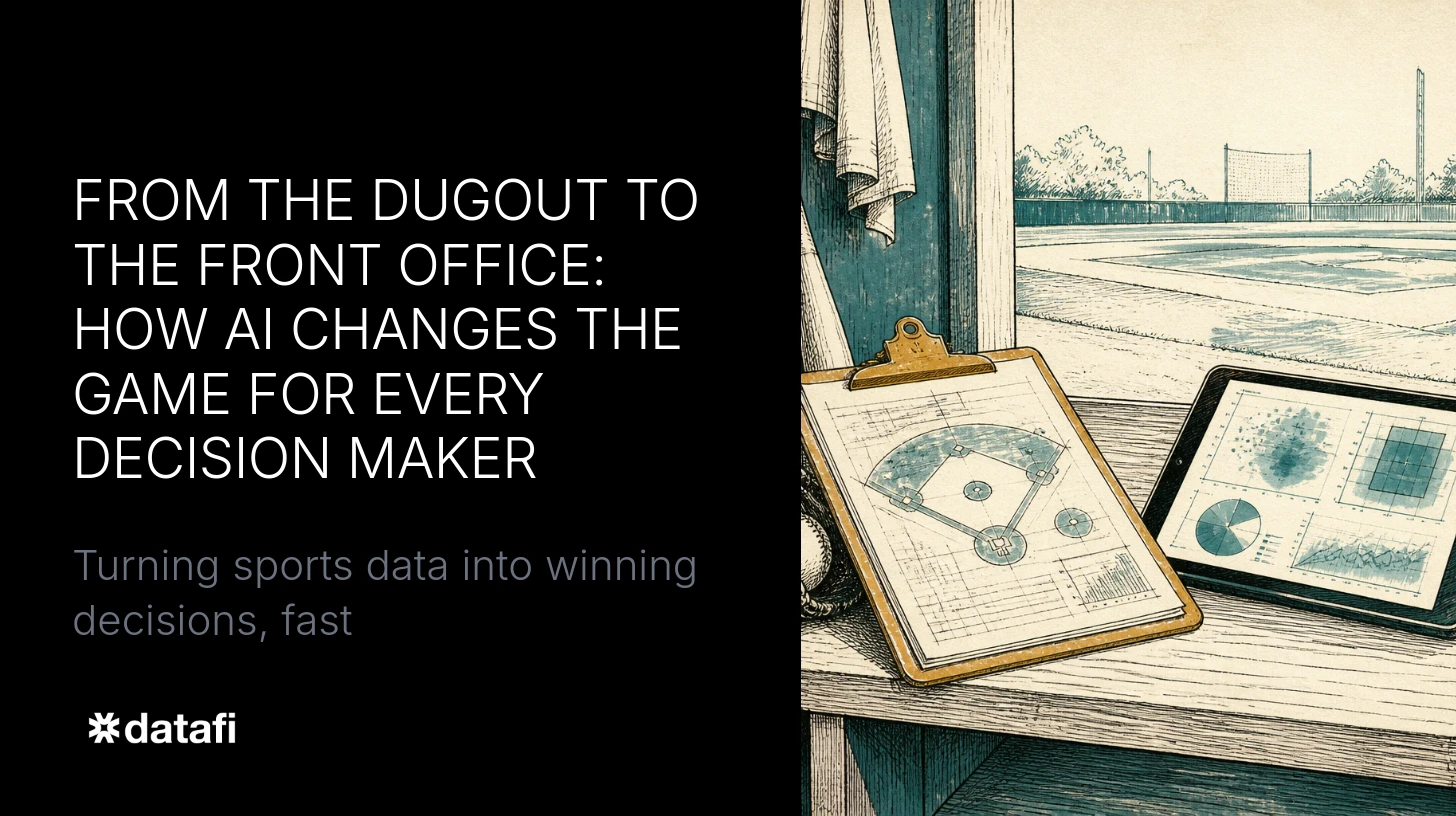
From The Dugout To The Front Office: How AI Changes The Game For Every Decision Maker
Discover how Datafi's Business AI Operating System closes the gap between sports data and real decisions, empowering every role from dugout to front office.
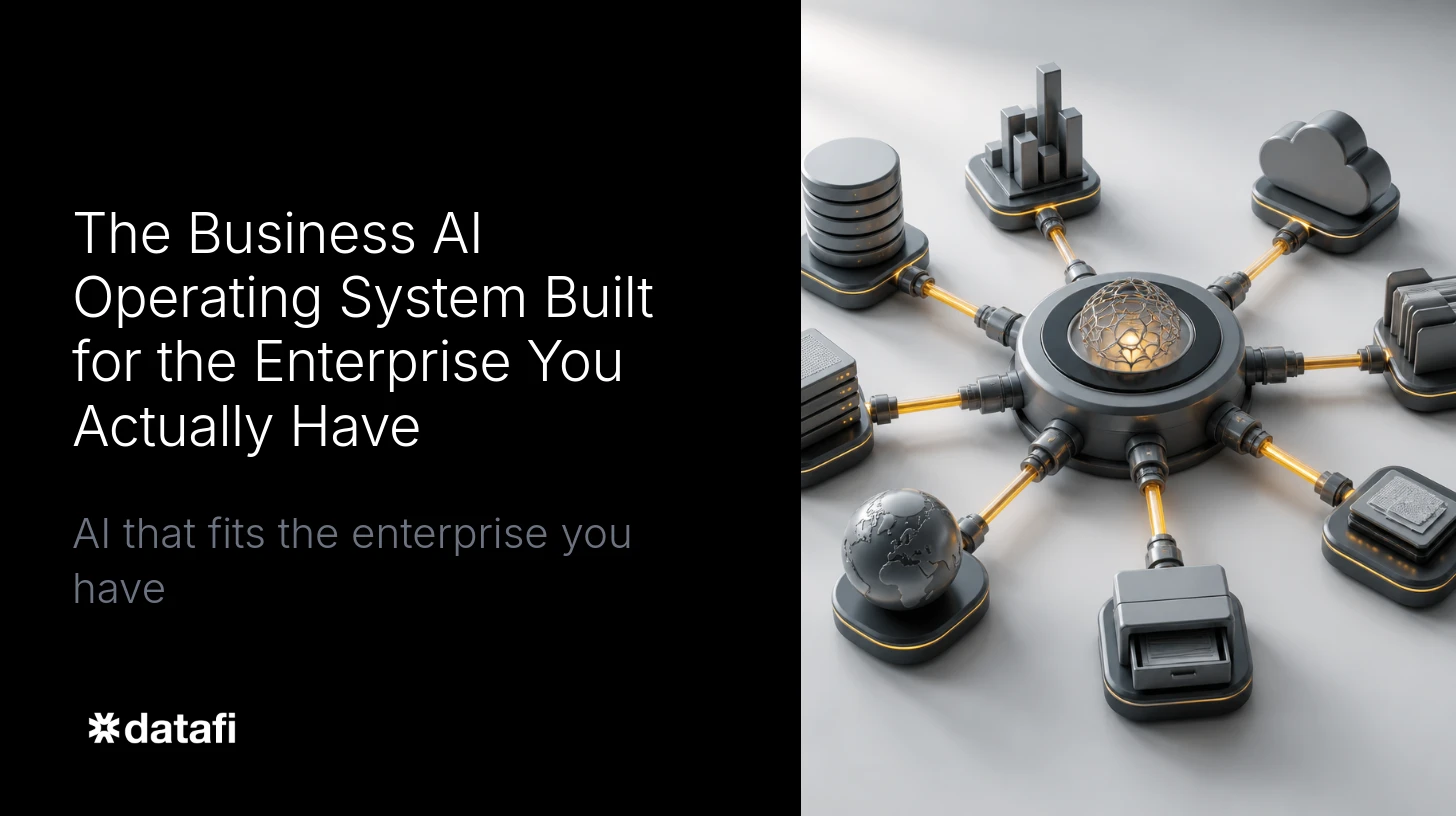
The Business AI Operating System Built for the Enterprise You Actually Have
See why mid-market and enterprise leaders choose Datafi over Microsoft Fabric as their Business AI Operating System for heterogeneous data environments.
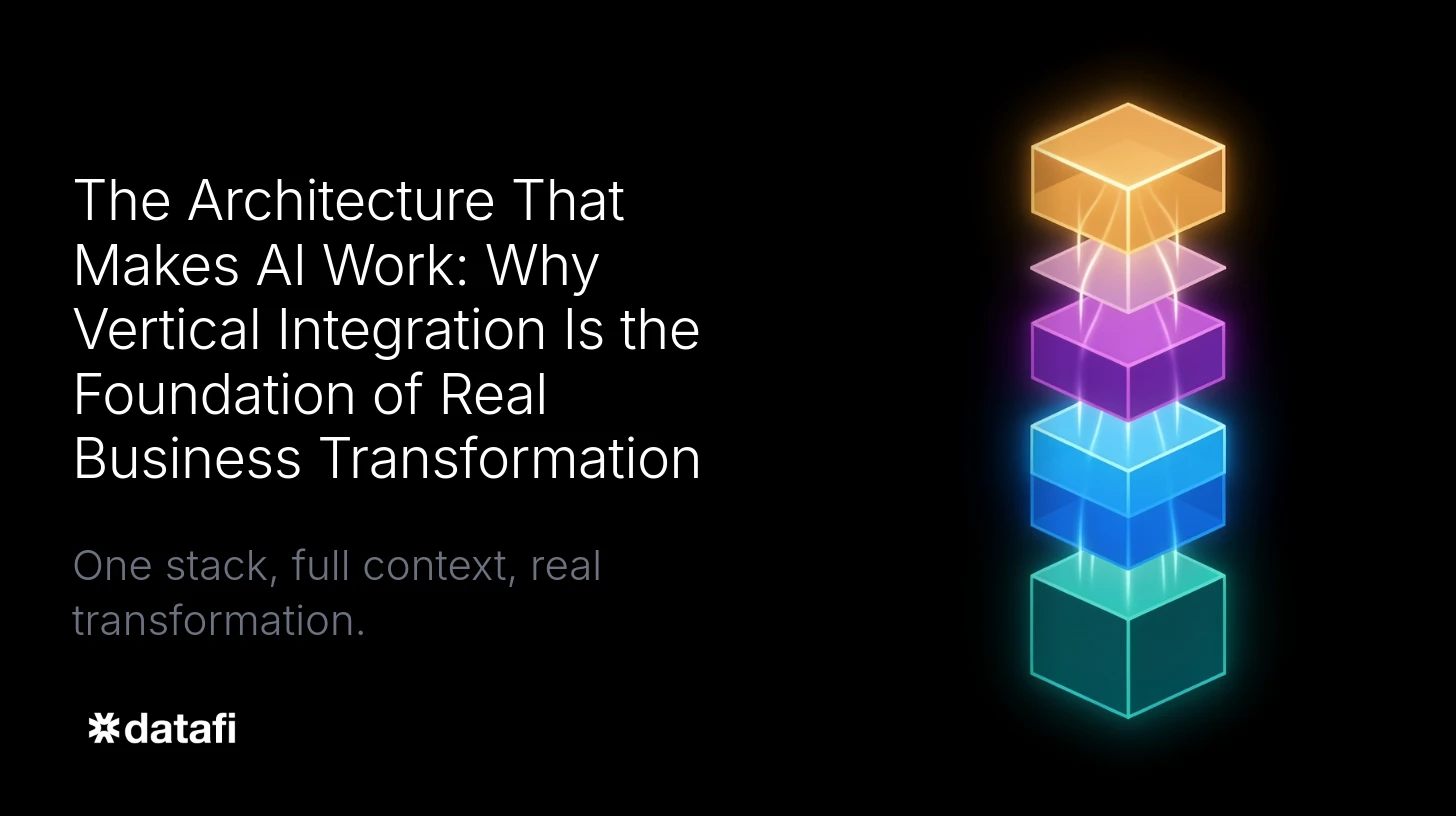
The Architecture That Makes AI Work: Why Vertical Integration Is the Foundation of Real Business Transformation
Discover why vertical integration is the missing foundation for enterprise AI that truly transforms operations, not just answers questions.
Turning Business AI into a Cybersecurity Force Multiplier
Discover how Datafi's AI platform turns enterprise data into a cybersecurity force multiplier, enabling autonomous threat detection, triage, and response at scale.
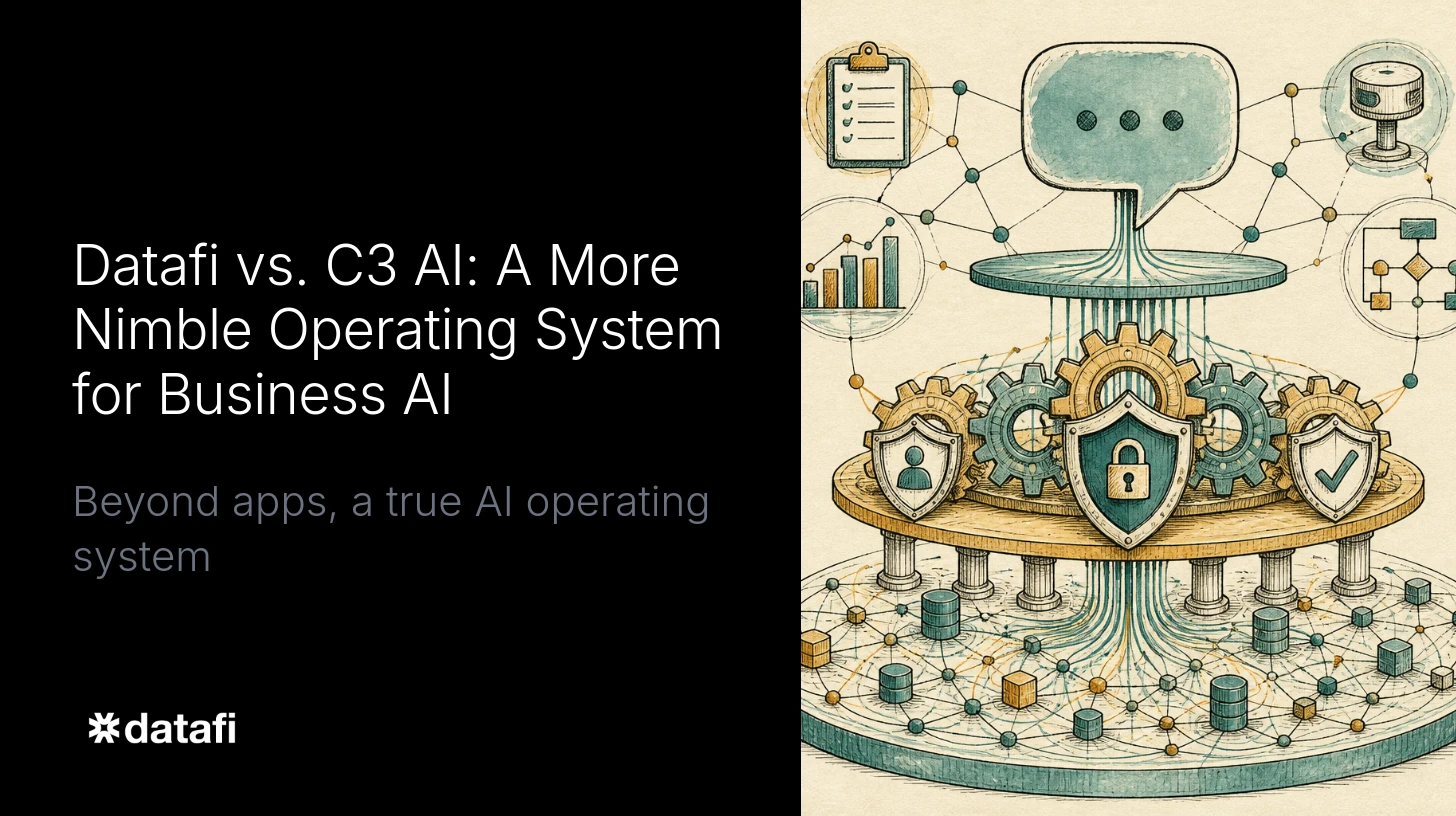
Datafi vs. C3 AI: A More Nimble Operating System for Business AI
Datafi vs. C3.ai: discover why a vertically integrated AI operating system outperforms an application catalog for enterprise-wide transformation.
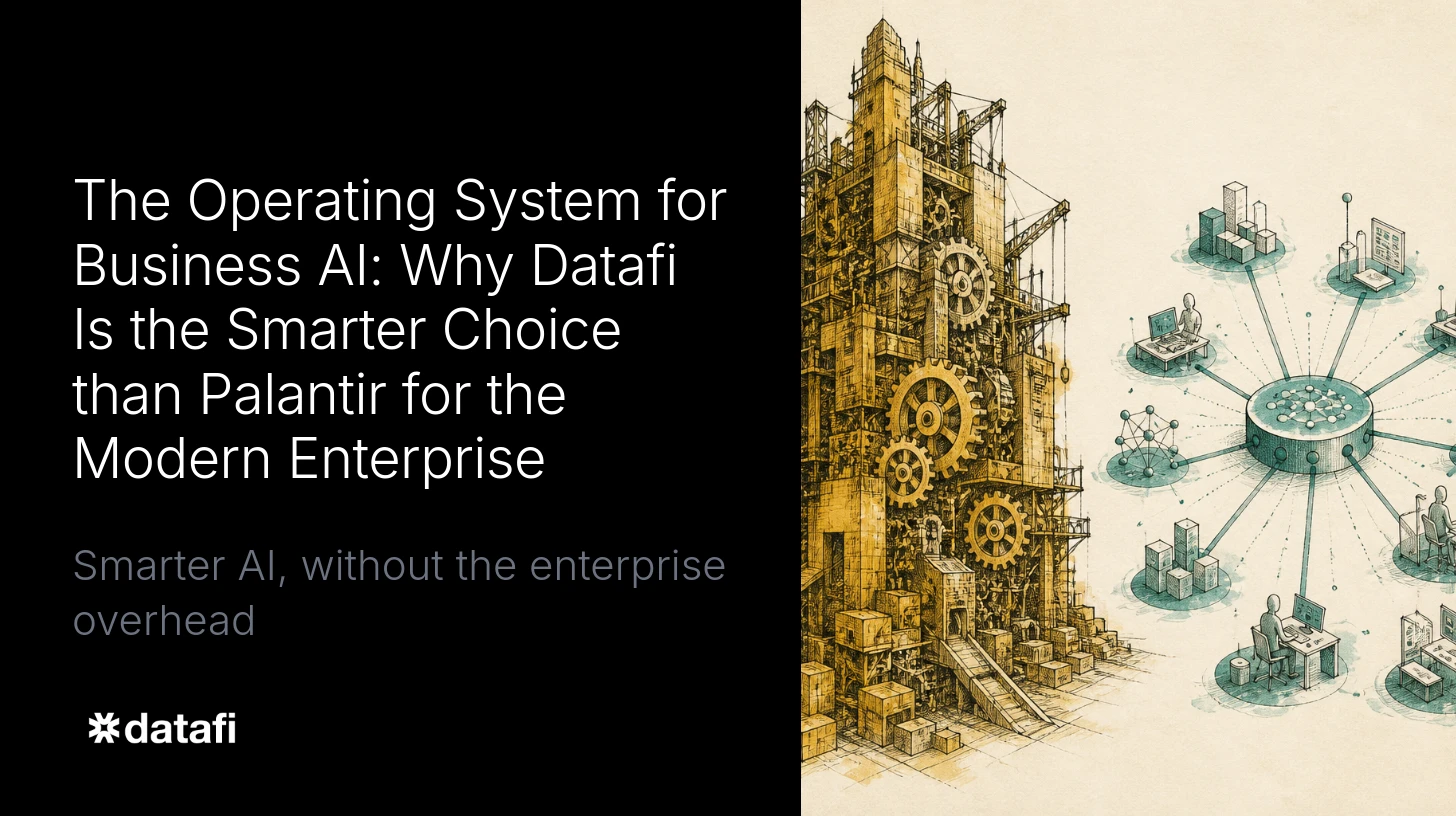
The Operating System for Business AI: Why Datafi Is the Smarter Choice than Palantir for the Modern Enterprise
Discover why Datafi's vertically integrated AI platform is the smarter enterprise choice over Palantir: faster deployment, native governance, and AI that solves problems.
Autonomous AI Agents: A New Class of Cyber Security Risk
Autonomous AI agents introduce new cybersecurity risks enterprises aren't ready for. Learn how to deploy AI agents securely with proper governance and policy controls.
Full AI Observability: The Control Plane for Autonomous Enterprise Agents
Autonomy without observability is recklessness at scale. Here's how full AI observability transforms agents into trustworthy enterprise partners.
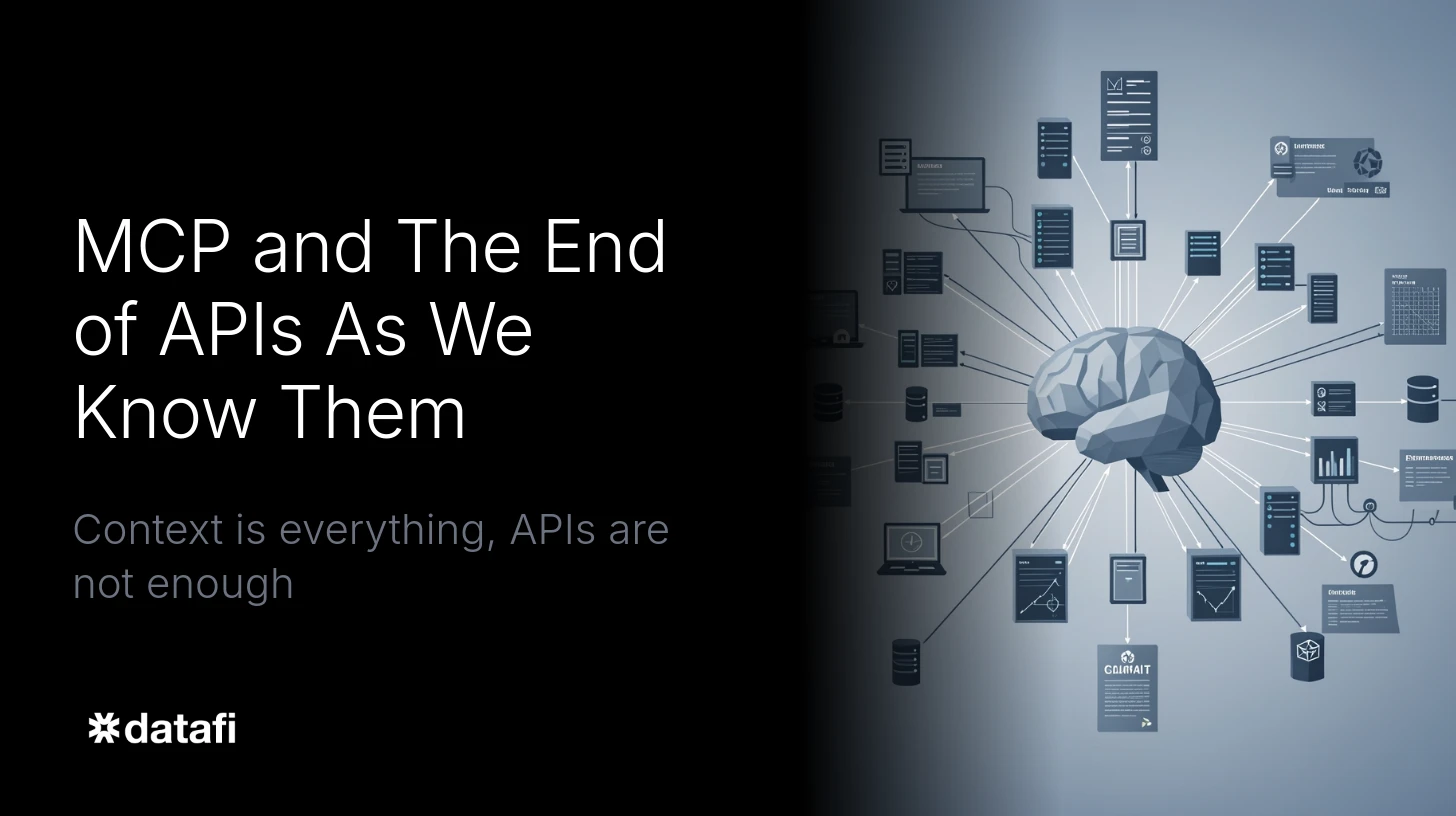
MCP and The End of APIs As We Know Them
MCP is rewriting how AI connects to enterprise systems. Learn why the Model Context Protocol signals the end of APIs as we know them and what it means for your AI strategy.
How Datafi Strengthens Customer Relations
AI, when deeply integrated across an organization's data ecosystem, plays a powerful role in strengthening the connection between an organization and its customers.
How Datafi Enhances Sales Teams
Sales and marketing represent the biggest adopters of generative AI. Here's how Datafi's Knowledge Agents supercharge sales team performance.

How Datafi Empowers HR
HR plays a key role in rolling out AI and stands to be a major beneficiary. Knowledge agents serve as personal AI assistants across the organization.
Oak Harbor Freight's AI-Driven Future with Datafi
How Oak Harbor Freight Lines transformed operations by building 20+ custom business applications with Datafi's no-code platform, saving $350,000 annually.

The Power of Datafi's Data Chat
Datafi's Data Chat creates a digital coworker through conversational AI, transforming how employees interact with enterprise data.

How Datafi Helps Meet the Need for Responsible AI
Discover how Datafi's vertically integrated AI operating system delivers responsible, governed, and scalable enterprise AI across every employee and function.
Beyond BI Dashboards, Datafi is the Future of Business
Discover why BI dashboards are no longer enough and how Datafi's AI operating system transforms enterprise data into autonomous, decision-making power.
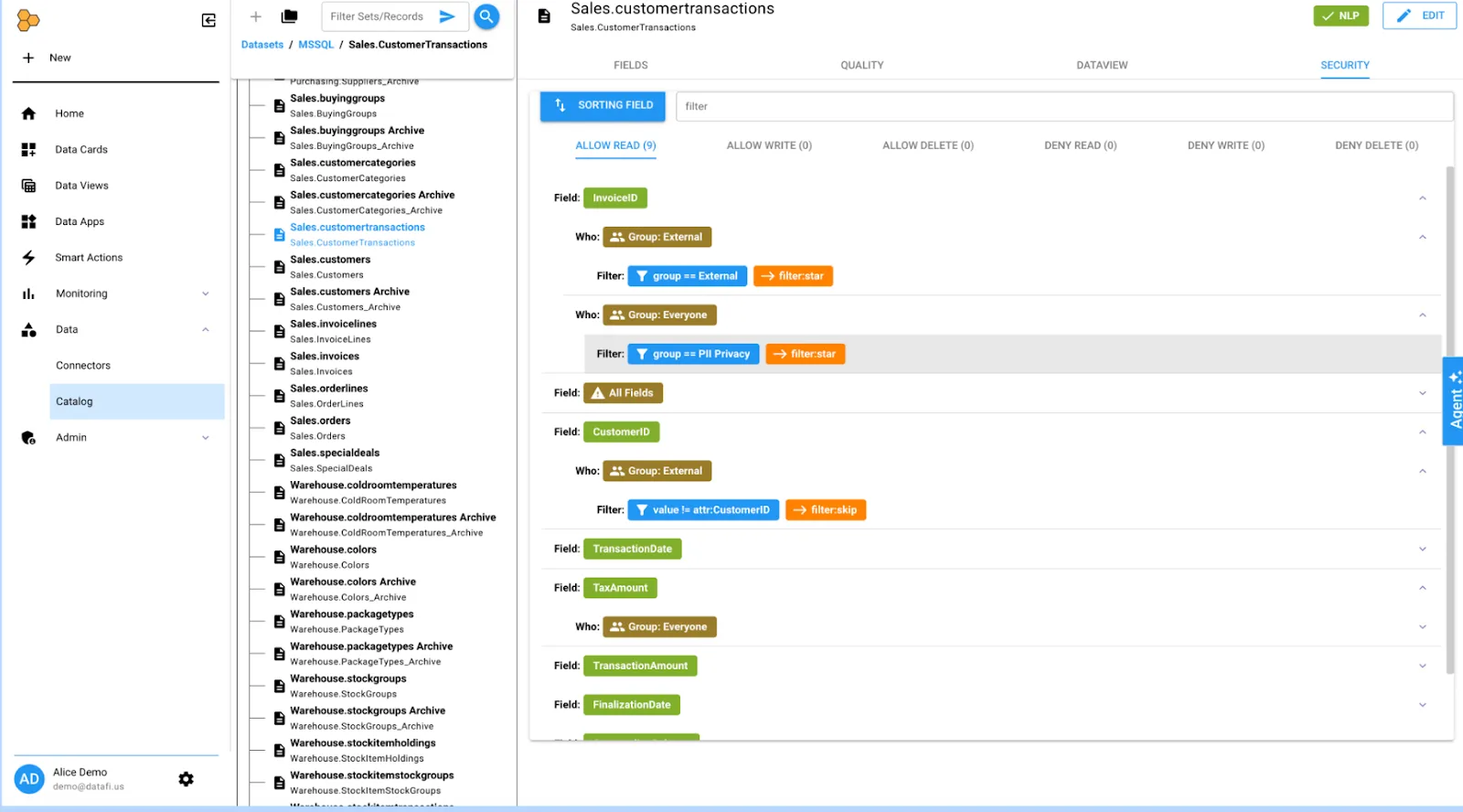
Why Datafi Embraces Attribute-Based Access Control (ABAC) for Security
How Datafi uses Attribute-Based Access Control (ABAC) to provide dynamic, fine-grained security that surpasses traditional role-based access methods.
Unlocking More Value with Datafi's Data Cards: The Building Blocks for Your Data Ecosystem
Discover how Datafi's Data Cards simplify data overload, automate visualization updates, and provide contextual insights as the foundation of a dynamic data ecosystem.
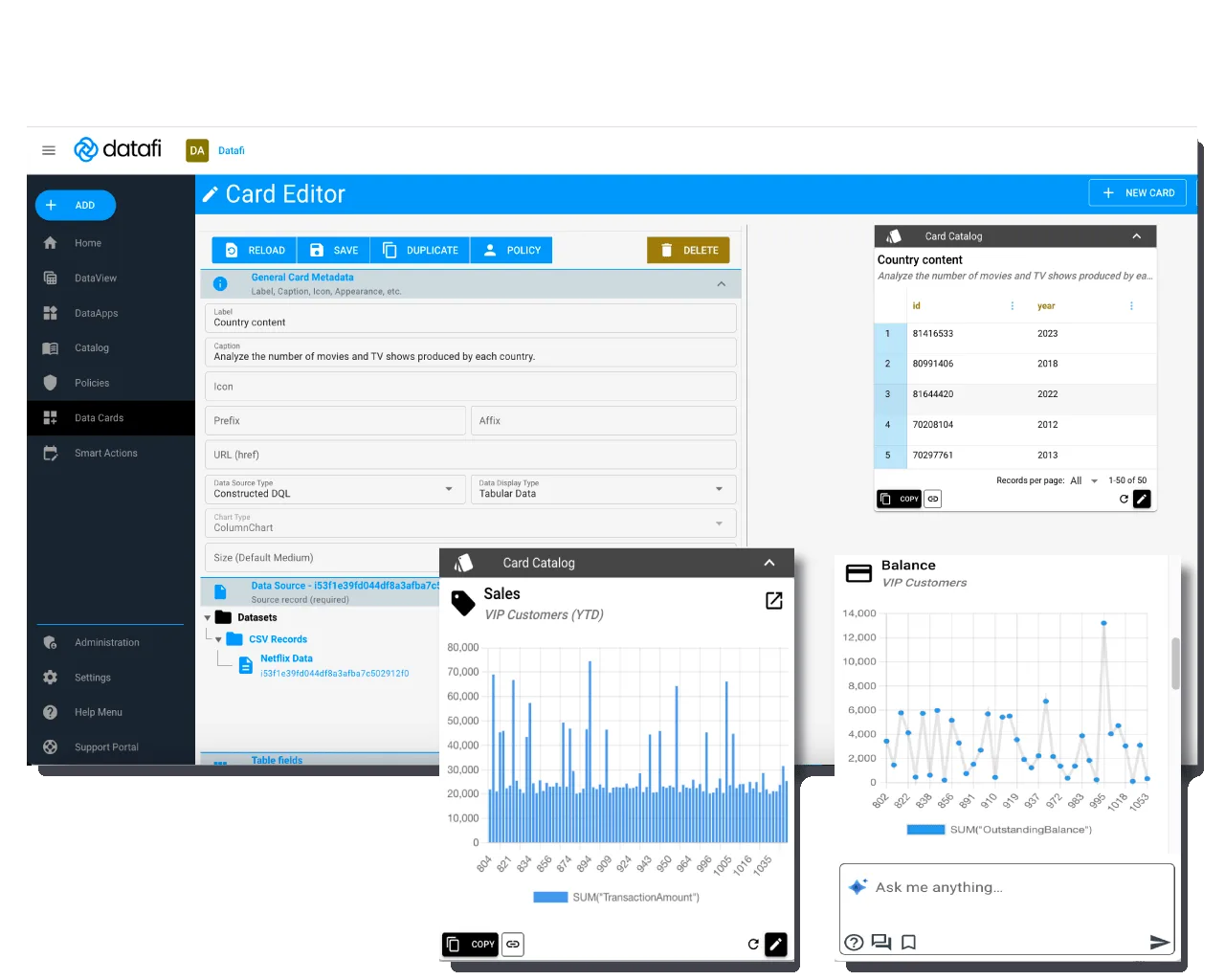
What Are the Major Challenges in Implementing AI and Real-Time Data?
An overview of the eight major obstacles organizations face when deploying AI with real-time data, from data privacy and ethics to scalability and talent shortages.

Datafi's Chrome Extension Revolutionizes Your Way of Leveraging Conversational AI
Datafi's Chrome Extension brings conversational AI directly into your browser, enabling natural language data queries and real-time insights within your everyday business applications.

From Data Chaos to Clarity: Data Management Tools and the Role of Datafi
Organizations struggle with disconnected data sources, quality inconsistencies, and inadequate oversight. Datafi transforms data management by providing a unified, user-friendly platform that brings clarity to complex data environments.

Datafi's Data Catalog: Your Enhanced Secure Solution for Data Governance
Strong data governance is essential for enterprises depending on data for strategic decisions. Datafi's Data Catalog addresses key challenges like data silos, quality issues, and security through a unified, secure platform.
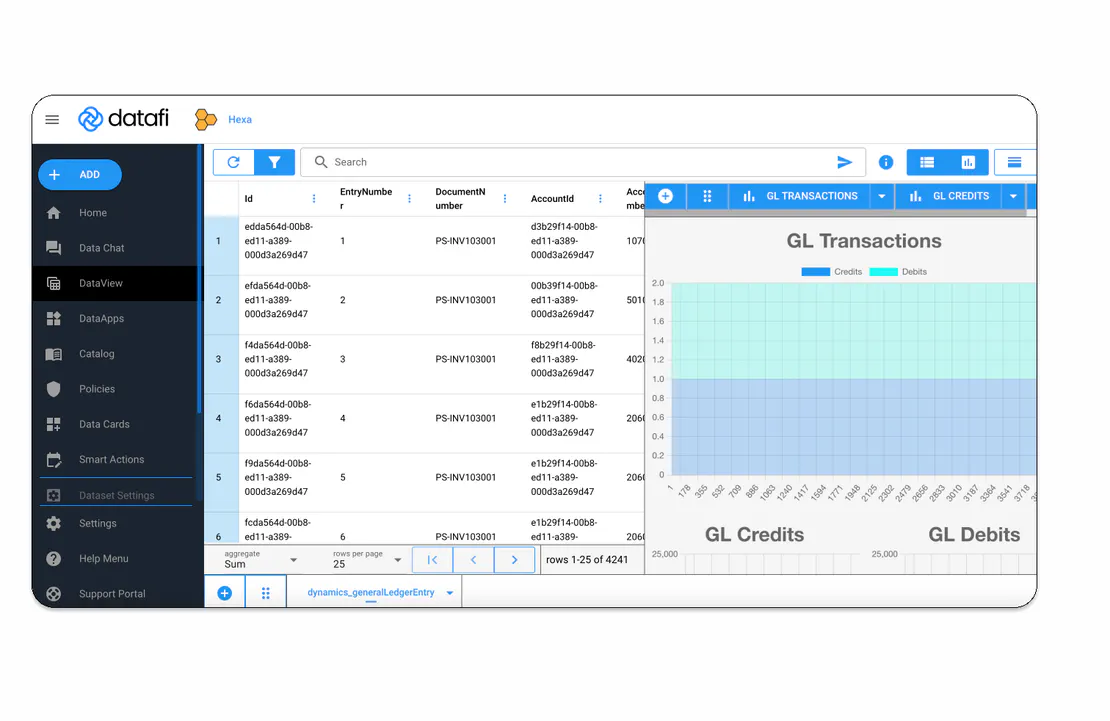
The Importance of Having a Data Catalog
Data catalogs are transformative infrastructure that support compliance, governance, collaboration, and an inclusive data culture across the organization.
Transformative Data Application Development with Datafi's Data App
How Datafi's no-code Data App feature democratizes application development, enabling non-technical users to build customized data applications without coding expertise.
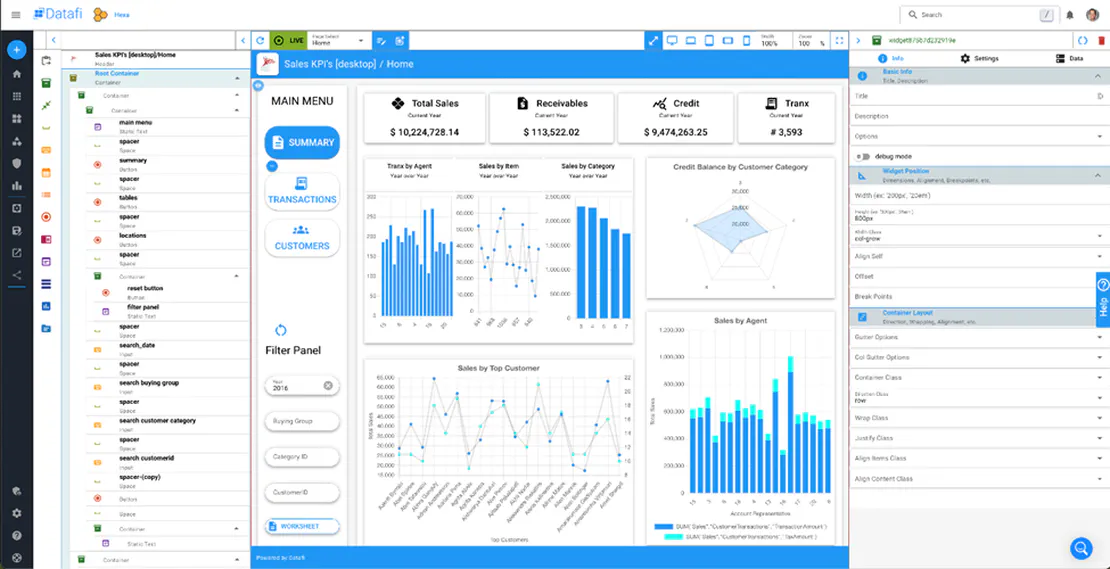
Low Code vs No Code: Which is Right for Your Business?
A comparison of low-code and no-code platforms to help businesses choose the right approach for faster, simpler, and more economical software development.
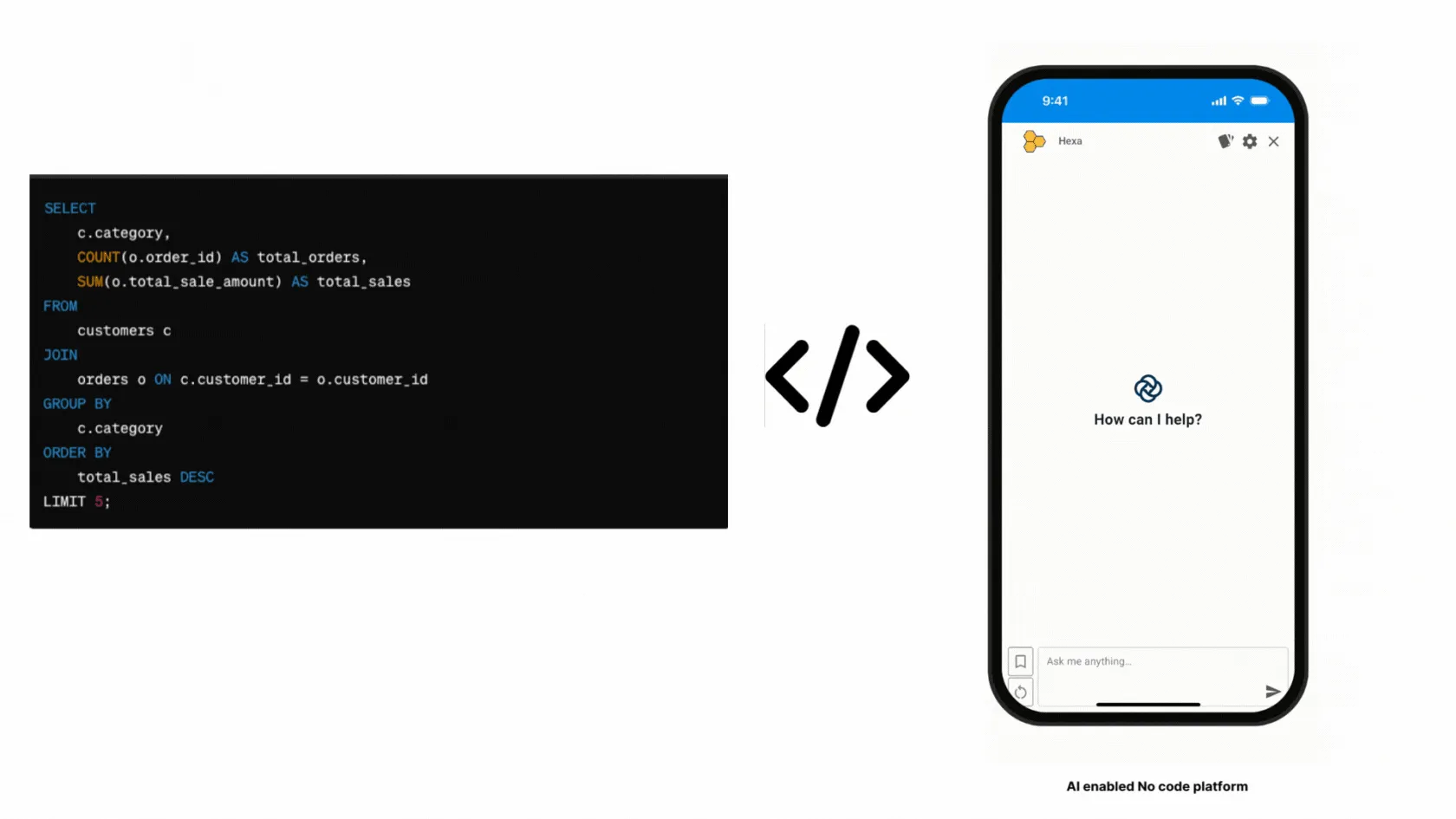
Datafi's DataChat: Increasing the Data Productivity
Data silos, low data literacy, and limited adoption prevent organizations from maximizing their data assets. Datafi's DataChat uses natural language processing to unify data access and democratize analytics for every employee.
Datafi's DataView: Your Top Guide to Efficient Data Management and Querying
Learn how Datafi's DataView feature simplifies data management through virtual tables that filter, secure, and optimize access to your underlying datasets.