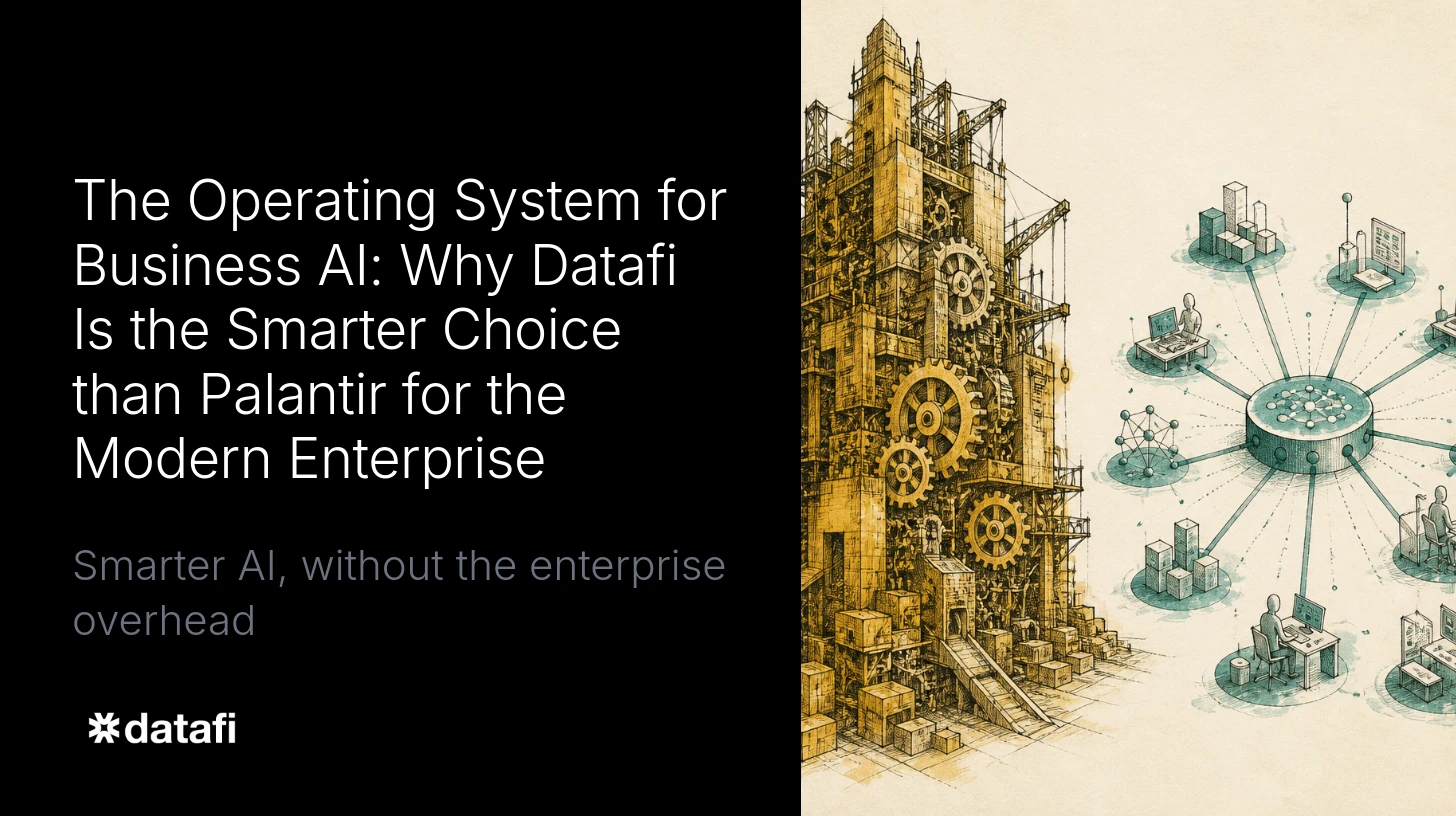



Retailers do not need more AI pilots. They need an operating system for business AI that can move from experimentation to production, support enterprise workloads at scale, and create measurable value across the business. Retail leaders face margin volatility, omnichannel complexity, supply chain disruption, rising customer expectations, and constant pressure to execute faster. Many organizations have already tested AI through Copilot-style pilots or narrow function chat tools. Those experiments can improve isolated tasks, but they rarely connect AI to the full business context, the complete data ecosystem, and the workflows that drive performance. datafi’s operating system for business AI is built for that next stage, giving retailers a unified platform to turn data into decisions and decisions into action.
Retailers need AI grounded in their complete data ecosystem and business context, not isolated pilots. A unified operating system for business AI is what closes the gap between experimentation and enterprise-wide execution.
The core advantage is integration. Retail data lives everywhere: merchandising platforms, ecommerce systems, POS, ERP, inventory, pricing, customer data, supply chain applications, and spreadsheets in between. When those systems stay fragmented, AI stays fragmented too. One team gets a chatbot, another gets a dashboard, and another gets an automation script, but nobody gets a shared operating model. datafi changes that by creating a unified data experience across the enterprise. Employees across merchandising, stores, ecommerce, supply chain, finance, and operations can work from the same governed context, with AI grounded in the business’s actual data, policies, and processes. That matters for organizations of any size, from regional chains to global brands, including complex retail segments such as automotive and mobility.
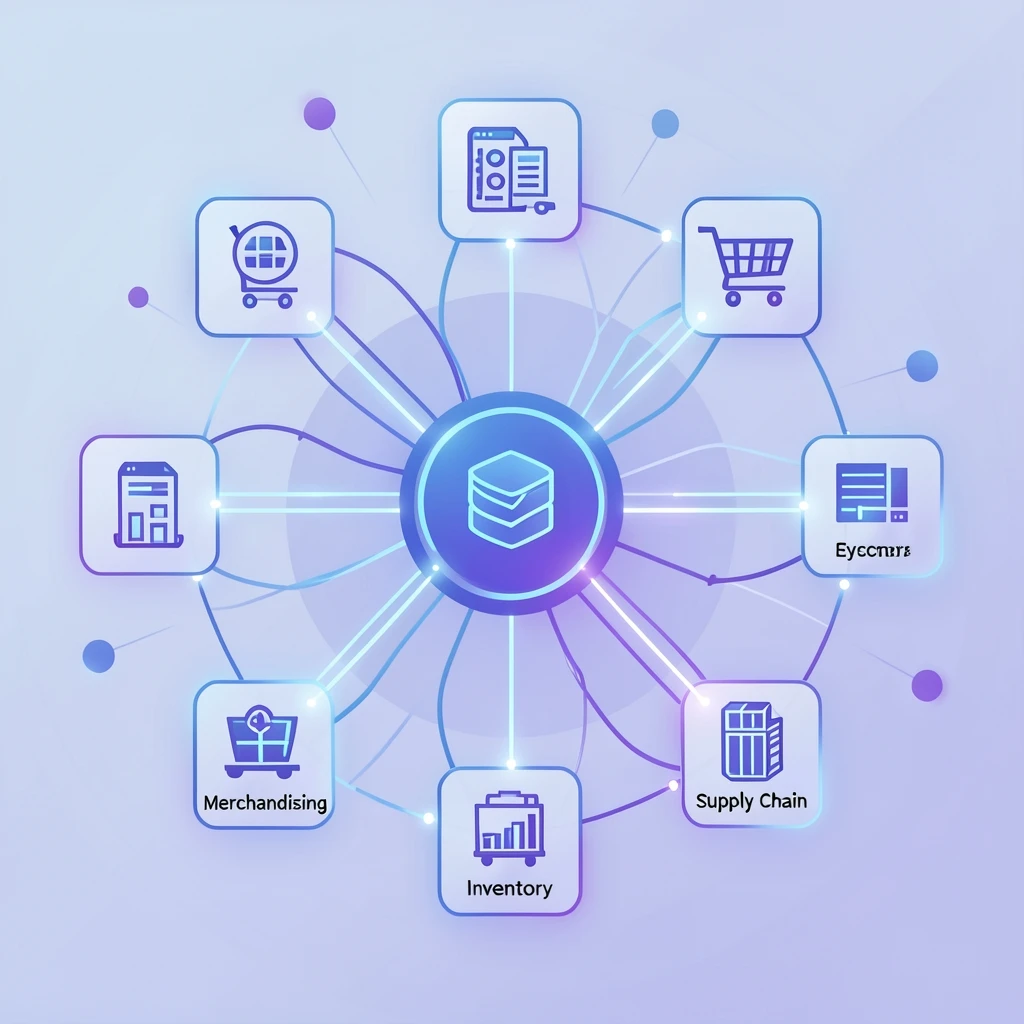
In retail, the real value of AI is not just better reporting. It is faster margin decisions. A merchant deciding whether to adjust a promotion, a planner rebalancing receipts, a store operator responding to local demand, or a supply chain leader managing inventory risk does not need one more static report. They need AI that can reason across sales trends, inventory positions, vendor constraints, fulfillment costs, markdown performance, customer behavior, and store execution, then recommend or automate the next best action. datafi enables AI agents and workflows that unify visibility across merchandising, stores, ecommerce, and supply chain so teams can move from analysis to execution with far less friction. The result is faster response to demand changes, better availability, less waste, stronger margins, and better coordination across functions.
This is where datafi stands apart from generic copilots and single purpose chat tools. Most chat based AI products are designed to answer questions, summarize content, or provide lightweight assistance inside a narrow surface area. They can be useful, but they are not built to carry critical thinking, workflow automation, and analytical workloads across the enterprise. At datafi, we see customers pushing AI into more consequential roles, where the system must evaluate options, apply business logic, understand policy constraints, and act inside real processes. That requires more than a model and a prompt. It requires a vertically integrated data and AI stack with access to the data ecosystem, policy enforcement, control layers, orchestration, and a chat experience designed for nontechnical users.
For enterprise retail, scale and governance are not optional. Sensitive data moves through pricing, loyalty, customer, vendor, employee, and operational systems every day. AI adoption slows quickly when business users cannot trust how data is accessed, what context is used, who can see what, or whether actions are governed. datafi is designed to solve that trust gap. Governed AI for sensitive retail data means retailers can extend AI more broadly without sacrificing control. Teams can apply policies, permissions, and oversight within a single environment rather than stitching together disconnected tools with inconsistent security models. That is essential for compliance, risk management, and adoption.
The platform also accelerates deployment. Retailers often lose time trying to assemble an AI stack from separate vendors, each solving only part of the problem. One tool connects data, another hosts models, another handles governance, another supports workflow automation, and another delivers a user interface. That fragmented architecture creates long implementation cycles, duplicated effort, and high dependence on technical specialists for every new use case. datafi takes a different approach. By vertically integrating data access, AI capabilities, workflow orchestration, governance, and a business-friendly interface, the platform reduces the time between ambition and impact. Instead of standing up disconnected experiments, retailers can deploy a consistent foundation that supports multiple use cases across multiple functions, with faster time to value and broader business adoption.

That broader adoption is a decisive advantage. Most retail employees are not data scientists, and they should not have to be. Store managers, merchants, planners, operations leaders, ecommerce teams, and finance partners need an intuitive way to interact with enterprise data and AI in the flow of work. datafi’s chat UI is designed for nontechnical users, making advanced capabilities accessible without forcing the business to learn specialist tools or complex query languages. This is how AI becomes a workflow layer for every employee rather than a niche capability reserved for a few experts. The same platform can support natural language exploration, guided analysis, autonomous agents, and end-to-end workflows, all grounded in a shared enterprise context.
We believe large language models will only deliver transformational value in retail when they know the full context of the business, can access the complete data ecosystem, and can function in increasingly autonomous roles to learn and solve hard business problems. That is essential for building the contextual layer behind complex agents and workflows. Without that layer, AI remains generic and disconnected from retail execution. With it, AI can understand how decisions in one area affect performance in another, whether that is assortment, pricing, labor, fulfillment, or vendor management. It can reason across tradeoffs, surface the right actions, and support continuous improvement at enterprise scale.
That perspective comes from deep experience working with data and AI to drive real outcomes, not just generate outputs. At datafi, we believe the future belongs to platforms that action data, govern intelligence, and make AI usable across broad roles in the enterprise. For retailers, that means a system of record for data and AI that unifies information, workflows, policies, and agents in one operating environment. It means faster deployment, broader adoption, stronger governance, and better decisions across merchandising, stores, ecommerce, and supply chain. Most of all, it means using AI to solve business problems that matter, with the scale, control, and contextual intelligence required for enterprise retail. That is the promise of datafi’s operating system for business AI.