


Part 1 of 3: The Business AI Operating System for Professional Sports
There is a moment every analytics leader in professional sports knows well. The data is there. The model is sound. The insight is genuine. And then it lands on the wrong desk, gets lost in translation, or arrives too late to matter. The intelligence existed. The decision never happened.
This is not a data problem. It is an architecture problem — and it is one that the Datafi Business AI Operating System was built to solve.
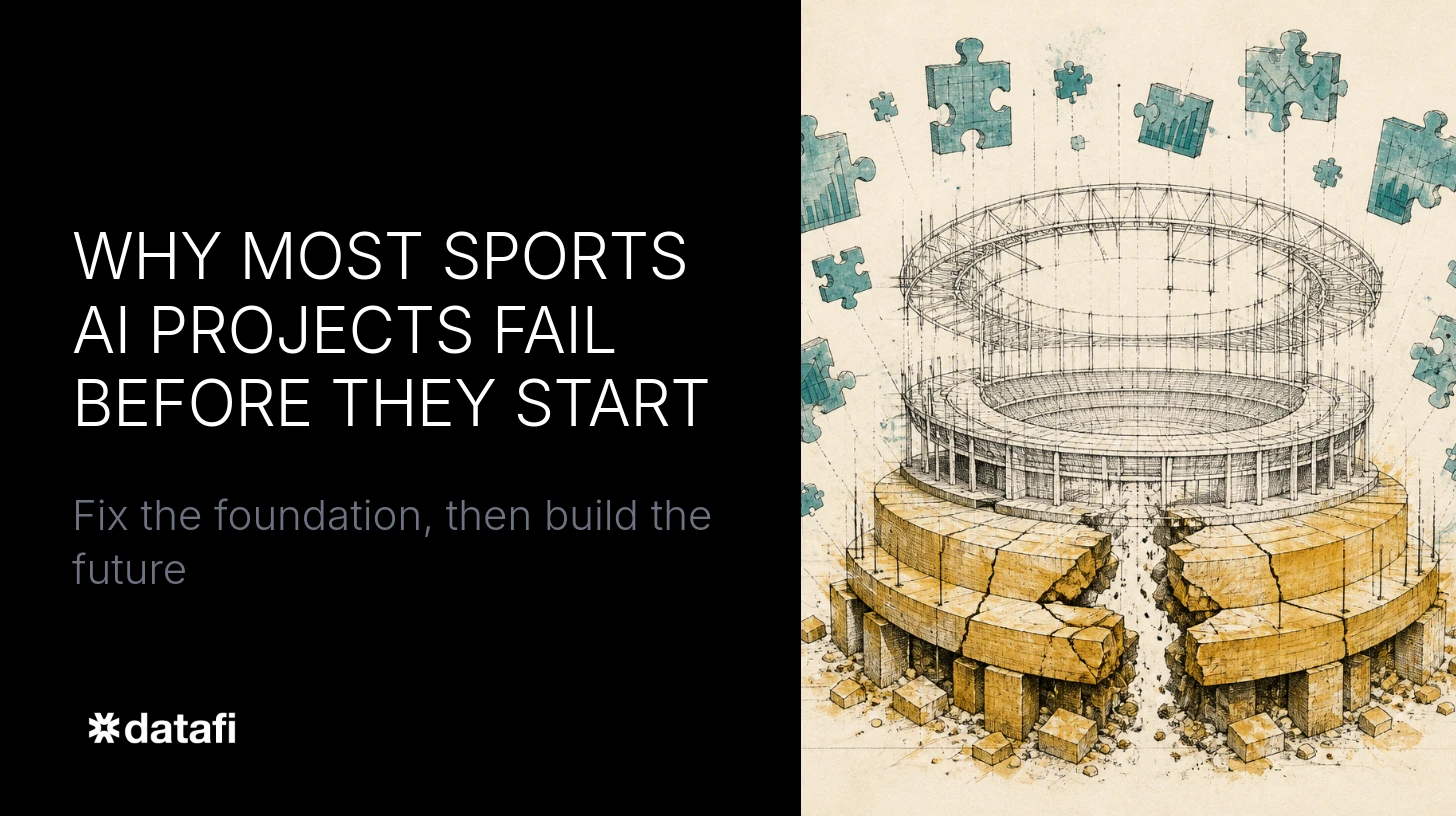
The gap between data and decision in professional sports is not a data quality problem; it is an architecture problem. The organizations that will pull ahead are those that can deliver intelligence to every decision maker, at every level, in real time.
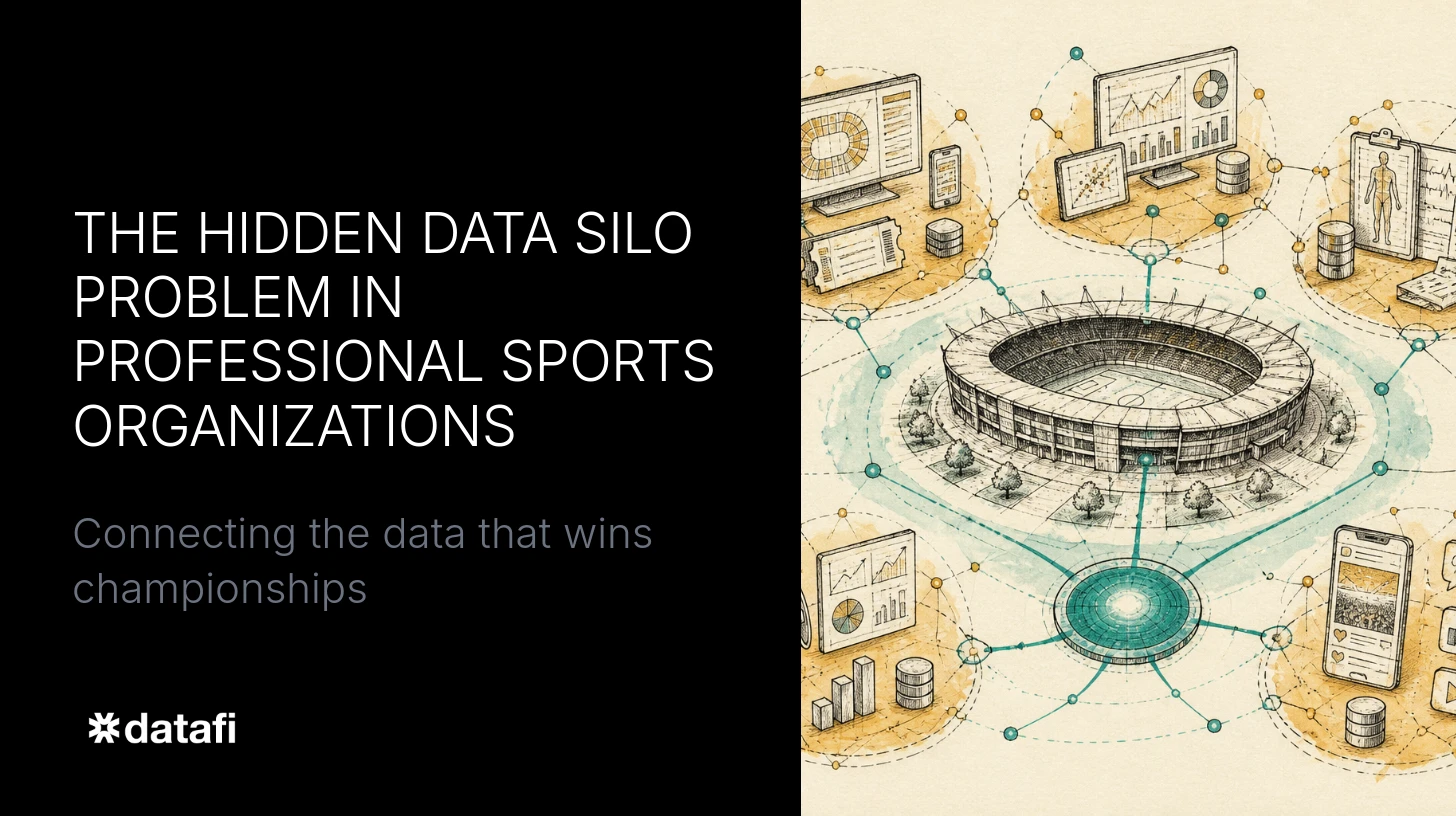
Professional sports organizations have become some of the most data-rich enterprises on the planet. Wearables, tracking systems, ticketing platforms, broadcast analytics, sponsorship dashboards, social media sentiment engines — the sensors never stop. And yet, despite this abundance, the most important decisions in sports organizations are still made by people who cannot access the right information at the right moment in a form they can actually use.
The gap between data and decision is not shrinking. In most organizations, it is widening.
The Insight That Never Becomes A Decision
Consider the analytics setup of a mid-market Major League Baseball franchise — a composite portrait drawn from what has become a common pattern across professional sports. The team employs a small but sharp analytics staff. They produce excellent work: win probability models, pitch sequencing recommendations, roster construction scenarios, injury risk assessments. The models are sophisticated. The visualizations are clean.
But when that work needs to reach the manager in the dugout, the pitching coach in the bullpen, or the general manager in a contract negotiation, something breaks down. The insight lives in a dashboard that only the analytics team knows how to navigate. The question being asked in real time is not the question the model was built to answer. The manager — a former player with decades of instinct and a head full of in-game variables — has no practical way to query the system on his own terms.
All the great ideas and information in the world mean nothing if the decision maker cannot digest them and put them into action. You can just throw it in the trash.
This is the problem Datafi was built to address. Not the quality of the models. Not the volume of the data. The distance between the intelligence and the person who needs to act on it.
AI That Solves Problems, Not Just Answers Questions
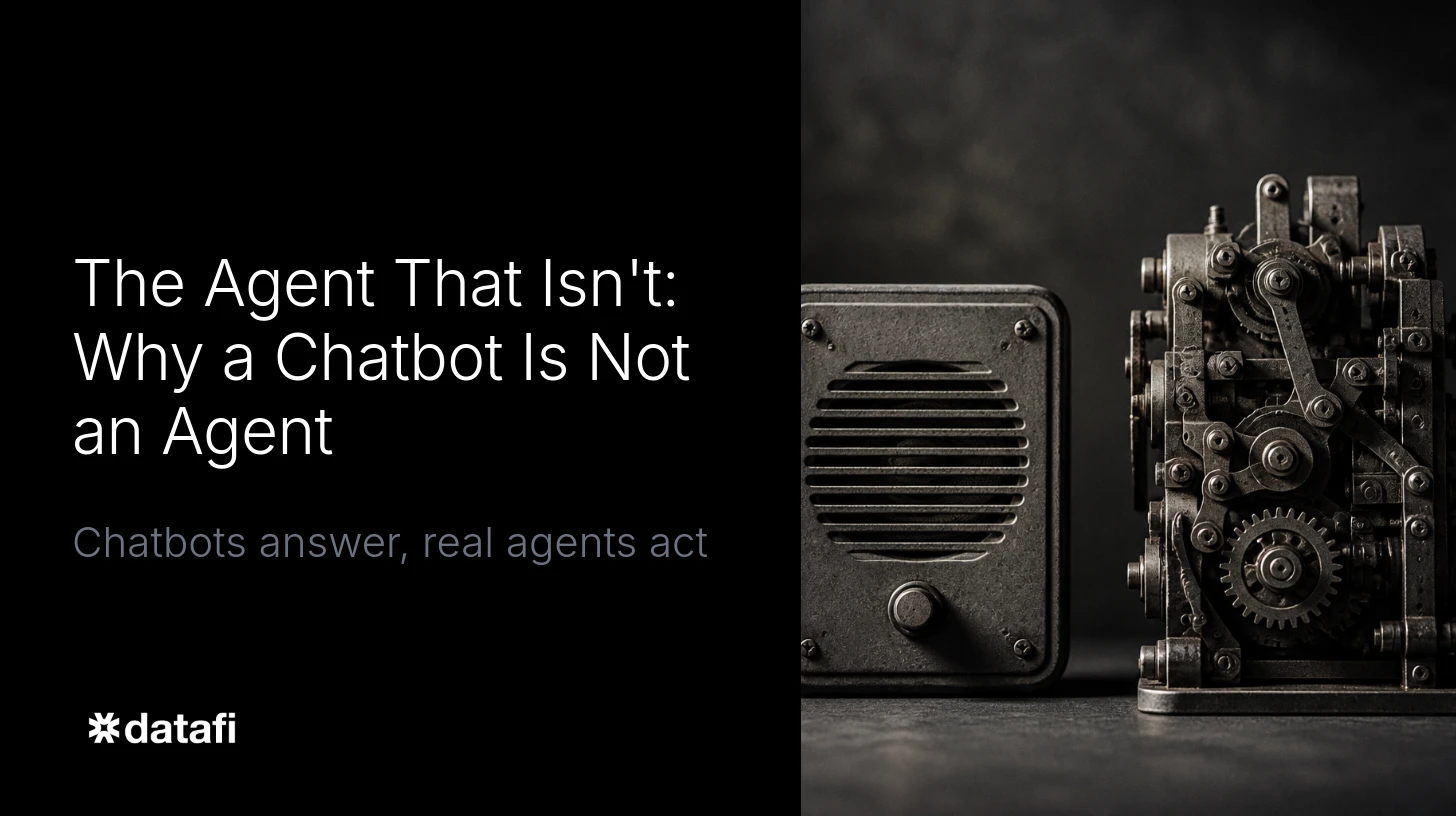
Most enterprise AI tools — including the point solutions that have proliferated across sports organizations — are built to answer questions. You query them. They respond. The burden of knowing what to ask, how to ask it, and what to do with the answer falls entirely on the human.
Datafi operates from a different premise. A Business AI Operating System does not wait to be queried. It maintains a living understanding of the organization — its data, its structure, its roles, its context — and delivers intelligence to the right person at the right moment, in the form they need it, enforced by the governance controls that protect the organization.
This distinction matters enormously in a professional sports context, where the pace of decision making is relentless and the cost of a bad call — whether on the field, in the front office, or in the business operations suite — is measured in wins, revenue, and competitive standing.
For the analytics leader, Datafi eliminates the bottleneck of being the sole interpreter between raw data and human judgment. For the manager, it means having a conversation with the organization’s intelligence rather than submitting a ticket to the data team. For the general manager, it means contract and roster analysis that draws on the full context of the organization’s data ecosystem — not just the slice that happened to be pre-built into the reporting layer.
For the vice president of business operations, it means fan engagement trends, sponsorship performance, and venue revenue data that are accessible in plain language — without a data science degree and without waiting for the weekly report.
The Full Stack Matters
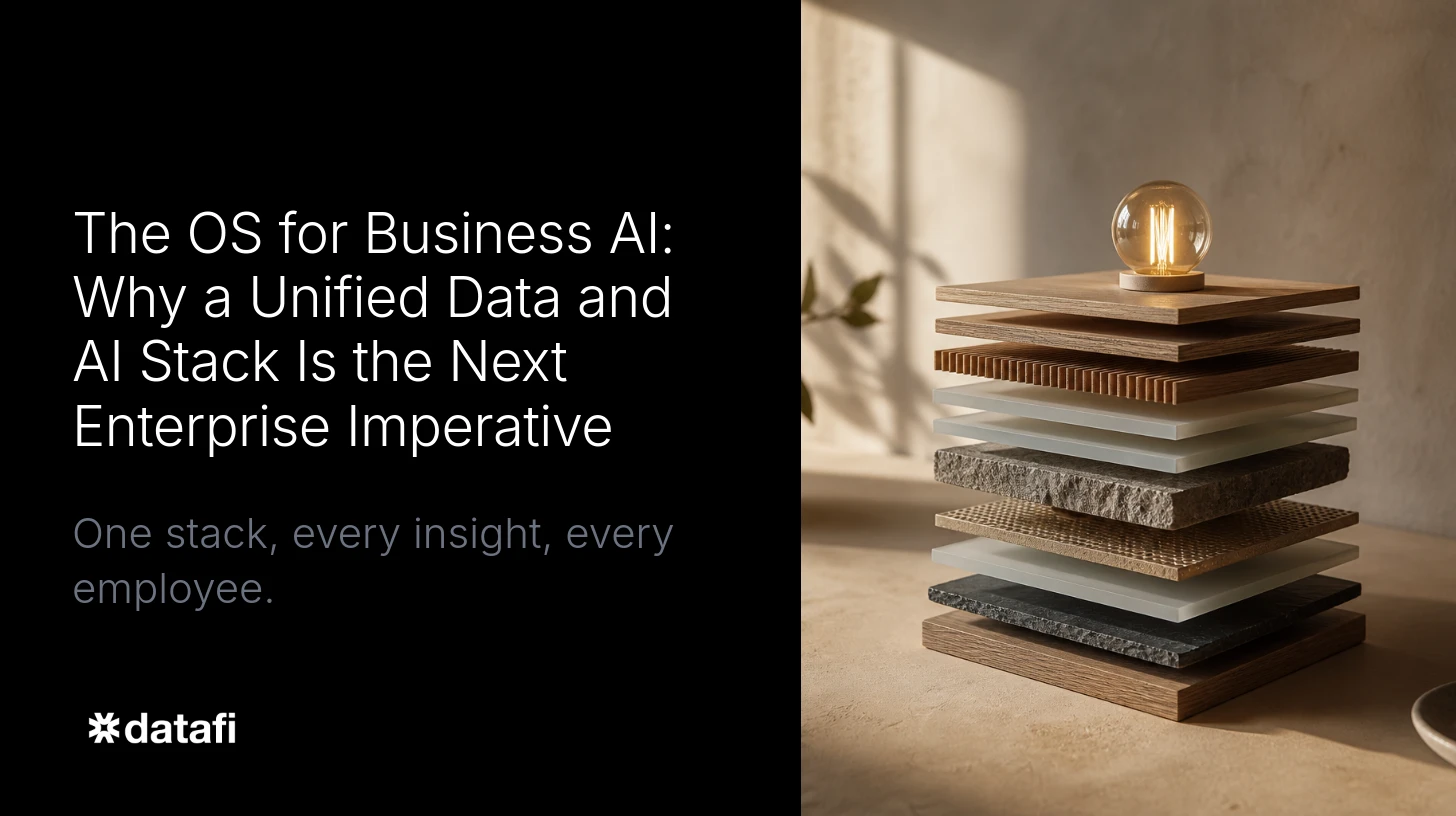
What makes this possible is not a single AI model or a smarter chatbot. It is a vertically integrated architecture that connects every layer of the organization’s data ecosystem into a unified, governed, context-aware intelligence platform.
Datafi’s architecture spans the data layer — connecting to every source the organization uses, from legacy ticketing systems to modern cloud data warehouses — through a governance and policy layer that enforces access controls, data quality standards, and audit trails, all the way to the AI agent layer that every user in the organization can interact with through a natural language interface.
This is not a replacement for the analytics team. It is a force multiplier. The work the analytics staff does — the models, the research, the strategic thinking — gets deployed across the organization rather than staying locked inside a dashboard that ten people know how to use.
In a sports organization, that means the coaching staff, the front office, the scouting department, the marketing team, the sponsorship sales team, and the venue operations group can all access the organization’s intelligence in ways that are meaningful to them, appropriate to their role, and governed by the policies the organization has set.
The Democratization Of Organizational Intelligence
One of the most durable findings in sports analytics is that the teams who win consistently are not necessarily the teams with the most data. They are the teams where data-driven thinking has permeated every level of the organization — where the culture of evidence-based decision making extends from the GM’s office to the dugout to the scouting combine.
Building that culture requires more than hiring analysts. It requires an infrastructure that makes intelligence accessible to everyone, not just the people who can write SQL or navigate a BI dashboard.
Datafi’s Personalized AI Agent is designed precisely for this reality. Every employee in the organization — from entry-level to executive-level — gets their own AI agent that understands their role, their context, and their data access permissions. The agent becomes smarter with each use, learning the patterns of the organization and the needs of the individual, while eliminating the hallucinations and governance failures that make most enterprise AI deployments unsafe to rely on.
This is what it means to move from AI that answers questions to AI that solves problems. The question is not what the data says. The question is: given everything the organization knows, what should we do? That is a different kind of intelligence — and it requires a different kind of platform.
What This Looks Like In Practice
For a professional sports franchise deploying Datafi, the change is not a single dramatic moment. It is a quiet but compounding shift in how the organization operates. The pitching coach who used to wait until Tuesday for the weekly analytics briefing now has a conversation with the team’s intelligence before every start. The VP of ticket sales who used to run a report request through IT now asks the system directly: which fan segments are showing early churn signals, and what offers have historically re-engaged them?
The general manager preparing for a roster decision does not just pull a player’s statistics. She asks the system to weigh the full context — contract value, injury history, defensive metrics, comparable players, and the team’s specific strategic needs — and surfaces the scenarios she needs to evaluate.
None of these users are data scientists. None of them needed to become data scientists. They simply needed a platform that could translate the organization’s full data ecosystem into intelligence that matches the way they work and the decisions they actually face.
That is the promise of the Datafi Business AI Operating System — not better dashboards, but a fundamentally different relationship between every person in the organization and the information they need to do their best work.
Conclusion
Professional sports organizations sit at an inflection point. The data infrastructure that was once a competitive advantage for the most sophisticated franchises is now table stakes. The next competitive advantage belongs to the organizations that can turn that data into decisions — not just for the analytics team, but for every decision maker, at every level, in real time.
Datafi was built for that moment. And the franchises that understand the difference between AI that answers questions and AI that solves problems will be the ones who pull ahead.
Next in this series: Part 2 — The Hidden Data Silo Problem in Professional Sports Organizations
Learn more at datafi.co