Explore
78 stories
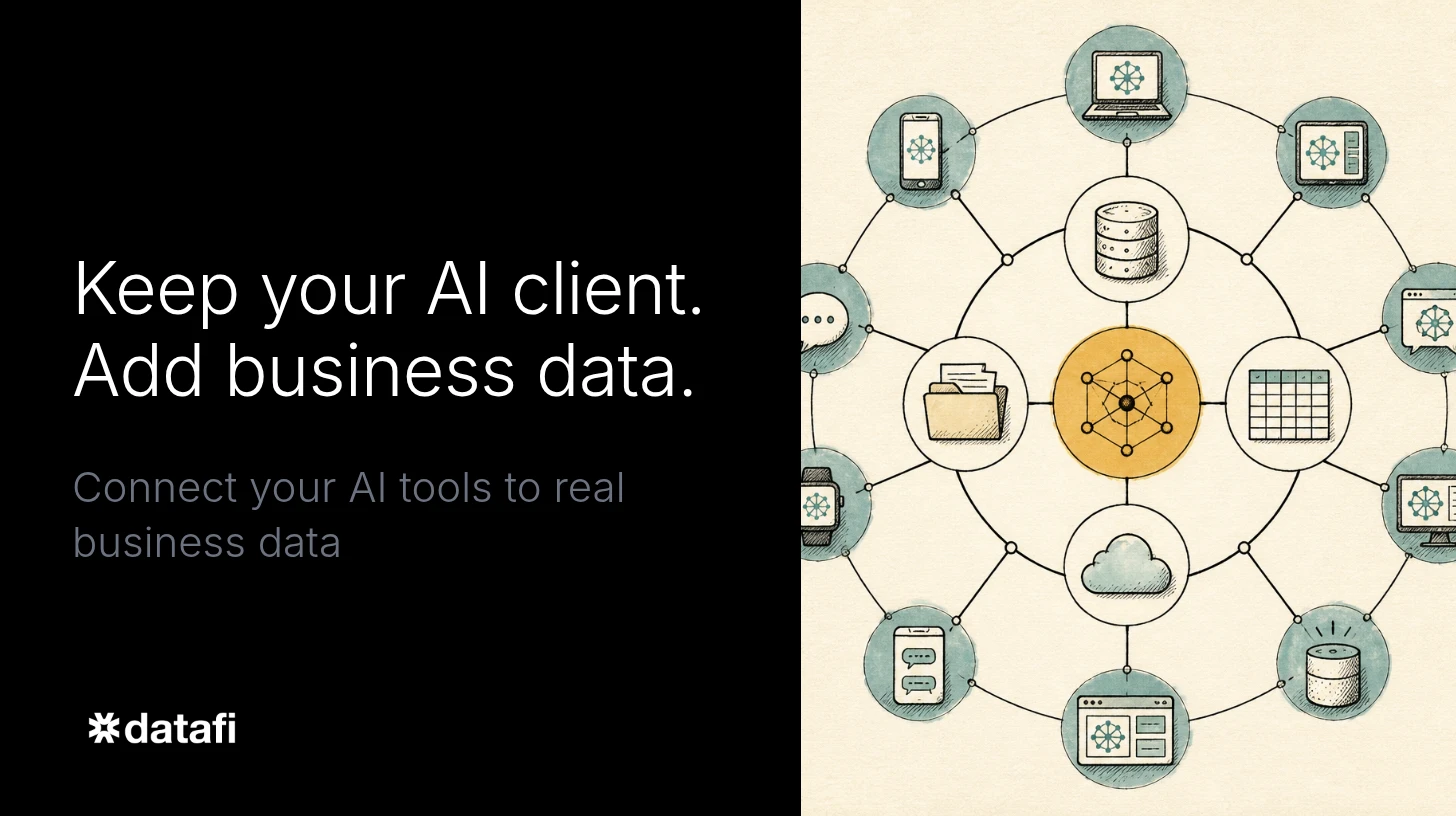
Keep the AI tools your team already uses. Datafi connects Copilot, ChatGPT, and Claude to your business data safely, with governance built in.
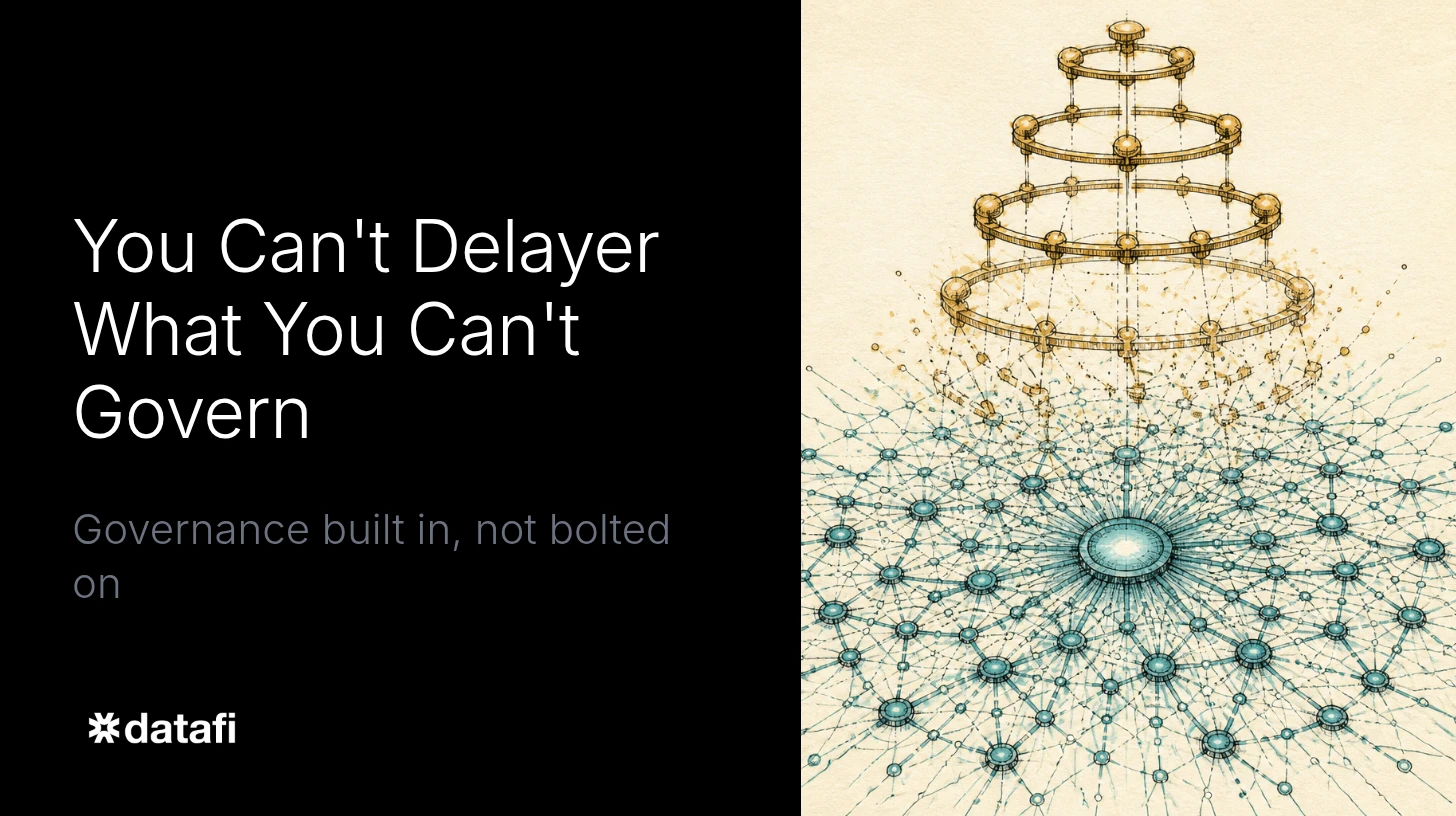
McKinsey says the AI operating system will flatten organizations and replace calendar-driven management. That only works when governance is built into the system as infrastructure, not added as a layer of approvals.
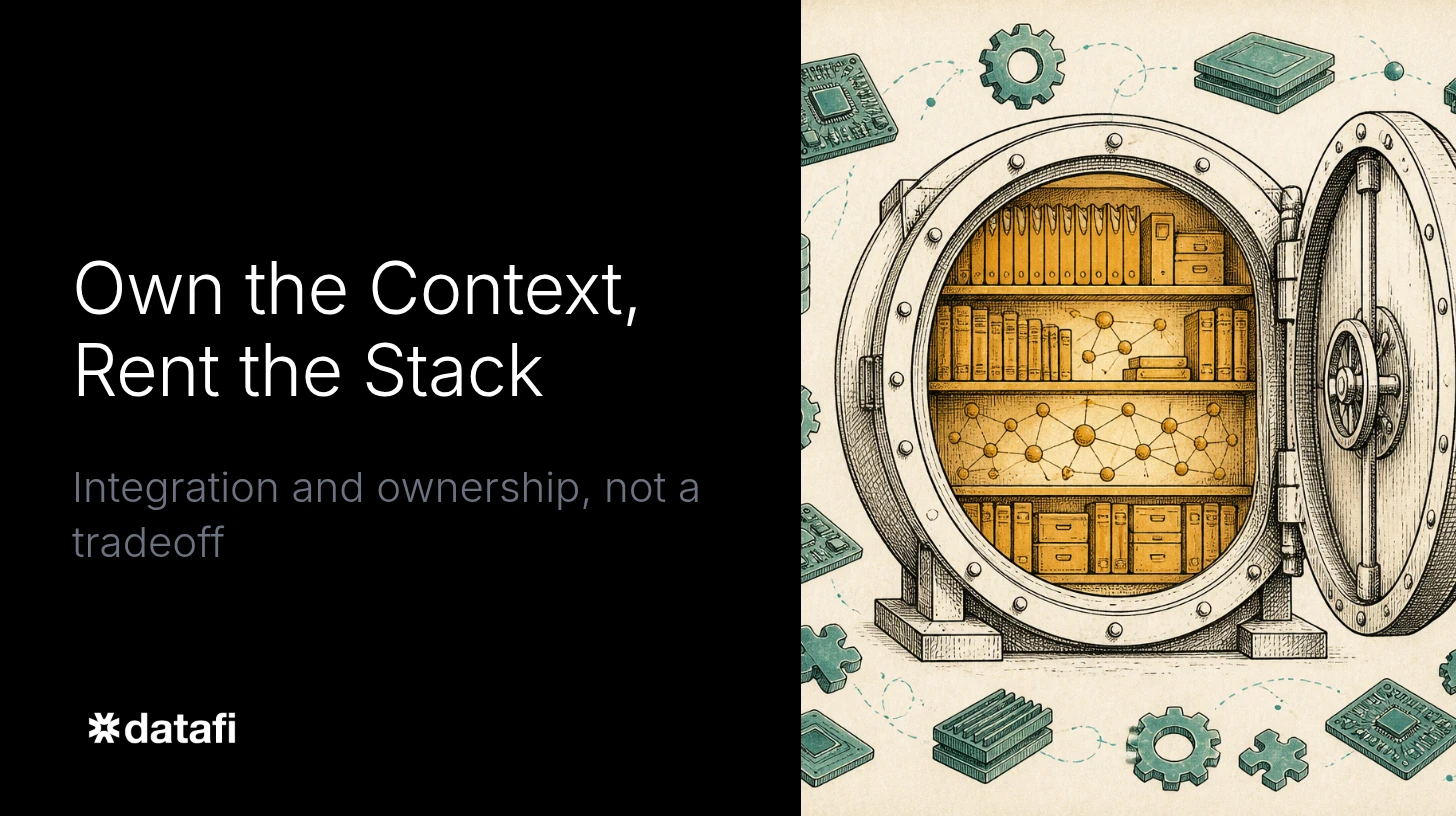
McKinsey's rule for the AI operating system is to own the context and rent the technology. For mid-enterprise companies, that means integration and ownership must be separated, not traded against each other.
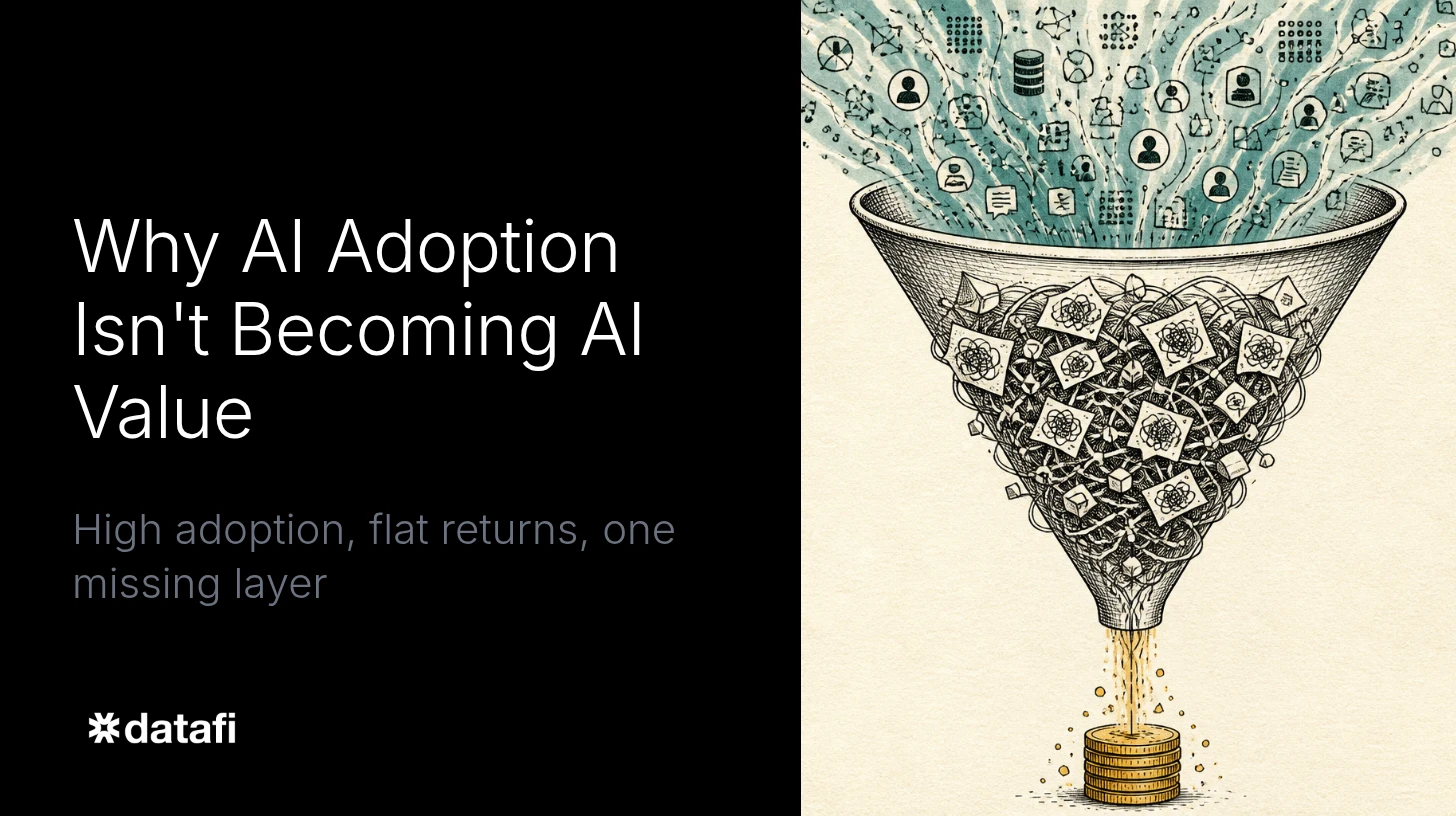
Forty percent of large companies have scaled AI agents, but only 6 percent see meaningful EBIT impact. The gap is not about models or adoption. It is about missing business context.
Chatbots answer. Agents act. Learn why the enterprise AI market conflates the two, what it costs, and what a real agentic AI platform requires.
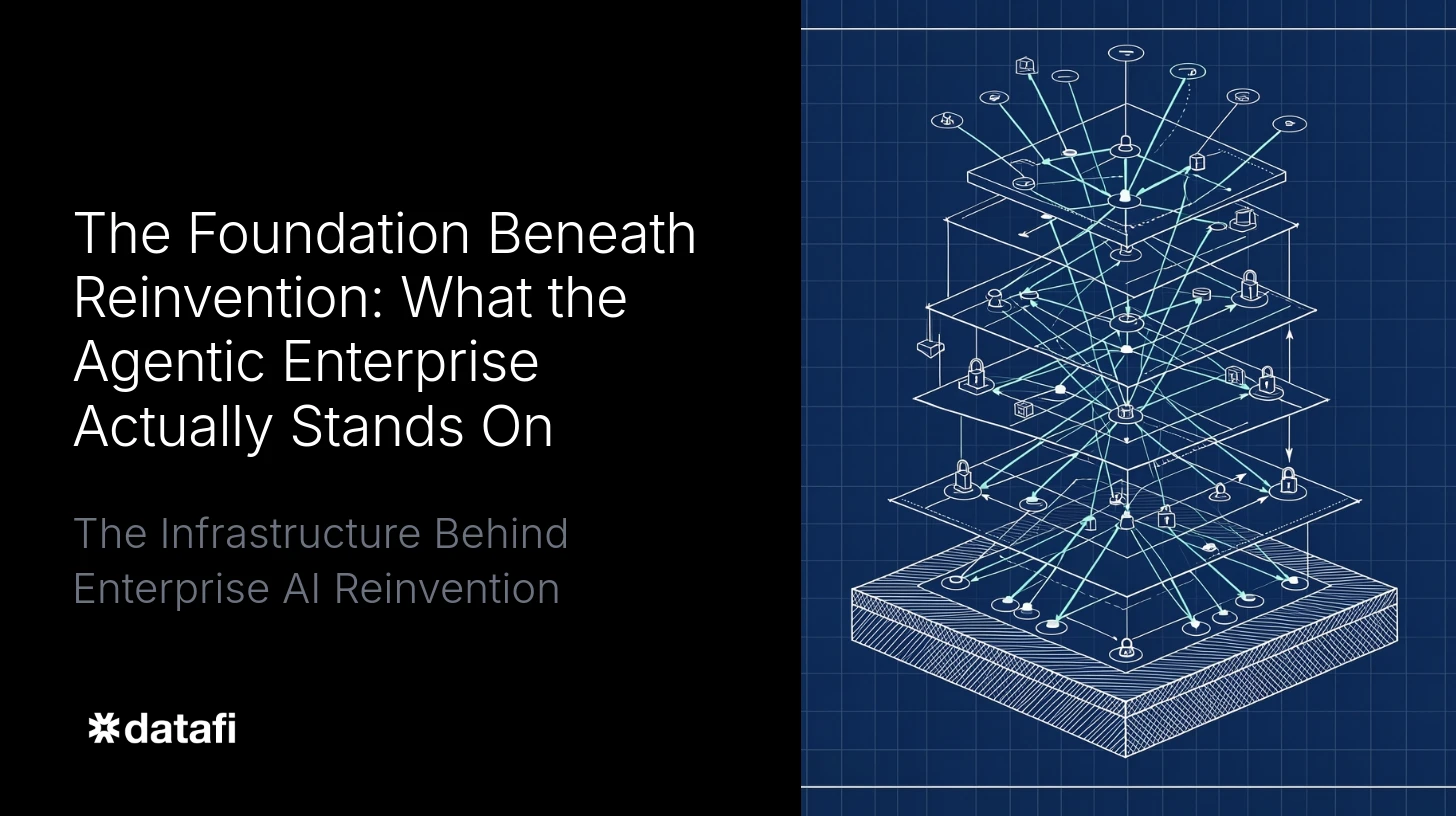
Only 11% of organizations reach AI reinvention. Discover the infrastructure foundation, governance, and culture that separate leaders from the rest.
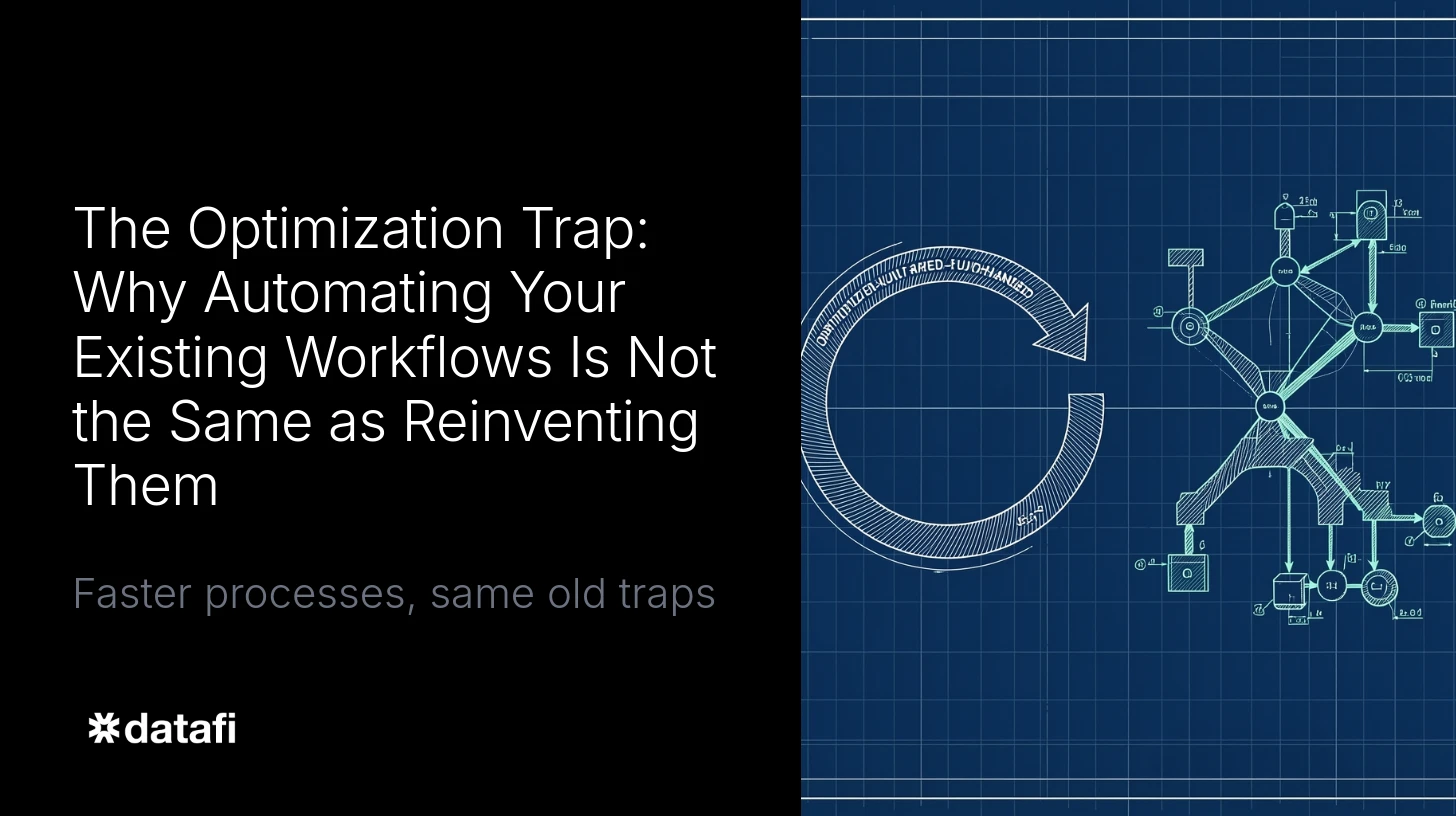
Most enterprises automate existing workflows and call it transformation. McKinsey's data shows why that's a trap, and what actually drives enterprise AI value.
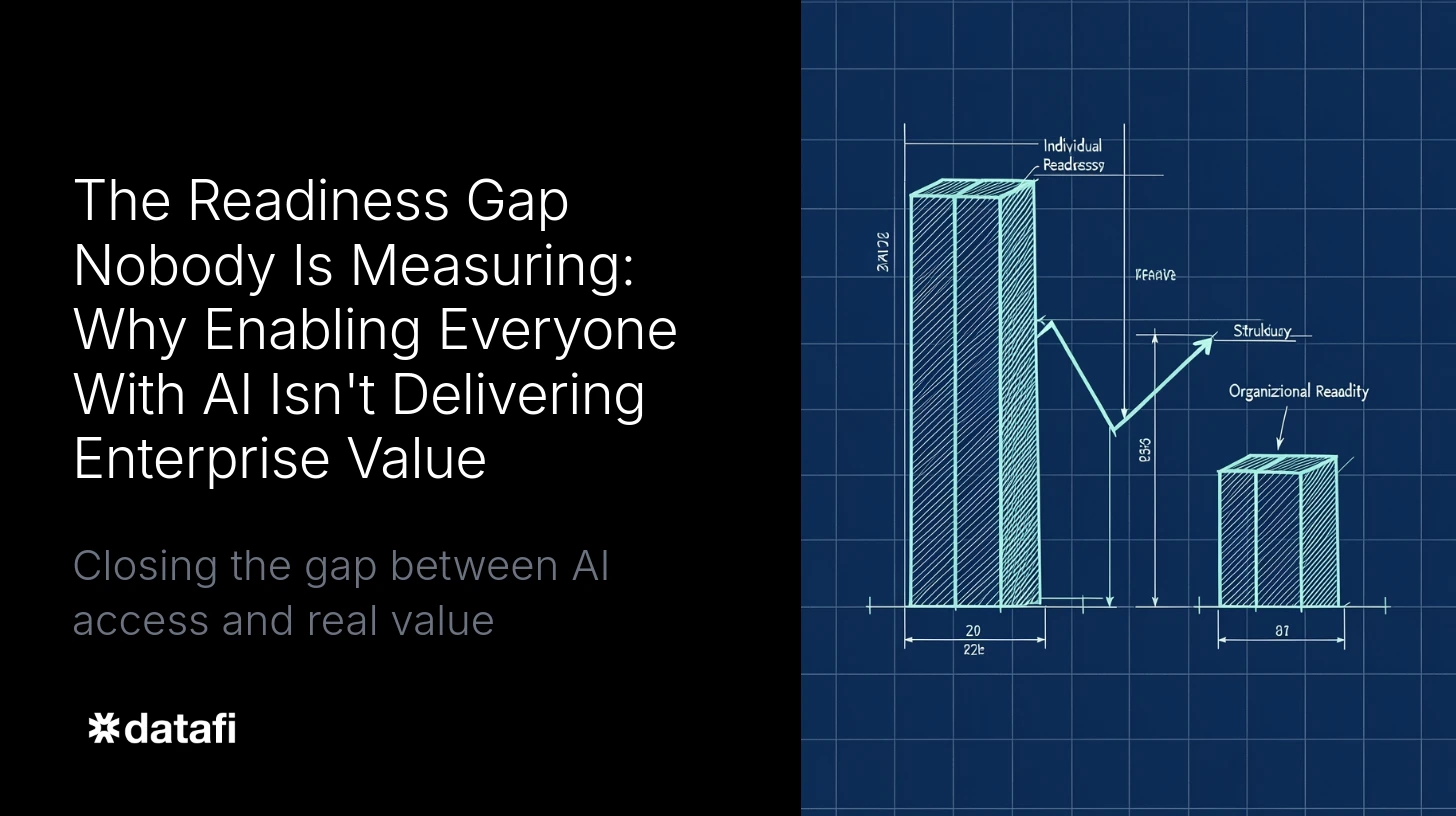
70% of employees are AI-ready, but only 27% of organizations are. Discover why the readiness gap is an architecture problem, not a training problem.
Efficiency gains are table stakes. Discover why the real AI advantage comes from redesigning work, not just speeding it up, with governed agentic AI.
Governance as a feature vs. governance as architecture: how Snowflake Horizon and Datafi differ, and why it matters for enterprise AI compliance.
Snowflake sells data infrastructure. Datafi sells business outcomes. See why that distinction is the most important ROI question a CFO can ask in 2026.
Text-to-SQL tools like Snowflake Cortex Analyst answer questions fast, but they're not a Business AI strategy. Here's why the gap between data access and outcomes matters.
Snowflake's agentic vision is bold, but a control plane built on data isn't the same as a Business AI OS. Here's why the starting point matters.
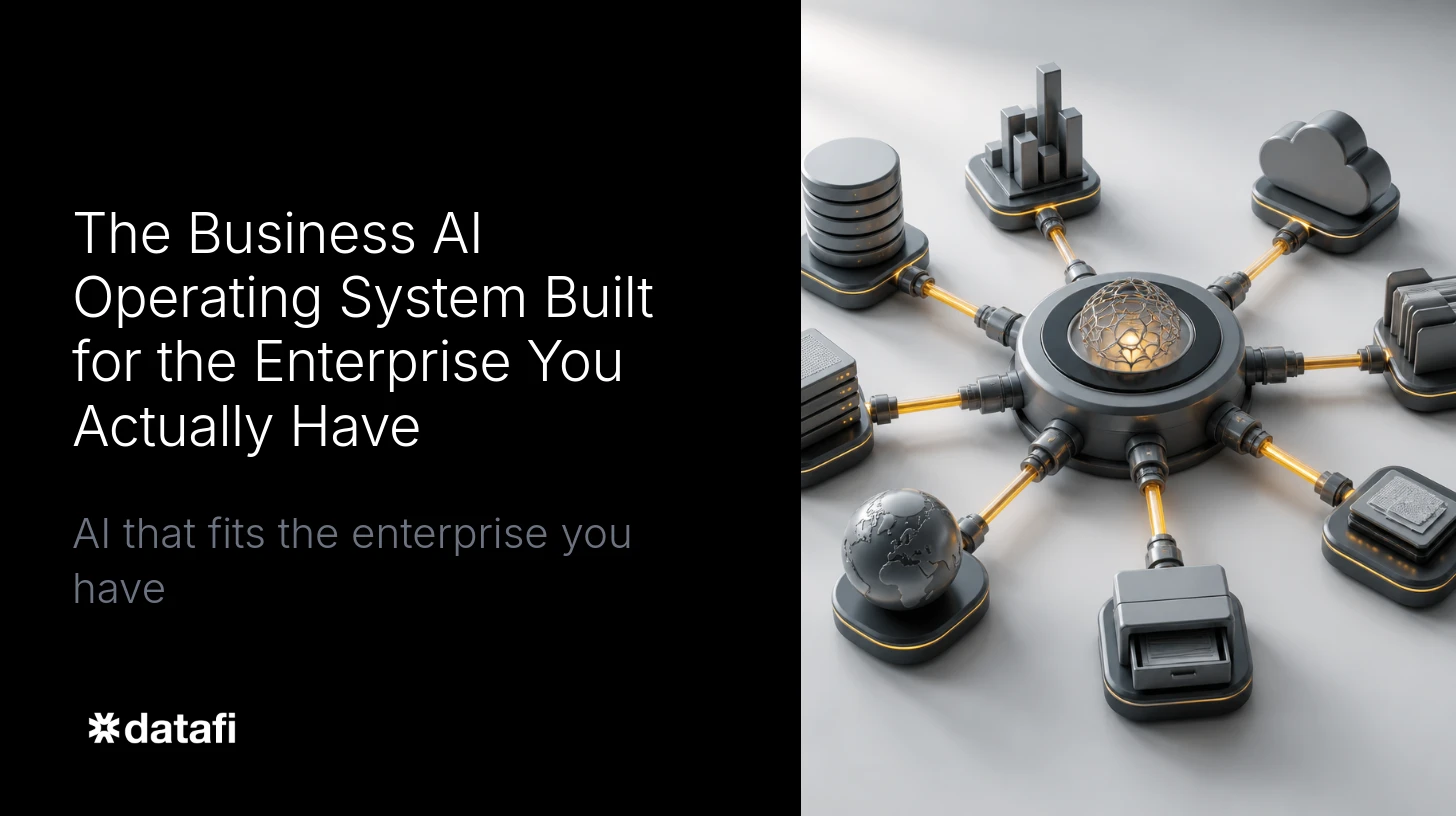
Discover why enterprises need a Business AI Operating System between their data and AI models to close the gap between investment and real ROI.
Your data is in Snowflake, but your business still waits. Learn why the gap between data and action requires a Business AI Operating System.
Discover why SOC 2 compliance is the architectural foundation that makes autonomous, governed AI deployable at enterprise scale, not just a checkbox.
ServiceNow AI excels at workflow efficiency, but proactive enterprise intelligence requires a different foundation. Learn where the ceiling is and what lies beyond it.
Discover how governance-by-architecture differs from governance-by-addition in enterprise AI, and why the distinction matters for security and compliance.
Discover the real TCO of choosing ServiceNow for AI: hidden costs, platform lock-in risks, and how data portability changes your negotiating position.
ServiceNow's workflow fabric captures process data, but full business context requires more. See why Datafi's direct-connect architecture closes the gap.
Most enterprise AI only reaches technical users. Learn how Datafi democratizes intelligent data access for every employee, not just platform power users.
Discover why the difference between workflow automation and Business AI determines your enterprise outcomes, and where ServiceNow ends and Datafi begins.
Discover why autonomous AI fails without complete data context and how the autonomy gap between answering questions and solving real business problems gets closed.
Discover the hidden scope tax in Salesforce Agentforce pricing and how a unified AI data platform like Datafi delivers lower total cost of intelligence at enterprise scale.
Discover why enterprise AI accessibility depends on who it's built for, and how Datafi Chat reaches every employee, not just Salesforce experts.
Agent governance controls what AI does. Data governance controls what AI sees. Learn why the difference defines your enterprise risk posture.
Salesforce-native AI offers fast adoption, but its platform boundary limits enterprise ambition. Learn why your AI strategy needs to sit above all your data.
Agentforce is powerful inside Salesforce, but most enterprise data lives elsewhere. Discover the CRM trap and why AI architecture determines your real AI potential.
Discover why enterprise AI deployments fail after the demo: the gap between answering questions and solving problems, and the infrastructure needed to close it.
Databricks serves data specialists. Datafi serves every employee. Discover why AI platform design determines who actually benefits from your investment.
Databricks vs. Datafi: understand why data intelligence for specialists and business AI for everyone require fundamentally different platforms.
Policy-based AI governance can't keep pace with autonomous agents. Learn why governance by architecture is the only sustainable path to enterprise AI compliance.
Discover why a business context layer outperforms a lakehouse for enterprise AI, turning raw data access into reliable, grounded business intelligence.
Discover what enterprise AI TCO comparisons miss: staffing costs, time to value, and organizational reach. See how Databricks vs. Datafi stacks up.
Knowledge graphs improve enterprise search, but they can't act on live data or trigger workflows. Discover why operational AI needs more than context.
Discover why enterprise AI ROI depends on your investment thesis: productivity gains from search tools vs. structural transformation from a Business AI Operating System.
Discover why enterprise AI governance requires architectural design, not just policy layers, to safely manage autonomous agents in regulated industries.
SaaS sprawl isn't your real AI problem. Fragmented data architecture is. Learn why enterprise search layers fall short and what a semantic operating layer enables.
AI assistants help you work faster, but AI agents actually execute. Discover the action gap separating proactive assistants from autonomous enterprise AI.
Enterprise search AI finds answers fast, but acting on them is where value is created. Discover why the search trap limits transformation and what replaces it.
Shadow AI just triggered the first SEC 8-K disclosure from unauthorized AI use. Here's what enterprises must do now to govern AI before it becomes a crisis.
A five-question framework for choosing the right enterprise AI platform. Cut through vendor noise and make the decision your organization cannot afford to get wrong.
Discover why enterprise AI fails at the last mile and how Datafi's Chat UI delivers governed, agentic AI to every employee, not just technical teams.
Palantir serves the Fortune 500. Datafi's Business AI OS is built for the mid-market organizations that actually drive the economy, faster, leaner, and at real scale.
Is your AI governance protecting your organization or your vendor's position? Learn why governance architecture, not features, determines real enterprise AI control.
Build an honest enterprise AI TCO model that survives a 3-year audit. Compare Palantir vs. Datafi costs across licensing, implementation, and ongoing operations.
Discover what separates genuine agentic AI from marketing hype, and how Palantir AIP and Datafi's contextual-first architecture stack up for enterprise autonomy.
Palantir's defense roots vs. Datafi's commercial-first design. Discover which enterprise AI platform is actually built for your organization's real operating needs.
Ontology vs. contextual layer: discover why the intelligence layer is the defining architectural decision in enterprise AI and how each approach compares.
Discover the true total cost of Palantir's 18-month deployment model: hidden professional services, Ontology maintenance, and strategic dependency that never appear on the invoice.
Palantir and Datafi both call themselves enterprise AI operating systems. Here's how their architectures, philosophies, and deployment models fundamentally differ.
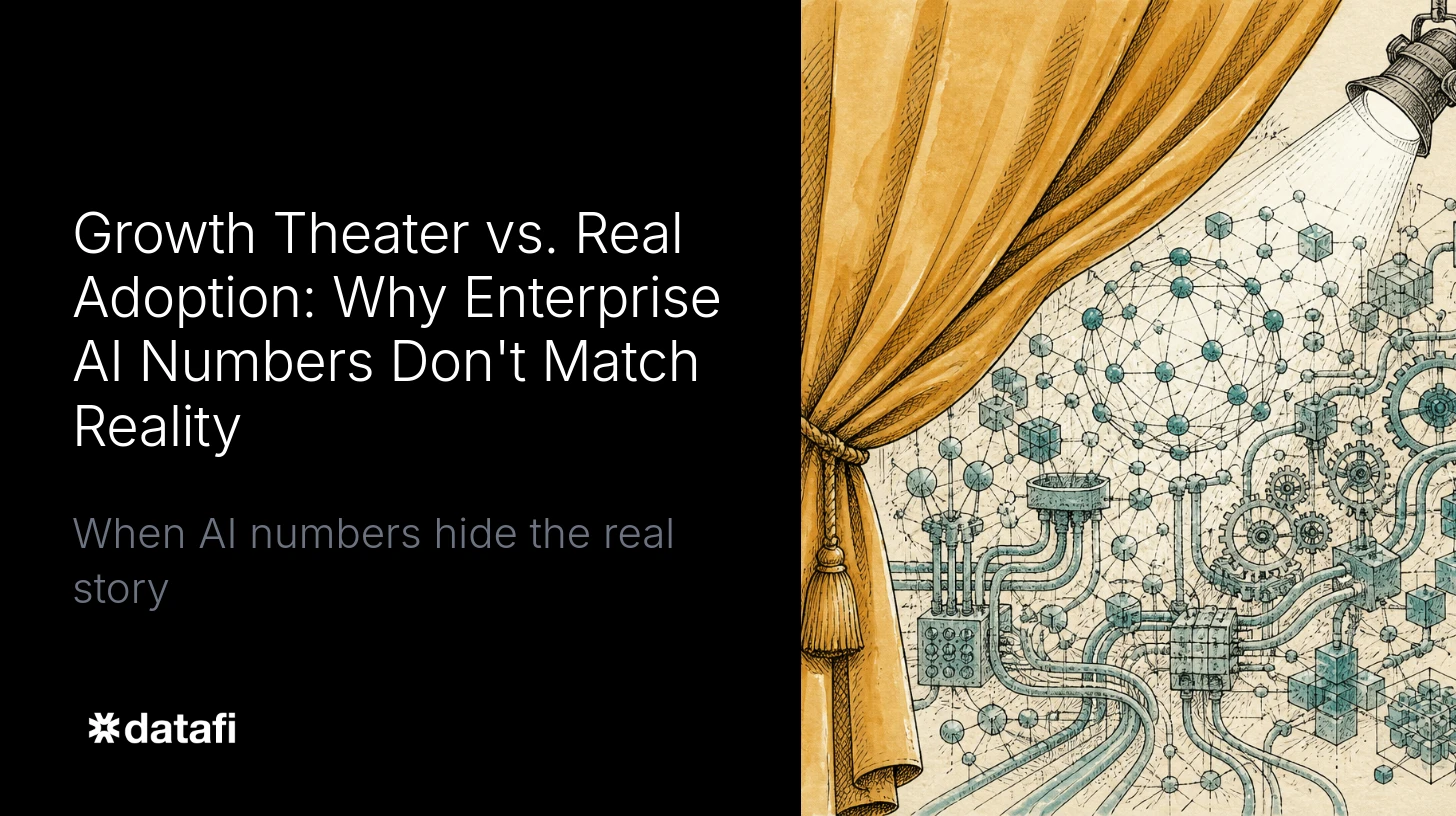
Why enterprise AI adoption numbers mask a deeper problem, and what real adoption actually requires from architecture, data, and leadership.
Discover why the future of enterprise AI is an operating system, not a project. Learn how platform-first architecture compounds competitive advantage at scale.
See exactly what a Datafi deployment delivers in 90 days: governed AI in production, real users, measurable outcomes, and a compounding advantage your build team can't match.
Discover why AI governance must be built into your platform architecture from day one, not added later, and what it costs when enterprises get this wrong.
Discover why the contextual layer is the true moat in enterprise AI, and why internal build teams consistently underestimate what it takes to create it.
Discover why most enterprise AI deployments answer questions but fail to solve problems, and what architectural choices determine which AI you actually build.
A rigorous 5-dimension scoring framework to help mid-enterprise organizations make smarter build vs. buy AI platform decisions, with honest TCO analysis.
Palantir works, but not for everyone. Discover what its builder-dependent deployment model reveals about scaling AI in mid-enterprise organizations.
Discover why enterprises choose Datafi's unified Business AI OS over fragmented Azure and Databricks stacks to deploy autonomous AI across every business function.
Discover the true cost of building an enterprise AI platform in-house. The real 3-year TCO is 3-7x the initial estimate. Here's what your spreadsheet misses.
Discover the 7 architecture layers enterprise AI builds forget to budget for, why they compound in cost, and what a realistic build timeline actually looks like.
Discover the 5 organizational patterns that cause enterprise AI projects to stall before they scale, and what it actually takes to reach production.
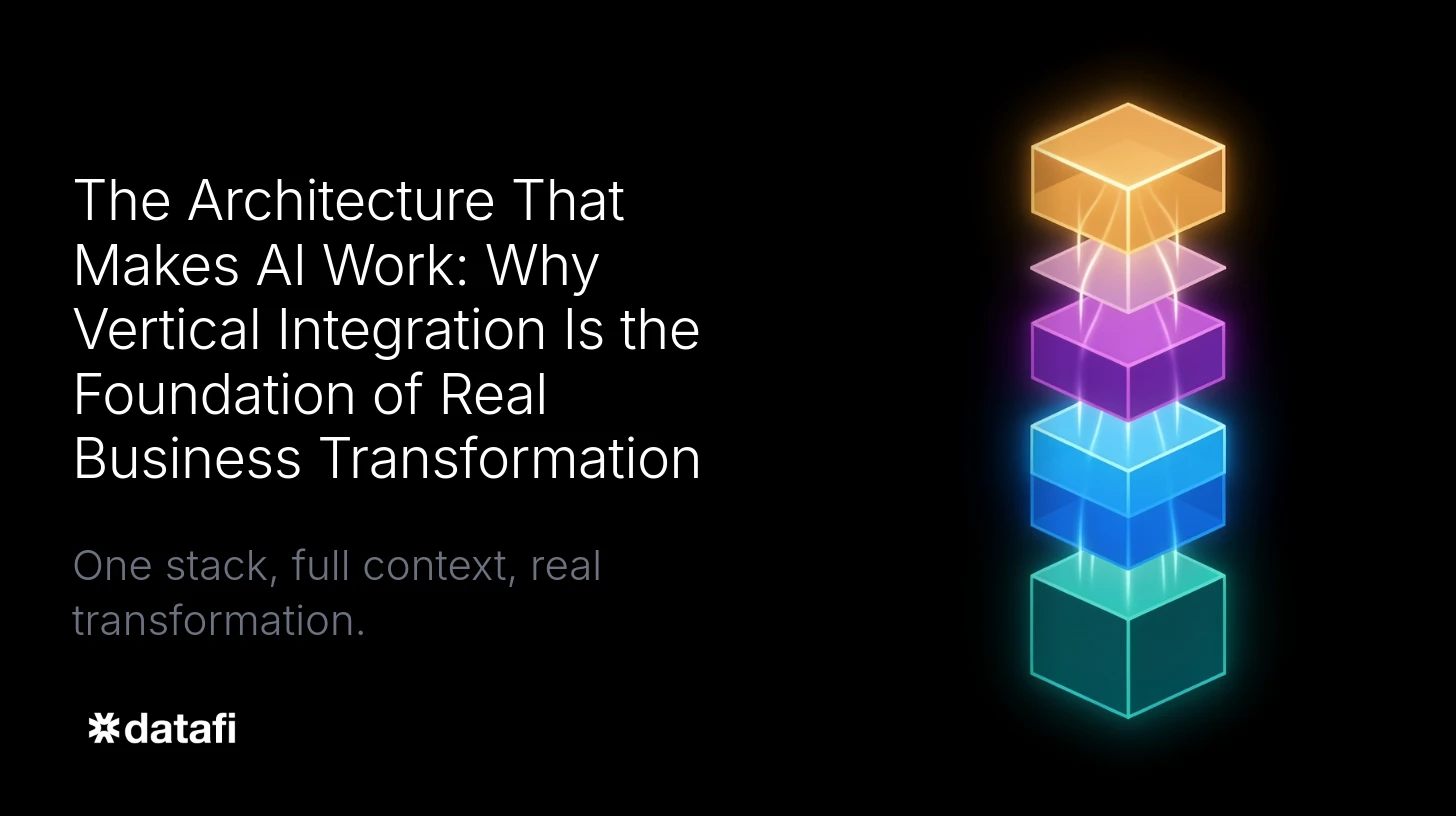
Discover why enterprise AI needs a vertically integrated architecture, not point solutions, to deliver JARVIS-level intelligence across your entire organization.
Datafi Chat is the only AI chat built on a Business AI Operating System, delivering governed, context-aware intelligence to every employee in the enterprise.
Discover why integrated AI security beats point solutions. Datafi Cyber governs AI agents, data access, and workflows from within the stack that makes AI effective.
McKinsey says 80% of enterprises cite data limitations as the AI scale barrier. Datafi explains why agentic AI demands a unified data foundation, not better models.
Discover why Datafi's vertically integrated AI platform outperforms contextual retrieval tools, delivering governed, agentic AI across your entire data ecosystem.
Discover why business context is the missing foundation of enterprise AI and how a unified, governed context layer unlocks true agentic capability.
Discover why data warehouses fall short for enterprise AI and how a Business AI Operating System delivers real-time, bidirectional, governed AI action.
Discover why a unified data and AI stack is the enterprise imperative, and how building the right foundation transforms AI from a curiosity into operational infrastructure.
Discover how Datafi's AI Operating System helps multi-franchise dealer groups recover lapsed service customers and protect fixed operations revenue.
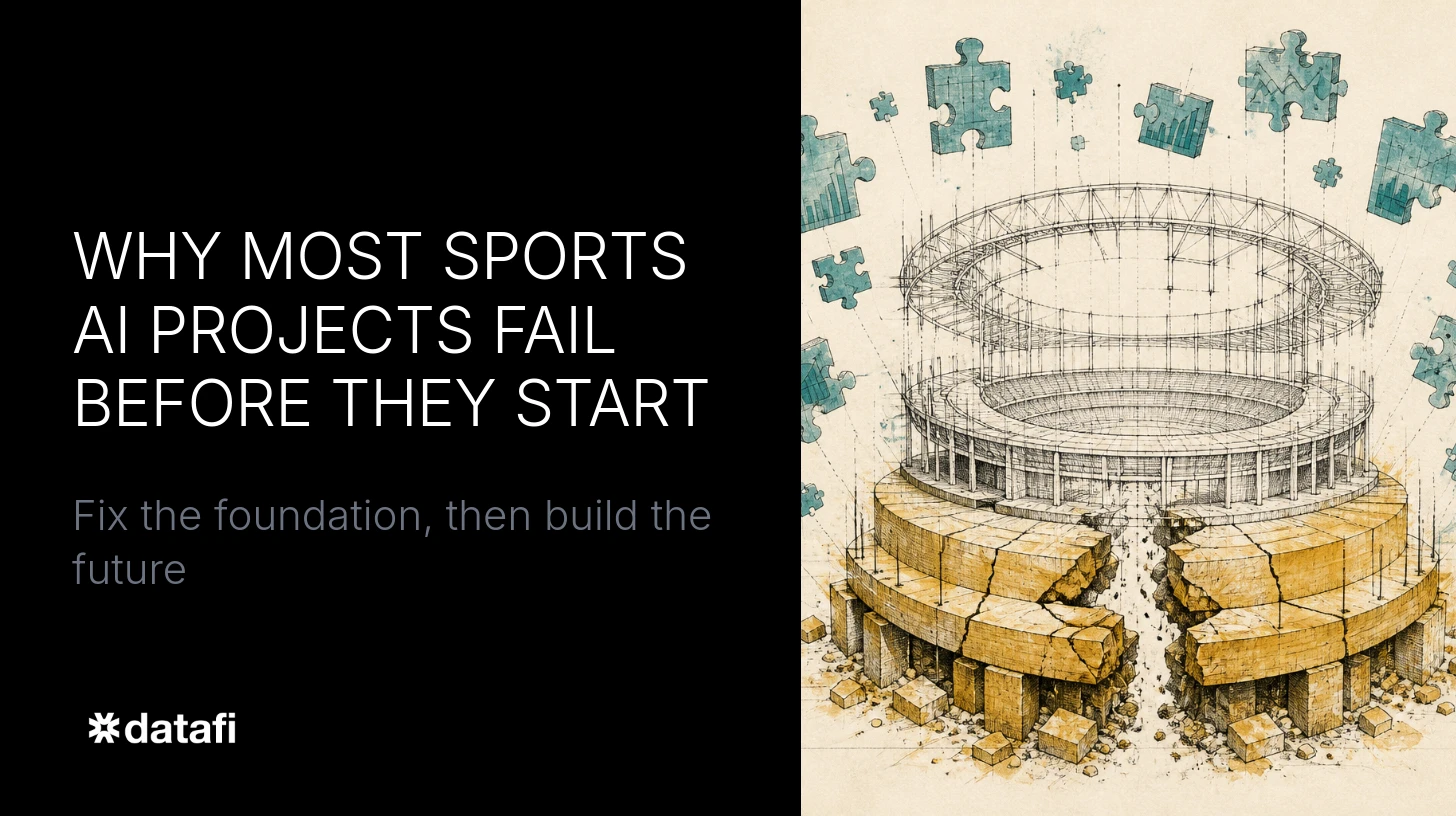
Most sports AI projects fail not from bad technology, but from broken foundations. Learn why connectivity, governance, and accessibility determine AI success.
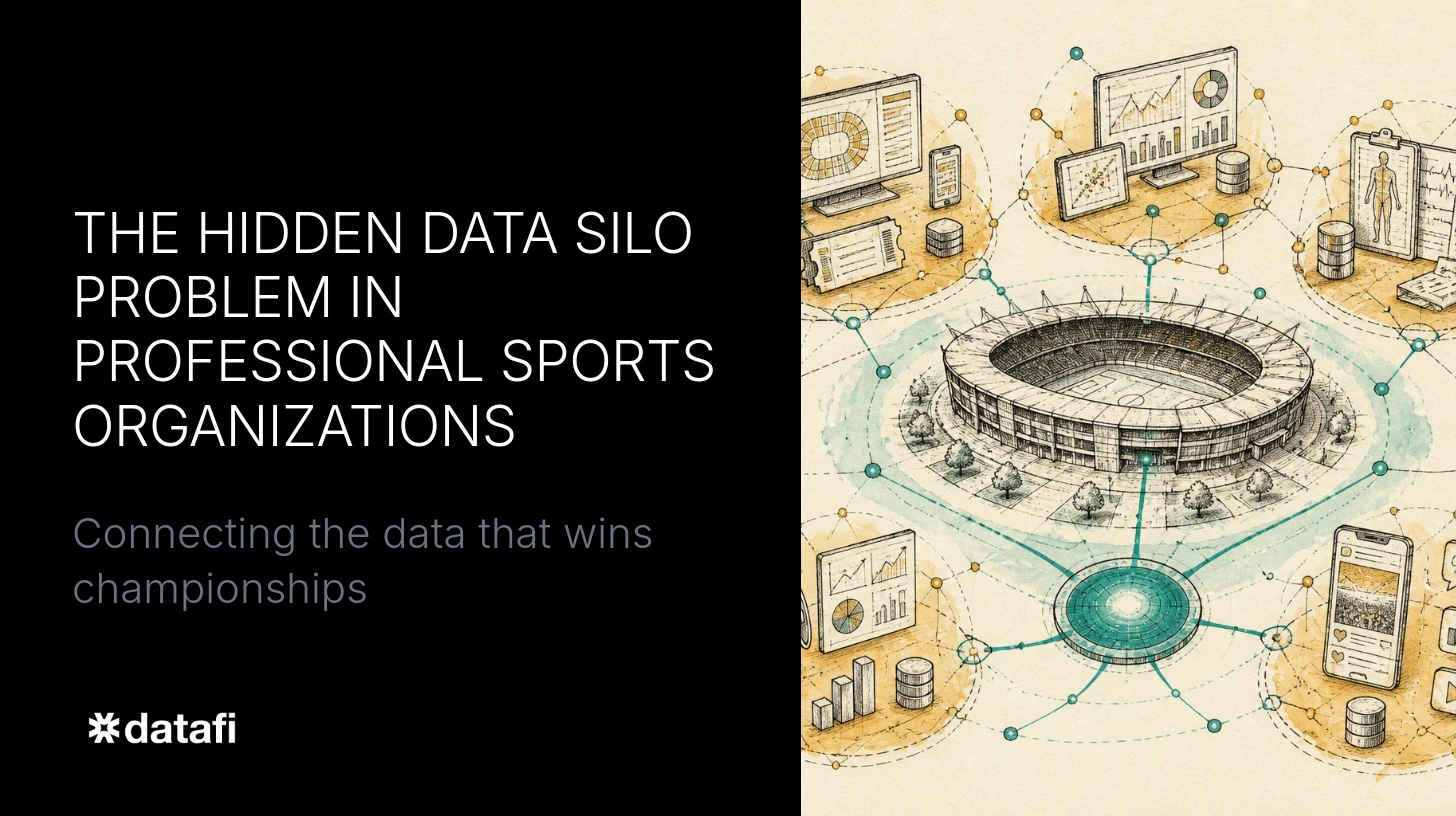
Discover how data silos are costing professional sports franchises millions and how a unified AI platform can connect fragmented systems into real competitive advantage.
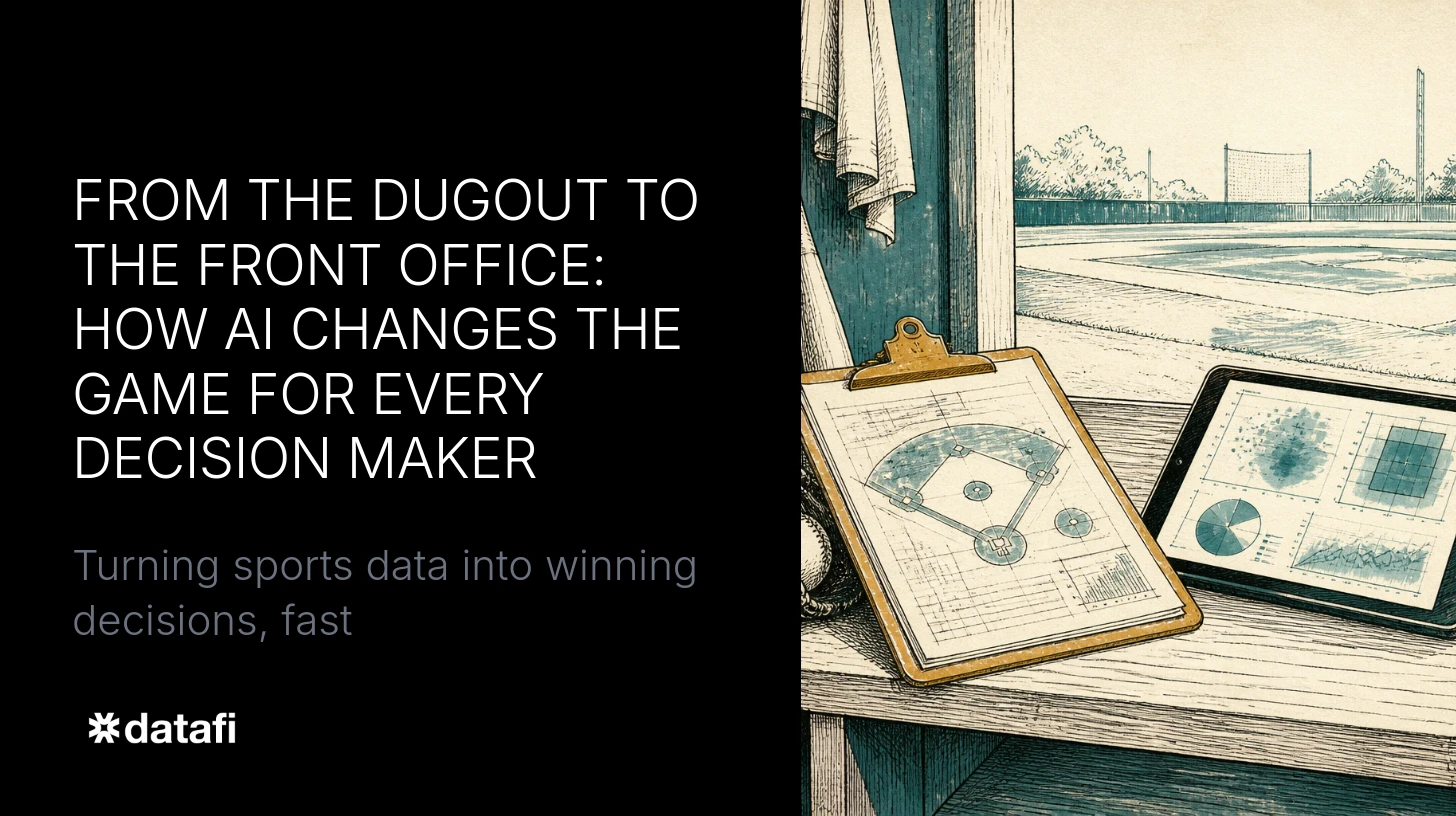
Discover how Datafi's Business AI Operating System closes the gap between sports data and real decisions, empowering every role from dugout to front office.
See why mid-market and enterprise leaders choose Datafi over Microsoft Fabric as their Business AI Operating System for heterogeneous data environments.
Discover why vertical integration is the missing foundation for enterprise AI that truly transforms operations, not just answers questions.
Datafi revolutionizes business AI through personalized, context-aware, and secure access to enterprise data, eliminating bottlenecks and enabling real-time decision-making.