
In cybersecurity and defense, the difference between a threat detected and a threat realized can be measured in seconds. Yet most organizations in these sectors still operate with fragmented data ecosystems, siloed analytical tools, and a workforce that depends on technical specialists to surface intelligence from their own operational data. The consequence is not just inefficiency. It is exposure. Every moment that data sits ungoverned, unconnected, or inaccessible to the people who need it is a moment that adversaries, whether criminal, competitive, or state-sponsored, can exploit.
Datafi was built on a foundational belief: that AI should not simply answer questions. It should solve problems. In cybersecurity and defense, where the problems are complex, time-sensitive, and consequential, that distinction is everything.
A unified, governed AI platform does not just accelerate threat detection; it transforms decision velocity across the entire organization, putting enterprise intelligence directly in the hands of every operator, analyst, and commander without intermediaries.
The Data Problem at the Heart of Cyber and Defense Operations
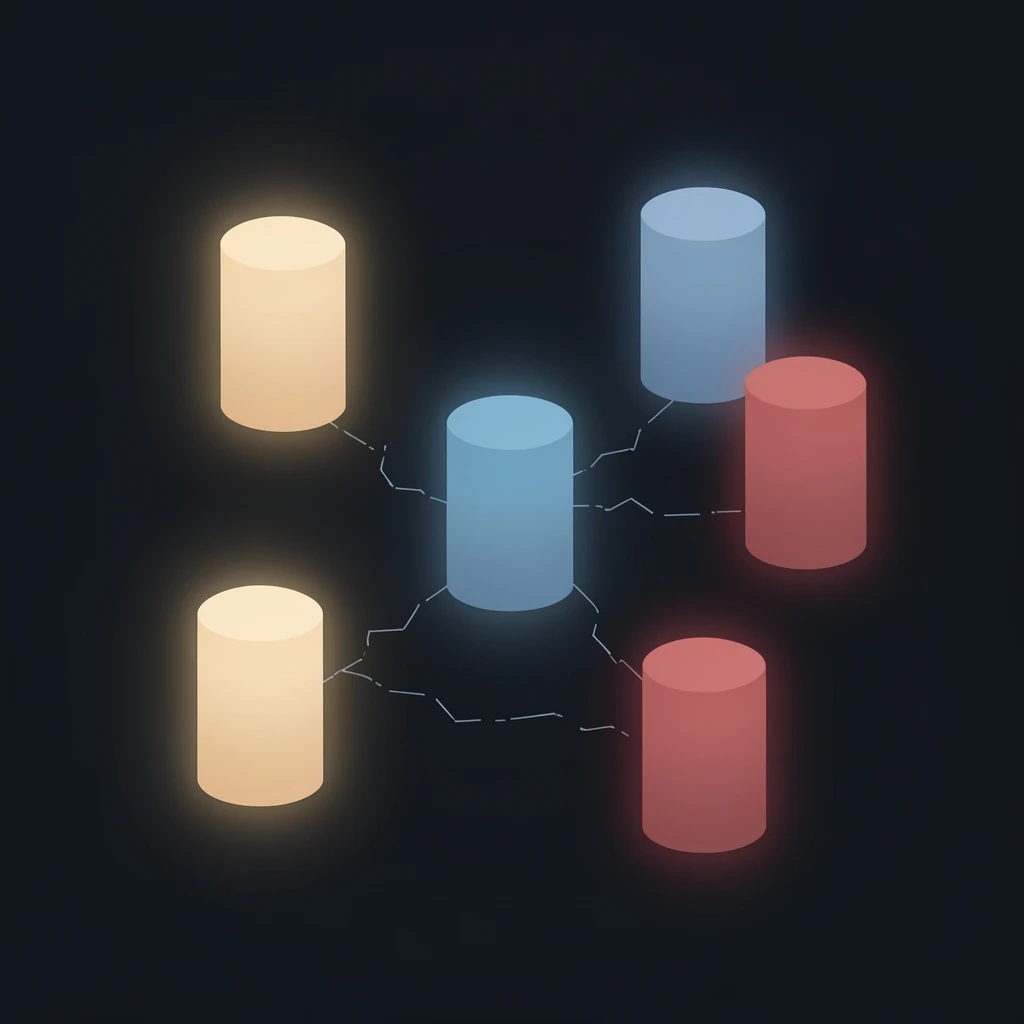
Defense agencies, intelligence teams, cybersecurity operations centers, and critical infrastructure organizations all share a common challenge. They generate enormous volumes of operational data across a sprawling ecosystem of systems, each with its own format, governance model, and access control layer. Threat intelligence feeds, endpoint telemetry, identity and access logs, network traffic, geospatial data, incident ticketing systems, and compliance frameworks all coexist in the same enterprise, yet rarely in genuine conversation with one another.
The result is that the analysts, operators, and decision-makers who need integrated situational awareness are forced to work through layers of intermediaries: data engineers, security analysts, and technical staff who translate raw data into something actionable. This introduces latency. It limits the breadth of analysis. And it creates a dependency structure that cannot scale with the pace of modern threats.
The traditional response to this challenge has been to add more tools. More dashboards. More SIEM platforms. More point solutions layered on top of an already fragmented stack. What organizations in this sector actually need is something fundamentally different: a unified data and AI technology stack that allows every employee, not just technical specialists, to engage directly with operational data and act on it.
What Unification Actually Means
When Datafi talks about a unified data experience, the word unified carries real weight. It does not mean aggregating data into a single repository. It means creating a coherent operational layer across the entire data ecosystem, one that maintains governance, enforces compliance controls, and surfaces intelligence through an interface designed for the people who need to act on it.
In cybersecurity and defense, this translates into several critical capabilities that traditional architectures cannot deliver.
The first is contextual breadth. A threat is never just a log entry. It is the intersection of network anomalies, user behavior, asset criticality, historical incident patterns, geopolitical context, and regulatory obligations. For AI to support meaningful threat analysis, it needs access to all of that context simultaneously, not a sanitized subset delivered through a narrow integration. Datafi’s architecture provides AI agents with access to the complete data ecosystem, enabling the kind of multi-source, multi-domain reasoning that operational decisions in this sector actually require.
The second is governed intelligence. In no sector is compliance more consequential than in defense and cybersecurity. Clearance levels, data classification, regulatory frameworks including CMMC, FedRAMP, and ITAR, and mission-specific access controls are not footnotes in these environments. They are operational requirements.
Datafi’s policy and control layer is embedded in the architecture itself, meaning that AI operates within defined boundaries by design, not by manual oversight. Every query, every agent workflow, every automated action inherits the governance posture of the organization. Compliance is not a downstream step. It is a structural property.
The third is accessibility for non-technical users. The people making critical decisions in cybersecurity and defense are not always data scientists. They are commanders, analysts, compliance officers, operators, and field personnel who need intelligence without needing to write SQL or understand machine learning pipelines. Datafi’s Chat UI was designed for exactly this population: a natural language interface that connects non-technical users directly to the data ecosystem, enabling them to ask operational questions and receive governed, contextually grounded answers without intermediaries.
AI Agents and Workflows That Operate at Mission Speed
Modern cyber threats do not wait for a ticketing system to be updated. Advanced persistent threats, zero-day exploits, and coordinated disinformation campaigns require detection, analysis, and response that outpaces human-in-the-loop workflows by orders of magnitude. This is where AI agents, operating within a governed and fully contextualized data environment, become decisive.
Datafi’s approach to agentic AI in cybersecurity and defense is grounded in a simple but demanding premise: an AI agent is only as effective as the context it can access and the authority it is granted to act. An agent that can only see a fragment of the operational picture will produce fragment-level responses. An agent that is denied the ability to initiate workflows, update records, or trigger escalations cannot meaningfully accelerate response. And an agent that operates outside the organization’s governance framework creates more risk than it resolves.
By contrast, Datafi’s AI agents operate with full access to the data ecosystem, within policy-defined boundaries, and with the capability to execute multi-step workflows autonomously. In a security operations context, this means an agent can ingest and correlate telemetry from across the enterprise, identify anomalies consistent with known threat patterns, cross-reference against threat intelligence feeds, assess the blast radius of a potential incident, initiate a containment workflow, and escalate to human analysts with a fully assembled operational picture, all before a traditional alert queue has even been acknowledged.
In a defense operations context, agents with this level of integration can support logistics planning, readiness assessments, supply chain risk analysis, and mission-critical reporting with a speed and accuracy that manual workflows simply cannot match. The value is not in replacing human judgment. It is in ensuring that human judgment is exercised with complete, current, and governed information.
The Contextual Layer: Why Full Business Context Changes Everything

There is a concept at the center of Datafi’s philosophy that the broader AI industry has been slow to internalize: that transformative AI outcomes require not just data access, but contextual depth. An LLM that has been given access to a data warehouse but not to the policies, relationships, organizational context, and domain knowledge that give that data meaning will answer questions. It will not solve problems.
This distinction is especially consequential in cybersecurity and defense, where the data itself is often ambiguous and the context is everything. A login from an unusual IP address means something very different depending on whether the user is a contractor traveling internationally, a privileged administrator outside their normal work hours, or an account that has been dormant for six months. Without the organizational context to disambiguate, an AI system will either over-alert or under-alert. Neither is acceptable.
Datafi’s vertically integrated stack is designed to develop and maintain this contextual layer continuously. As the platform learns the operational patterns, data relationships, and policy structures of the organization, AI agents become progressively more capable of autonomous reasoning in complex, ambiguous situations. This is the foundation on which genuinely autonomous roles for AI in cybersecurity and defense become possible: not a model that has been trained on generic data, but a system that has been given the full context of the business, the mission, and the risk environment.
Operational Decision Velocity as a Strategic Capability
In strategic contexts, decision velocity is often discussed in terms of the OODA loop: observe, orient, decide, act. The organization that can compress this cycle faster than its adversary holds a persistent advantage. For decades, the bottleneck in this cycle has been the orient phase: the process of synthesizing raw observations into a coherent situational picture that supports sound decisions.
Datafi directly addresses this bottleneck by compressing the time between data and decision. When every employee, from the SOC analyst to the CISO, from the logistics officer to the commanding general, can engage directly with a unified, AI-powered operational picture, the orientation phase accelerates dramatically. Decisions are made with broader context, less latency, and greater confidence. Actions are initiated earlier in the threat or operational lifecycle, when the cost of intervention is lower and the potential for impact is higher.
This is not a marginal improvement. In cybersecurity and defense, decision velocity at this level represents a categorical shift in organizational capability.
Scaling AI Across the Enterprise, Not Just the Technical Team
One of the most persistent barriers to AI adoption in cybersecurity and defense organizations is the assumption that AI capability lives in the technical layer and flows outward through reports and dashboards. Under this model, the intelligence generated by AI is perpetually delayed, filtered, and abstracted before it reaches the people who need to act on it.
Datafi is built on a different assumption: that AI should be a direct capability of every employee, regardless of technical background. The Chat UI is the expression of this belief, a governed, context-aware interface that allows operators, analysts, commanders, and compliance officers to engage with the full intelligence of the enterprise directly. Not through a report that was generated last night. Not through an analyst who interpreted the data on their behalf. Directly, in real time, with AI that knows the context of their role, their mission, and their data environment.
For organizations of any size in cybersecurity and defense, this means that the benefits of a sophisticated AI and data stack are not confined to the data science team. They are distributed across the entire workforce, compounding the return on the technology investment and creating a culture in which data-driven, AI-augmented decision-making becomes the operational norm rather than the exception.
The Path Forward
The cybersecurity and defense sectors are entering an era in which AI will not be a tool that organizations choose to deploy. It will be a capability that adversaries and competitors possess, and that organizations must match or exceed to remain effective. The question is not whether to adopt AI, but whether to adopt it in ways that are governed, integrated, contextualized, and genuinely capable of autonomous operation in complex mission environments.
Datafi offers a path that meets that standard. A vertically integrated data and AI stack that connects to the complete data ecosystem, enforces governance and compliance by design, enables AI agents and workflows to operate at mission speed, and puts the intelligence of the enterprise directly in the hands of every employee.
In cybersecurity and defense, the mission is too important for AI that only answers questions. Datafi is built for AI that solves problems.
Datafi is an applied AI company delivering unified data and AI experiences for enterprises that demand governed, high-performance intelligence at scale. To learn how Datafi can transform your cybersecurity or defense operations, contact us to schedule a demonstration.