


Datafi vs ServiceNow for Data Platforms in the AI Era
There is a question every enterprise technology leader is wrestling with right now: which platform will actually deliver on the promise of AI as a transformative business capability, rather than a sophisticated search engine layered over existing workflows?
ServiceNow has built an impressive position in enterprise workflow automation. For two decades, it has been the system of record for IT service management, and it has worked hard to extend that position into AI-assisted workflows. But it was designed as a process automation tool and the architecture it built was designed for a different era, one defined by structured ticketing systems, rule-based automation, and human-in-the-loop approvals. As AI moves from answering questions to solving problems, the limitations of that architecture are becoming increasingly consequential.
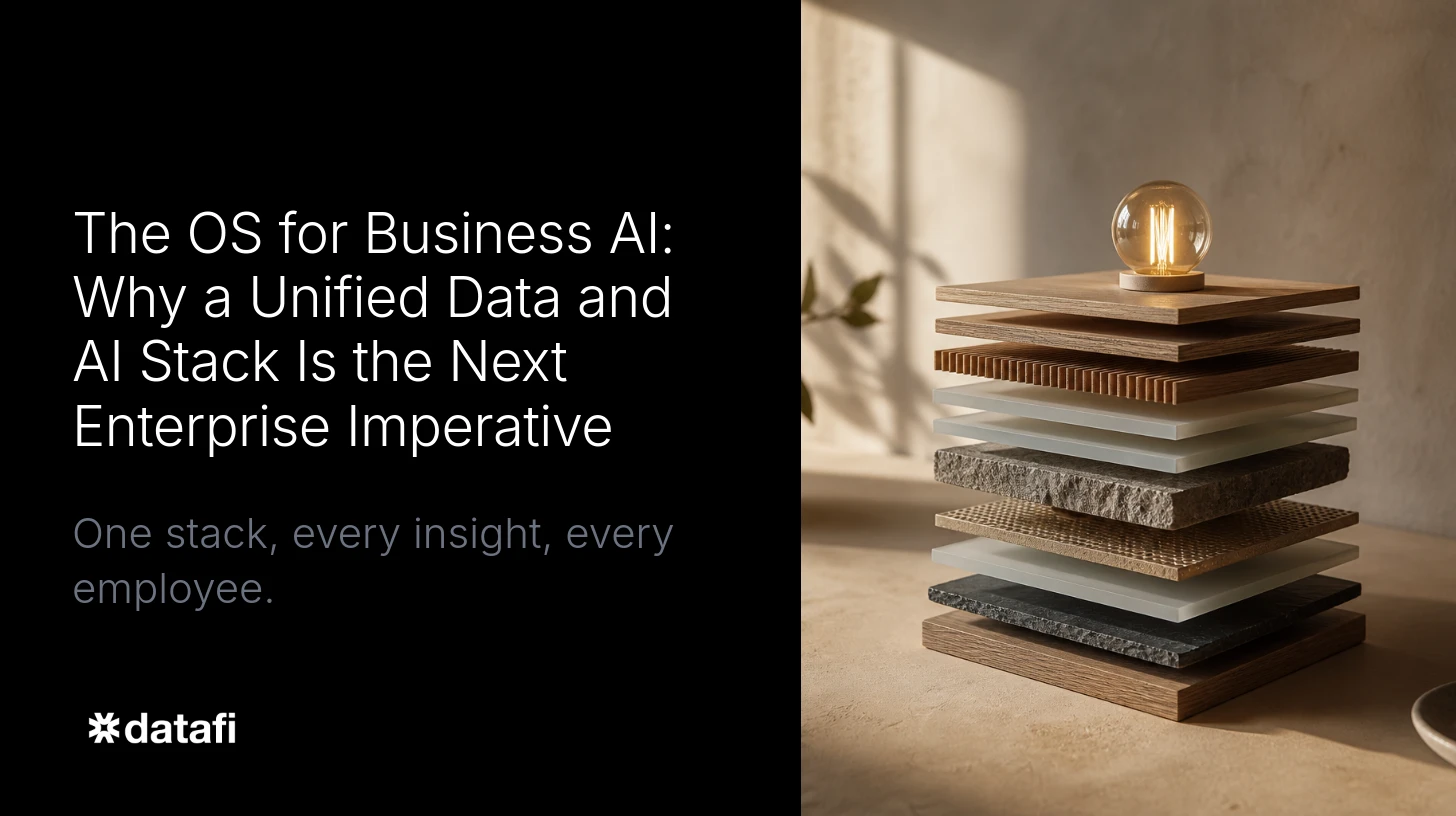
Datafi was designed from the ground up for exactly this moment. Our operating system for business AI gives organizations of any size a vertically integrated data and AI stack that can put every employee in an intelligent, governed conversation with the full context of their business. That is a fundamentally different proposition, and the distinction matters more than most enterprise buyers currently appreciate.
The platforms that will define the next era of business technology are not the ones that add AI features to workflows designed for human execution. They are the ones that build from the premise that AI is a first-class participant in business operations, with access to the full context it needs and the autonomy required to act on that context effectively.
The Architecture Gap

ServiceNow’s AI capabilities sit on top of its workflow platform. That is not a criticism of their engineering; it reflects a deliberate design choice. Their system was built around structured data, defined processes, and role-based access to specific records within specific modules. AI has been added to that foundation in the form of Now Assist, which provides generative capabilities inside existing ServiceNow workflows. It is a capable addition to an established platform.
But here is the problem. AI agents that operate only within a workflow platform cannot develop the full contextual understanding of a business that is required to solve genuinely hard problems. They see what the workflow system exposes. They operate on structured records. They answer questions that can be framed within the boundaries of the modules they are connected to.
Datafi’s architecture starts from a completely different premise. The platform is built as a data integration platform that gives AI access to the complete data ecosystem of an enterprise: structured data, unstructured documents, operational systems, historical records, real-time feeds, and the policies and governance layers that determine what AI is permitted to do with all of it. This is not a bolt-on capability. It is the foundation on which every Datafi capability is built.
When an AI agent operating inside Datafi is tasked with solving a problem, it does not consult a curated subset of approved records. It reasons across the full business context it has been authorized to access, applies the governance rules defined by the organization, and takes action in a role that is genuinely autonomous. That is the difference between AI that answers questions and AI that solves problems.
Unified Data Experience for Every Employee
One of the most significant organizational costs of the current generation of enterprise AI tools is the expertise required to use them effectively. Platforms that expose AI capabilities through technical interfaces, complex query languages, or heavily customized dashboards effectively restrict the benefit of AI to a relatively small group of data-literate users. Everyone else gets a report someone else generated, a dashboard that was built before the question they need answered existed, or a ticket submitted to a team that has a backlog.
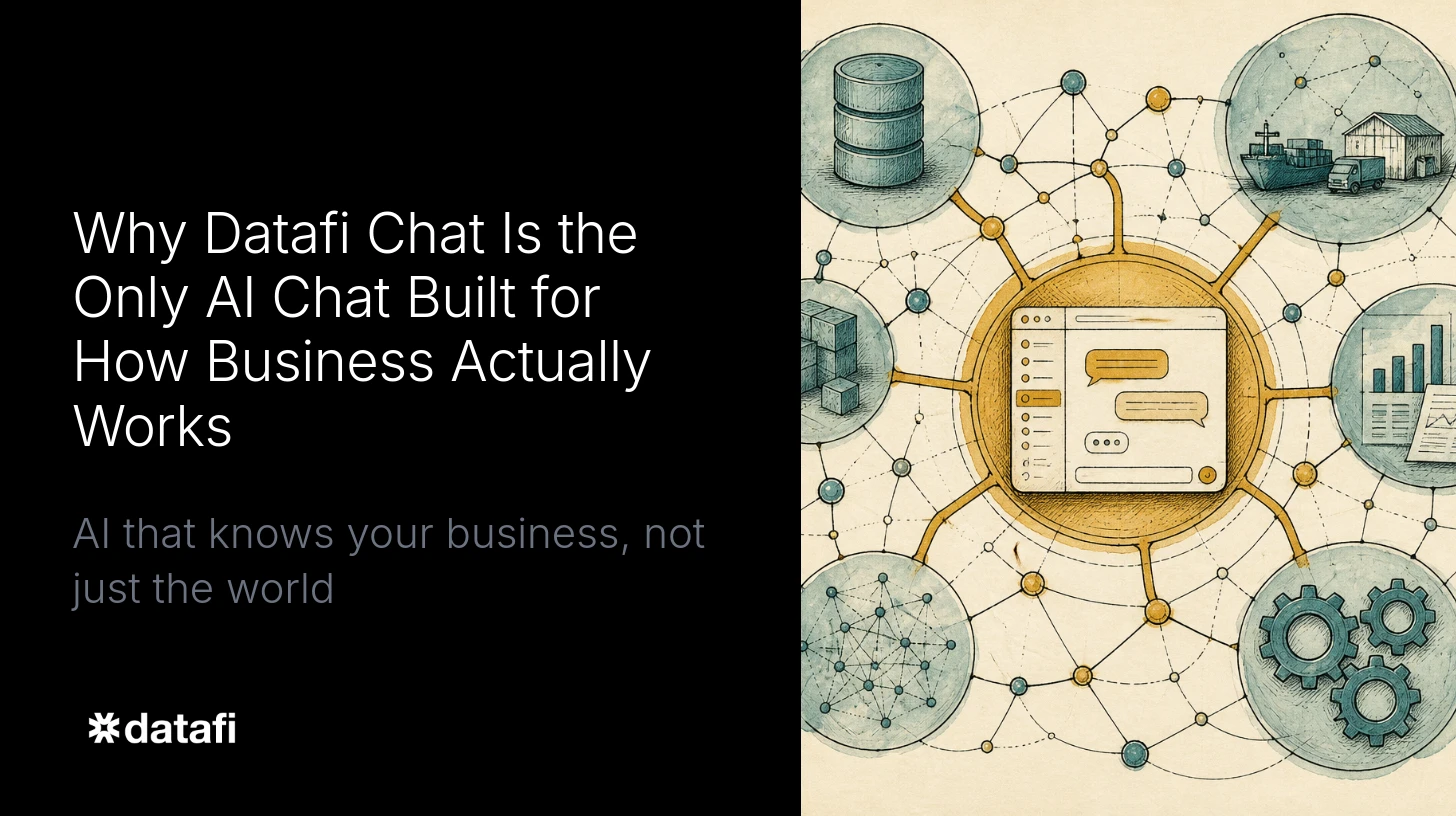
Datafi’s Chat UI was designed to change that dynamic at scale. Non-technical users can access the full analytical and operational capability of the platform through natural language. They can ask questions that would previously have required a data analyst, get answers that draw on live and historical data, and initiate workflows without navigating complex interfaces or waiting for support from a technical team.
This is not simply a user experience improvement. It is a structural change in who can participate in data-driven decision making, and it compounds over time. When a frontline operations manager can directly query maintenance histories, asset performance data, and supplier lead times in a single conversation, the quality of decisions made at that level improves immediately. When that capability is extended across every function and every level of the organization, the cumulative effect is a genuinely more intelligent enterprise.
ServiceNow has made meaningful investments in making its platform accessible to non-technical users within its domain. But the scope of what those users can access remains defined by the ServiceNow data model. Datafi’s Chat UI is a window into the entire data ecosystem of the business, governed appropriately, and open to every employee who should have access.
The Case for Vertical Integration
There is a persistent assumption in enterprise technology that best-of-breed component selection will outperform integrated platforms. In many contexts, that is true. But AI presents a different optimization problem. The quality of AI reasoning is directly proportional to the completeness of the context it operates within, and the ability to act on that reasoning is directly proportional to how deeply the AI is integrated into the systems where action needs to be taken.
Datafi’s vertically integrated stack eliminates these handoffs. Data access, governance, reasoning, and action all operate within a single coherent architecture. The LLMs that power Datafi’s agents have access to the full business context they need because the data ecosystem is part of the platform, not a separate system they must query through an API. Policies and controls are built into the stack, not retrofitted onto it. Agents can operate autonomously because the system is designed to support autonomous operation safely.
This integration creates a contextual layer that is simply not achievable with assembled components. And it is that contextual layer that makes the difference between AI that can handle routine queries and AI that can be trusted with genuinely complex analytical and operational tasks.
Autonomous AI Across Critical Business Functions
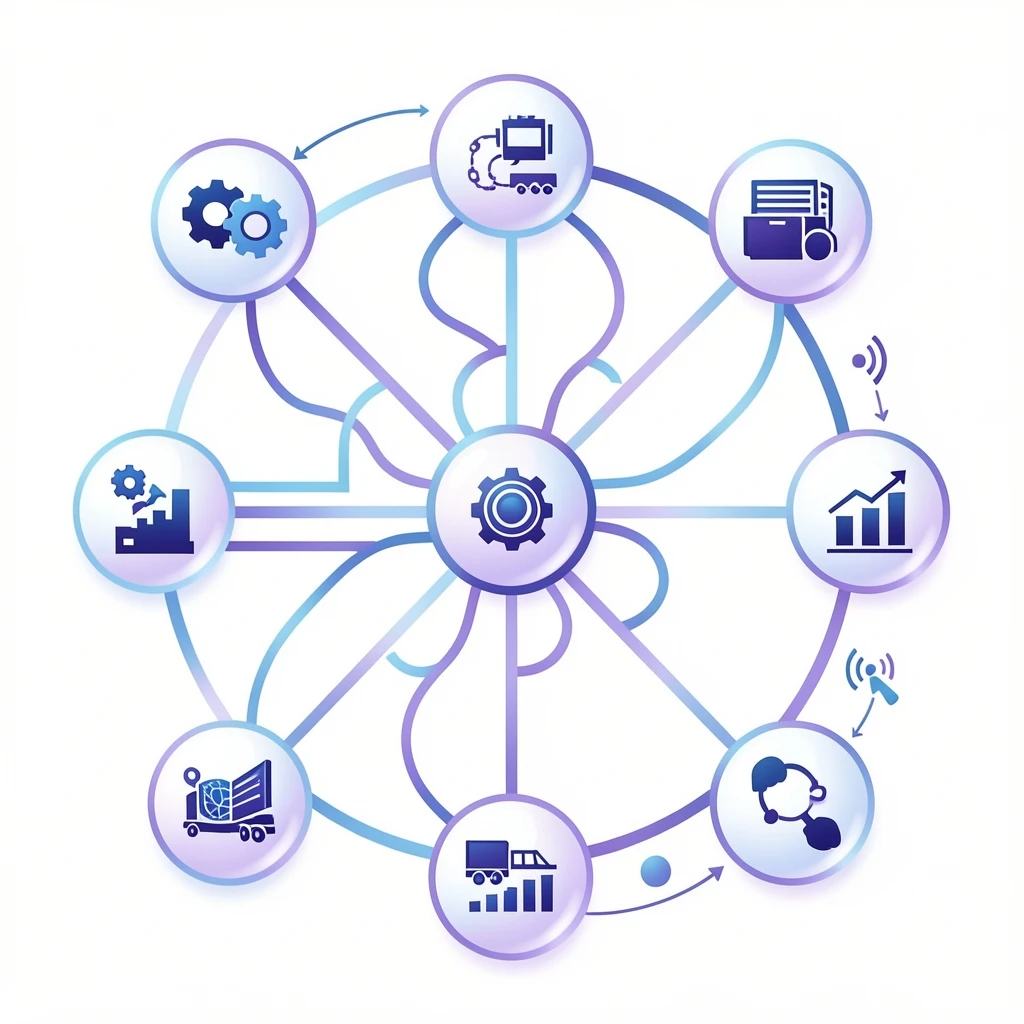
The practical consequence of Datafi’s architecture is that organizations can deploy AI in roles that have meaningful impact on their most important operational challenges, without being limited to the specific workflows a platform vendor has chosen to support.
In predictive maintenance and asset management, Datafi agents can synthesize sensor data, maintenance records, supplier data, operational schedules, and financial performance data to generate maintenance recommendations that reflect the full complexity of the real decision. ServiceNow has strong ITSM and asset management capabilities within IT infrastructure; Datafi extends that capacity to physical assets, operational equipment, and mixed environments where the relevant data does not live in a single workflow platform.
In operations optimization, the ability to reason across multiple data sources in real time means Datafi agents can identify bottlenecks, model alternative scenarios, and recommend operational adjustments with a level of contextual completeness that narrow workflow AI cannot match. Whether the operational context is a transportation network, a manufacturing facility, a logistics chain, or a service delivery organization, the platform’s architecture allows it to engage with the problem as it actually exists rather than as it can be represented within a predefined schema.
In passenger and customer experience management, unifying data from booking systems, operational feeds, service records, communication histories, and satisfaction data into a coherent AI-accessible context makes it possible to deliver personalized, proactive service at a scale that no human team could manage. Datafi makes that context available to agents that can act on it, not just report on it.
In strategic planning, the value of an AI that can reason across the complete financial, operational, market, and competitive context of a business, applying governance rules that ensure sensitive data is handled appropriately, is significant. Datafi makes that kind of reasoning available to strategic leadership teams and the analysts who support them, without requiring custom data science work for every analytical question.
The Size Advantage That Changes the Market
ServiceNow’s enterprise positioning comes with enterprise economics. The platform is designed for, and priced for, large organizations with mature IT departments, significant implementation budgets, and the organizational capacity to support complex deployments.
Datafi was built with a different belief: that the organizations who could benefit most from unified data experience and autonomous AI capability are not exclusively the largest enterprises. Mid-market organizations, specialized industry operators, and growing companies that have not yet built the data infrastructure of a large enterprise all face the same fundamental challenge. They need AI that understands their business fully enough to help them operate it better, and they cannot afford the implementation complexity and ongoing cost of a platform designed for a different scale.
Datafi’s architecture was designed to deliver the same quality of AI capability that large enterprises require at a scale and cost structure that organizations of any size can access. That is not a market positioning statement. It is an architectural commitment. The vertically integrated stack, the governed data access model, and the Chat UI designed for non-technical users are all choices that make sophisticated business AI accessible to organizations that would be excluded from the ServiceNow tier of the market.
The Emerging Standard for Business AI
We are in an early period of a transition that will ultimately touch every enterprise software category. The platforms that will define the next era of business technology are not the ones that add AI features to workflows designed for human execution. They are the ones that build from the premise that AI is a first-class participant in business operations, with access to the full context it needs and the autonomy required to act on that context effectively.
Datafi is that data platform. Our vertically integrated data and AI stack gives LLMs what they need to move from answering questions to solving problems: full business context, complete data ecosystem access, and the governance infrastructure required to operate in genuinely autonomous roles. Our Chat UI removes the expertise barrier that has historically limited the benefit of AI to a small subset of technically fluent users. And our architecture makes this capability available to organizations of every size, not just the enterprises large enough to absorb the cost and complexity of legacy platforms.
The question is not whether your organization will operate with AI in critical business roles. It is which platform will give that AI the context, the access, and the autonomy to make a transformative difference.
That is the question Datafi was built to answer.