


For nearly three decades, the business intelligence dashboard was the crown jewel of enterprise data investment. Rows of carefully curated charts. Color-coded KPIs. Quarterly reviews powered by slides exported from tools that took months to implement and years to maintain. The dashboard promised to make organizations data-driven. In many ways, it delivered.
But it also created a quiet trap.
The dashboard is a passive instrument. It surfaces what happened. It describes the state of things. It answers questions that were decided in advance by analysts who knew which questions to ask. For the vast majority of employees, the dashboard sits behind a login they rarely use, producing insights they were never trained to interpret, in a language that belongs to data teams rather than the people closest to the work.
The result is a persistent gap between data investment and business outcome. Organizations spend millions on data infrastructure and still make critical decisions based on instinct, relationship, and the analysis of whoever had time to build the report. The dashboard told you the machine was degrading. It did not tell you what to do about it, who to notify, what the cost of inaction was, or how similar problems resolved in the past.
That gap is exactly where AI should live. And filling it requires something fundamentally different from what most organizations are deploying today.
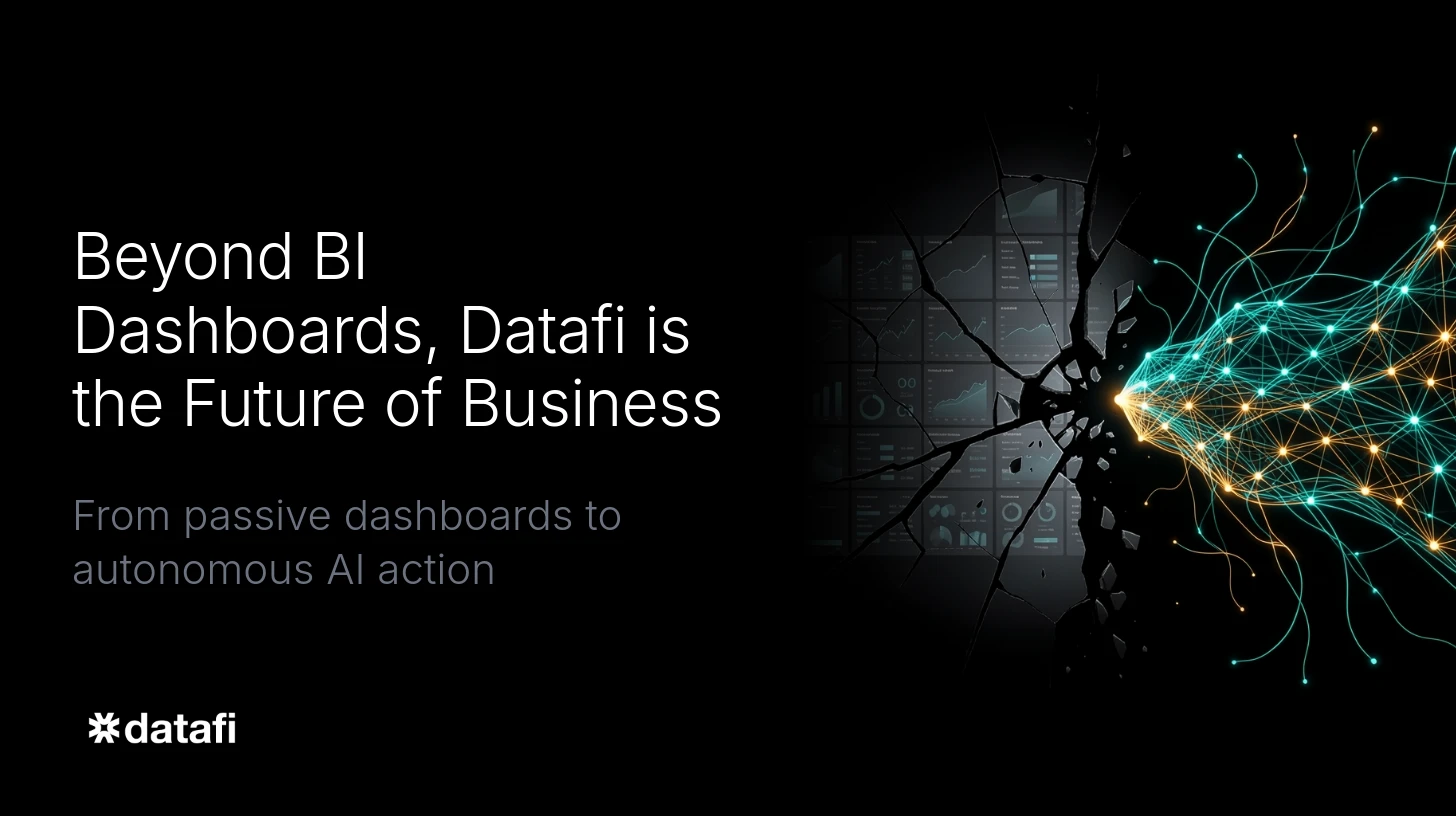
The dashboard era answered the question “what does our data say?” The AI operating system era answers a more powerful question: “what can our AI accomplish?” Organizations that make this shift stop optimizing for better reporting and start building a fundamentally different kind of business.
What Most Organizations Are Actually Getting from AI
The enterprise AI market has exploded. Copilots, assistants, chatbots, and generative tools have proliferated across every category of software. Organizations are experimenting at pace. And yet, a candid assessment of what most of these deployments accomplish reveals a familiar pattern: AI that answers questions rather than AI that solves problems.
A copilot embedded in a productivity suite can draft a document or summarize a meeting. A standalone chatbot can respond to HR policy inquiries or surface a CRM record. A generative tool can produce a first draft of a market analysis. These are genuinely useful capabilities, and they represent real efficiency gains at the individual contributor level.
What they do not represent is transformation.
Transformation requires AI that can hold the full context of a business, traverse the complete data ecosystem without being stopped at every governance boundary, reason through ambiguity with the accumulated knowledge of the organization, and take action, not just make recommendations. It requires AI that functions less like a research assistant and more like a seasoned operator who knows the business deeply, understands the constraints, and can be trusted to act.
That is not a prompt engineering problem. It is an architecture problem.
The Architecture Problem No One Is Talking About
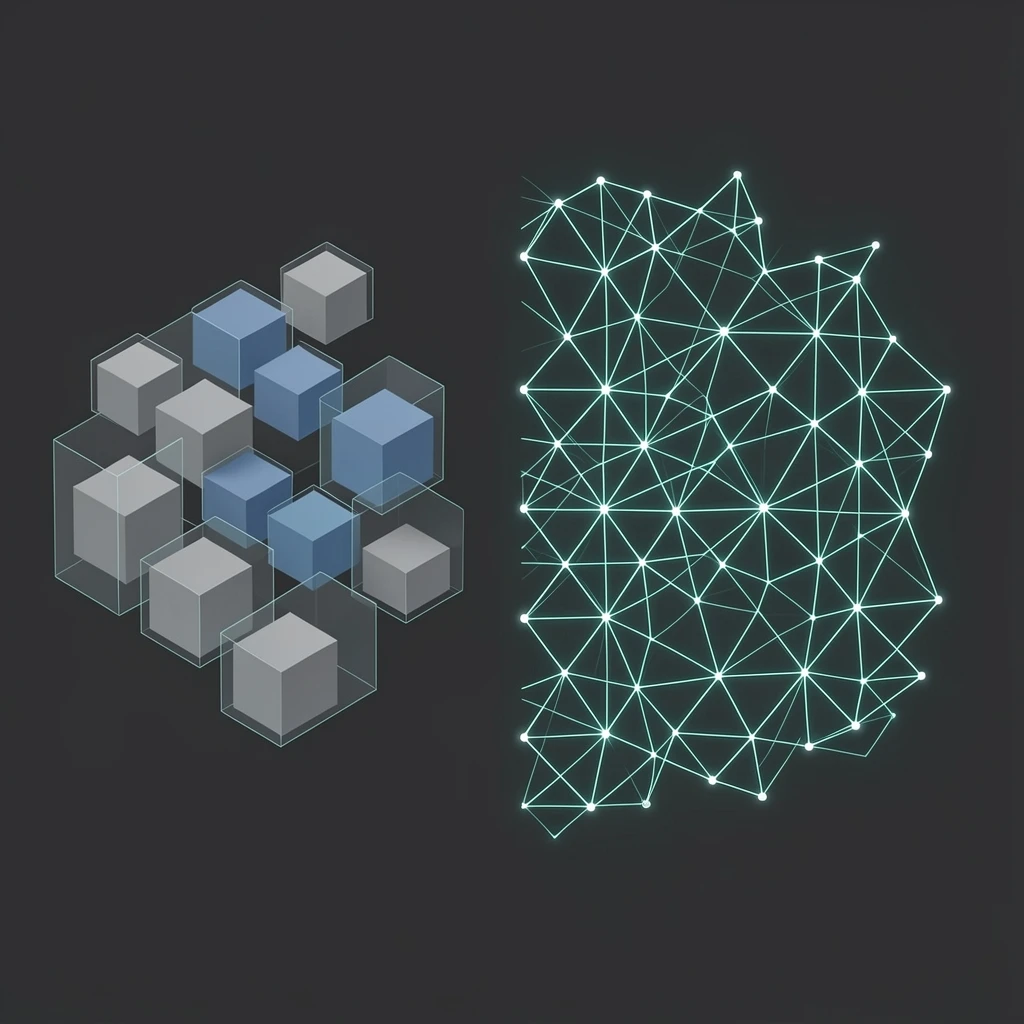
Most enterprise AI deployments are built on fragmented foundations. An LLM sits on top of a retrieval layer that has been wired to a subset of business data, usually documents, policies, and structured records from a few priority systems. The model is capable. The data behind it is not.
The result is AI that is intelligent in isolation and ignorant in context. It can reason brilliantly from the information it can see, but it cannot see enough to reason about what actually matters. Ask it a question that crosses organizational boundaries, like whether a supplier risk in procurement connects to a quality deviation in manufacturing, and it will either confabulate or tell you it does not have access.
This is not a failure of the model. It is a failure of the infrastructure.
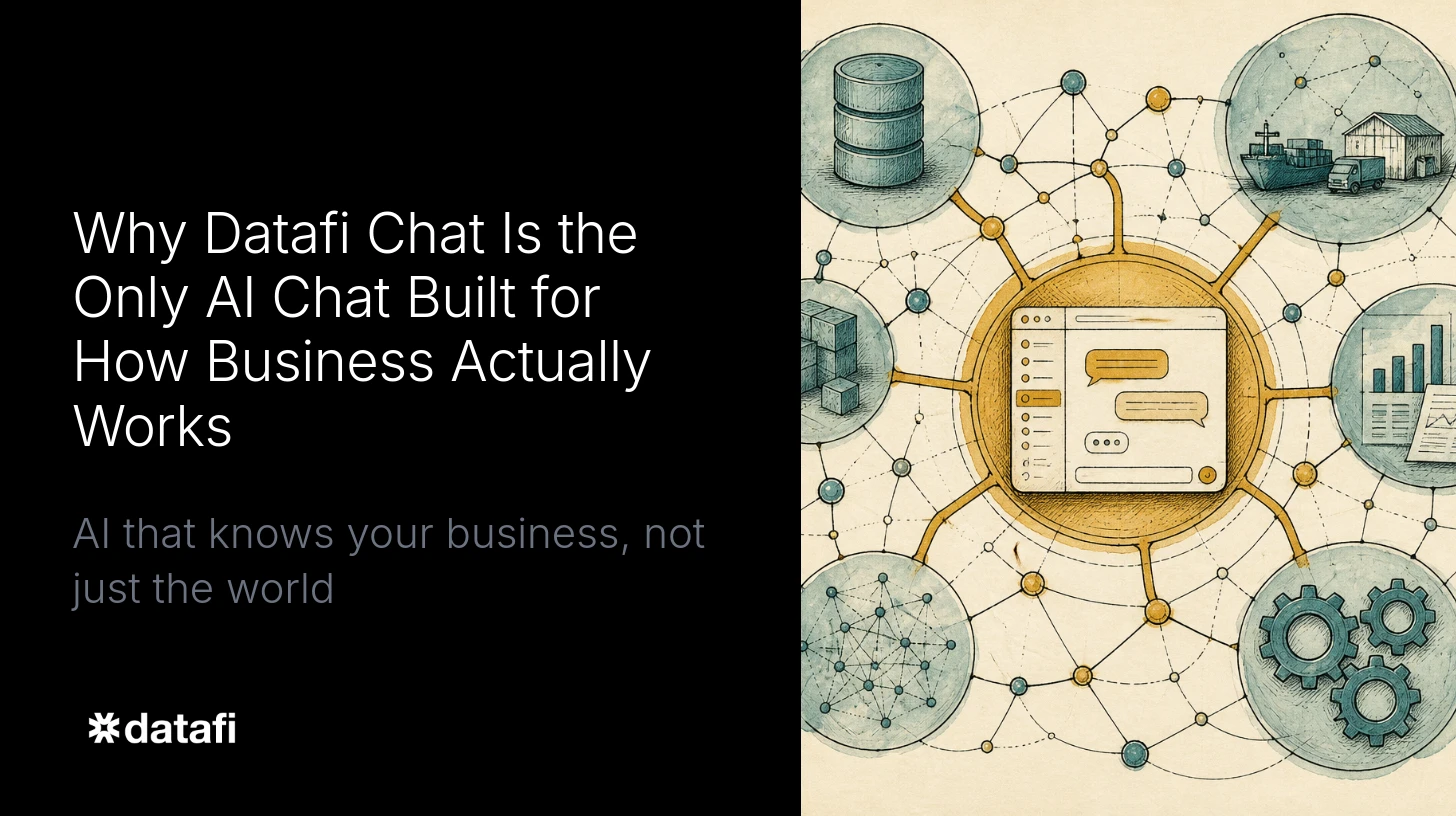
To move AI from assistant to operator, organizations need a vertically integrated data and AI stack. One that provides LLMs with access to the complete data ecosystem, structured and unstructured, real-time and historical, from operational systems and data warehouses alike. One that enforces the policy and governance controls that make that access trustworthy. One that presents all of this through an experience that non-technical employees can actually use.
This is the architecture Datafi was built to deliver.
The Datafi Operating System for AI
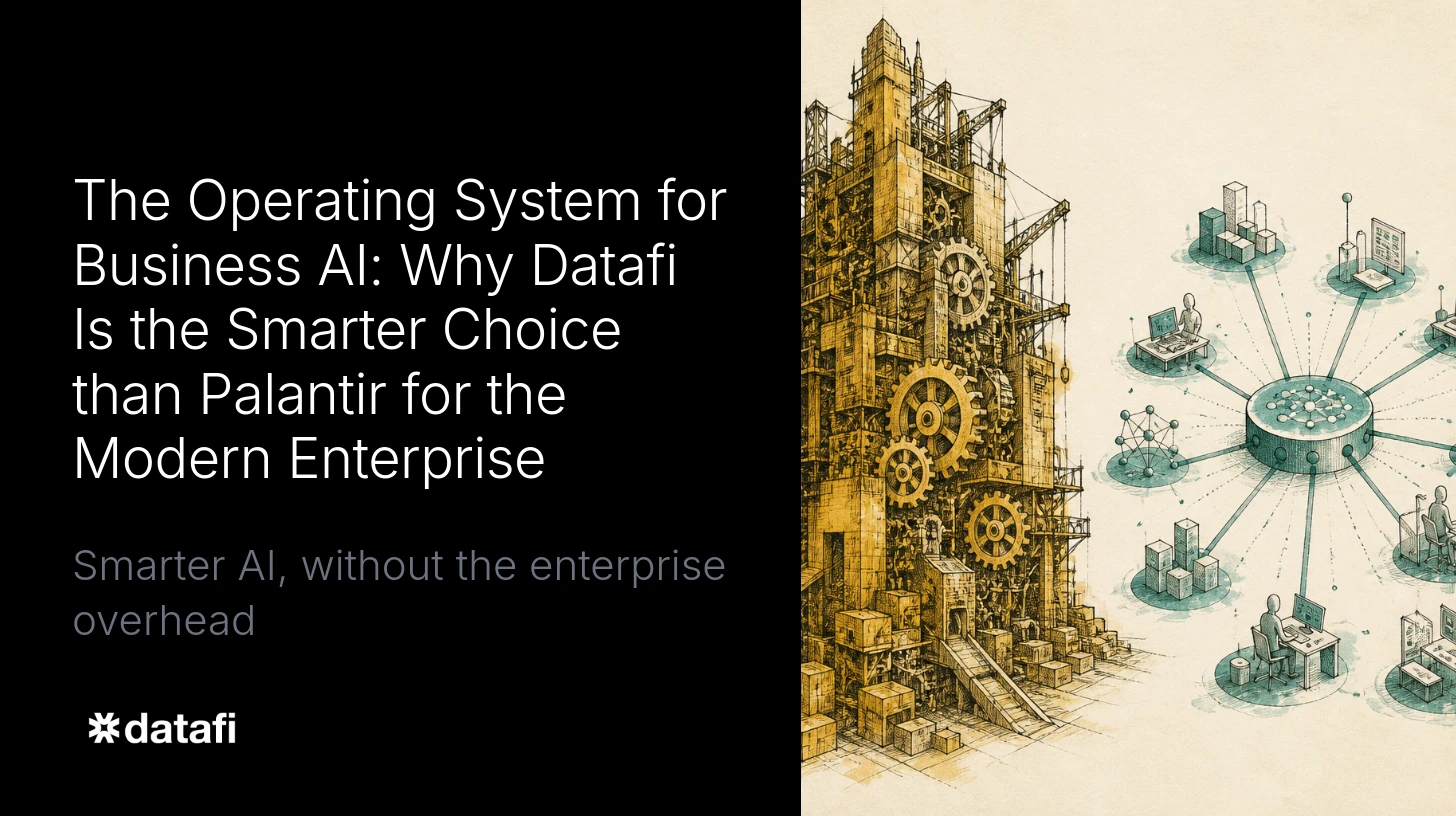
Datafi is not a dashboard replacement. It is not a chatbot platform. It is not a layer built on top of your existing data stack that adds AI features to the tools you already have.
Datafi is an operating system for AI at enterprise scale.
The distinction matters because an operating system does not just provide one capability. It provides the foundation on which every capability is built. It manages access, context, policy, and execution in a unified way so that every application built on top of it can benefit from those properties without reinventing them.
For AI to work in genuinely transformative roles across the enterprise, four things must be true simultaneously. The AI must know the business. It must have access to the data. It must operate within governance controls that the organization trusts. And it must be usable by the people who are closest to the problems it is solving.
Datafi makes all four true at once.
The Datafi platform gives LLMs full access to the enterprise data ecosystem, connecting across cloud data warehouses, operational databases, document repositories, IoT streams, and third-party systems. It applies policy and governance controls that determine what each user, role, and agent can see and do, without creating the hard walls that typically make governed systems unusable by AI. It provides a Chat UI designed from the ground up for non-technical users, so that the benefits of AI are not confined to the employees who know how to write queries or interpret model outputs. And it supports autonomous agentic workflows that can learn, plan, execute, and adapt across complex multi-step processes without requiring constant human orchestration.
This is what the Datafi operating system enables. Not a smarter dashboard. A smarter organization.
The Contextual Layer: Where Transformation Begins
One of the most underappreciated challenges in enterprise AI is the contextual layer. An LLM trained on general data knows a great deal about the world. It knows very little about your world.
It does not know that your Q3 revenue targets were revised in response to a competitor entering your primary market. It does not know that your highest-value customer segment has a six-month lag between contract signature and first expansion conversation. It does not know that maintenance events at your eastern facilities follow a seasonal pattern that your operations team learned from experience over twelve years.
This organizational knowledge, embedded in data, documents, decisions, and institutional memory, is the raw material of genuinely intelligent enterprise AI. Without it, even the most capable model is reasoning in a vacuum.
Building the contextual layer requires more than connecting a model to a few data sources. It requires persistent, comprehensive access to the full data ecosystem so that the AI can develop an accurate, nuanced understanding of how the business operates. It requires that this understanding be updated continuously as the business evolves. And it requires that the AI be able to use that understanding not just to answer questions, but to identify patterns, surface anomalies, generate hypotheses, and take action.
Datafi builds this contextual layer as a first-class architectural component. Every query, every workflow, every agent deployment runs against a business context that is complete, governed, and continuously current. This is what allows Datafi-powered AI to reason about real problems rather than curated data.
AI That Works Across the Entire Enterprise
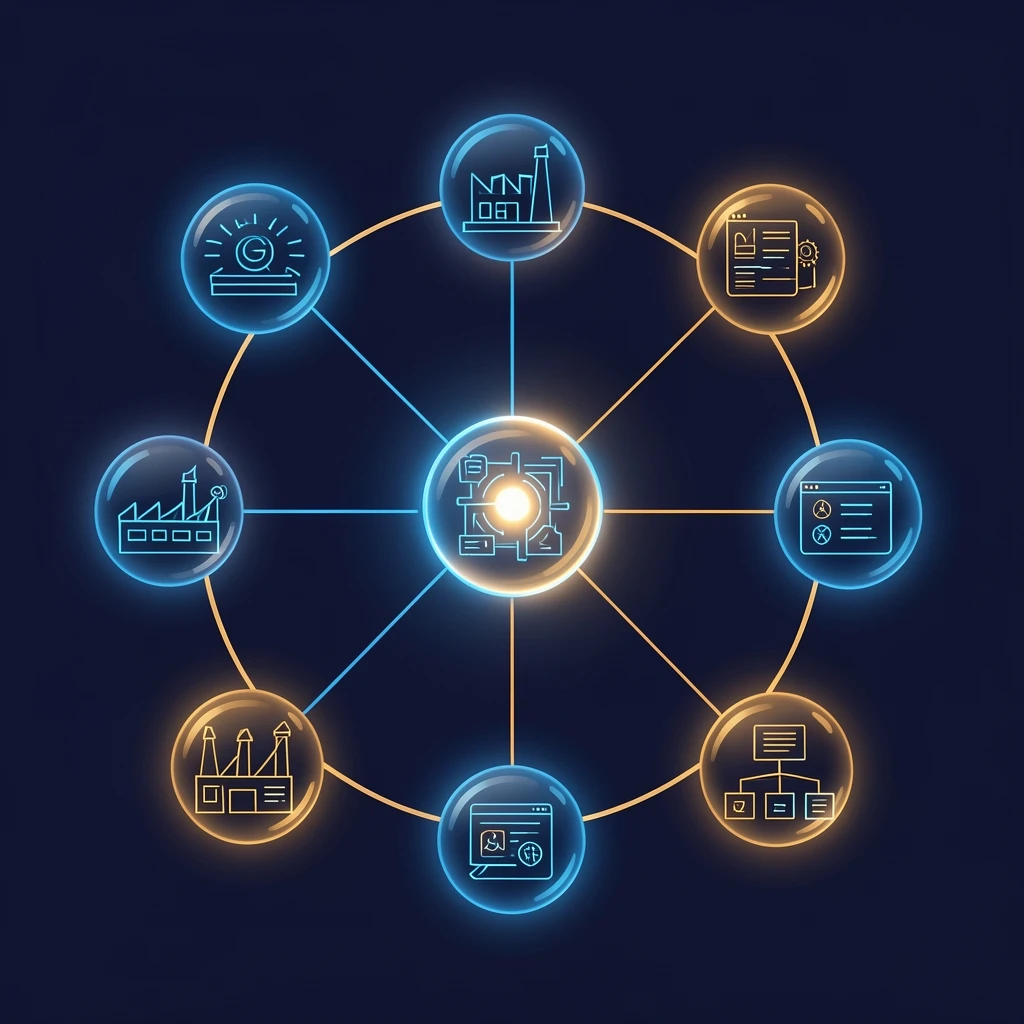
Consider what becomes possible when every employee, not just analysts, not just data teams, has access to AI that knows the full context of the business and can act on it.
In operations, a plant manager asks whether a pattern of minor sensor anomalies at a production line is consistent with the early signature of a failure event seen three years ago. The AI searches maintenance records, sensor histories, and incident logs across every facility, identifies the match, calculates the probable time to failure, and generates a work order for inspection before the shift ends. No dashboard was consulted. No analyst was involved. A problem that would have surfaced as unplanned downtime next week was resolved today.
In commercial, a sales leader preparing for a strategic account review asks the AI to identify which product combinations have historically driven the highest expansion revenue with enterprise accounts in similar industries. The AI traverses CRM data, contract histories, usage logs, and industry benchmarks to surface a recommendation that reflects the actual performance of the portfolio, not the assumptions in last year’s sales playbook.
In workforce planning, an HR executive asks what the current skills gap across the engineering organization looks like relative to the three-year product roadmap. The AI synthesizes competency data, project assignments, hiring histories, and product planning documents to produce a capability map that would have taken a team of analysts six weeks to build manually.
In each of these cases, the value does not come from the AI answering a question more efficiently. It comes from the AI solving a problem that would not have been solved otherwise, because the data was too distributed, the context too complex, and the analysis too time-consuming for any individual or team to execute at the speed the business requires.
This is the difference between AI that answers questions and AI that transforms outcomes. And it is only achievable with the full stack that Datafi provides.
Agents and Workflows: AI That Acts
The most significant shift in enterprise AI over the next five years will not be in model capability. It will be in autonomy.
The models available today are already capable of reasoning through problems of extraordinary complexity. What limits their organizational impact is not intelligence. It is access, governance, and the infrastructure required to sustain long-running, multi-step autonomous processes.
Agentic AI is not a chatbot that takes a next step. It is a system that can receive a goal, decompose it into a plan, execute across multiple data systems and business applications, adapt when it encounters unexpected information, and complete the work without requiring a human to hold its hand through every decision.
Predictive maintenance agents that monitor asset health continuously, dispatch inspections proactively, and update maintenance schedules based on real-time performance data. Operations optimization agents that identify throughput inefficiencies, model intervention scenarios, and recommend schedule adjustments before bottlenecks form. Strategic planning agents that synthesize market signals, internal performance data, and competitive intelligence to surface planning assumptions that deserve challenge.
These are not science fiction. They are the near-term deployments that Datafi’s architecture makes possible today, because the foundation required to support them is already in place.
From BI to AI: The Transition Organizations Cannot Afford to Delay
The organizations that will lead their industries over the next decade are not the ones that built the best dashboards. They are the ones that figured out how to put AI to work in the critical thinking and decision-making roles that have historically required their most experienced people.
That transition is not accomplished by adding AI features to existing tools. It is accomplished by building on a foundation designed for AI from the start. One that treats data access, governance, contextual intelligence, and autonomous workflow as integrated properties of the platform rather than bolt-on capabilities added after the fact.
Datafi exists because that foundation did not exist. And because the gap between what organizations need AI to do and what current approaches allow it to do is too consequential to close incrementally.
The era of the dashboard was defined by the question: what does our data say? The era of the Datafi operating system is defined by a different question entirely: what can our AI accomplish?
The organizations asking that second question, and building the infrastructure to answer it, are not optimizing for better reporting. They are building a fundamentally different kind of business. One where every employee has access to the analytical capacity of the entire organization. Where AI agents handle the work that is too complex, too distributed, or too time-sensitive for any human team to manage alone. Where the gap between data and decision narrows to the point where competitive advantage is measured not in quarters but in hours.
That is the future Datafi is building. Not a better way to visualize what happened. A better way to determine what happens next.
Datafi is an applied AI software company building the operating system for enterprise AI. The Datafi platform provides organizations with unified data access, policy-governed AI, and agentic workflow capabilities designed to move every employee from passive data consumer to active problem solver.