



Industry Series: AI for Freight and Logistics | Part 1 of 3
There is a problem hiding inside every LTL terminal in America, and most operations leaders know exactly what it is. They just have not yet found a way to solve it.
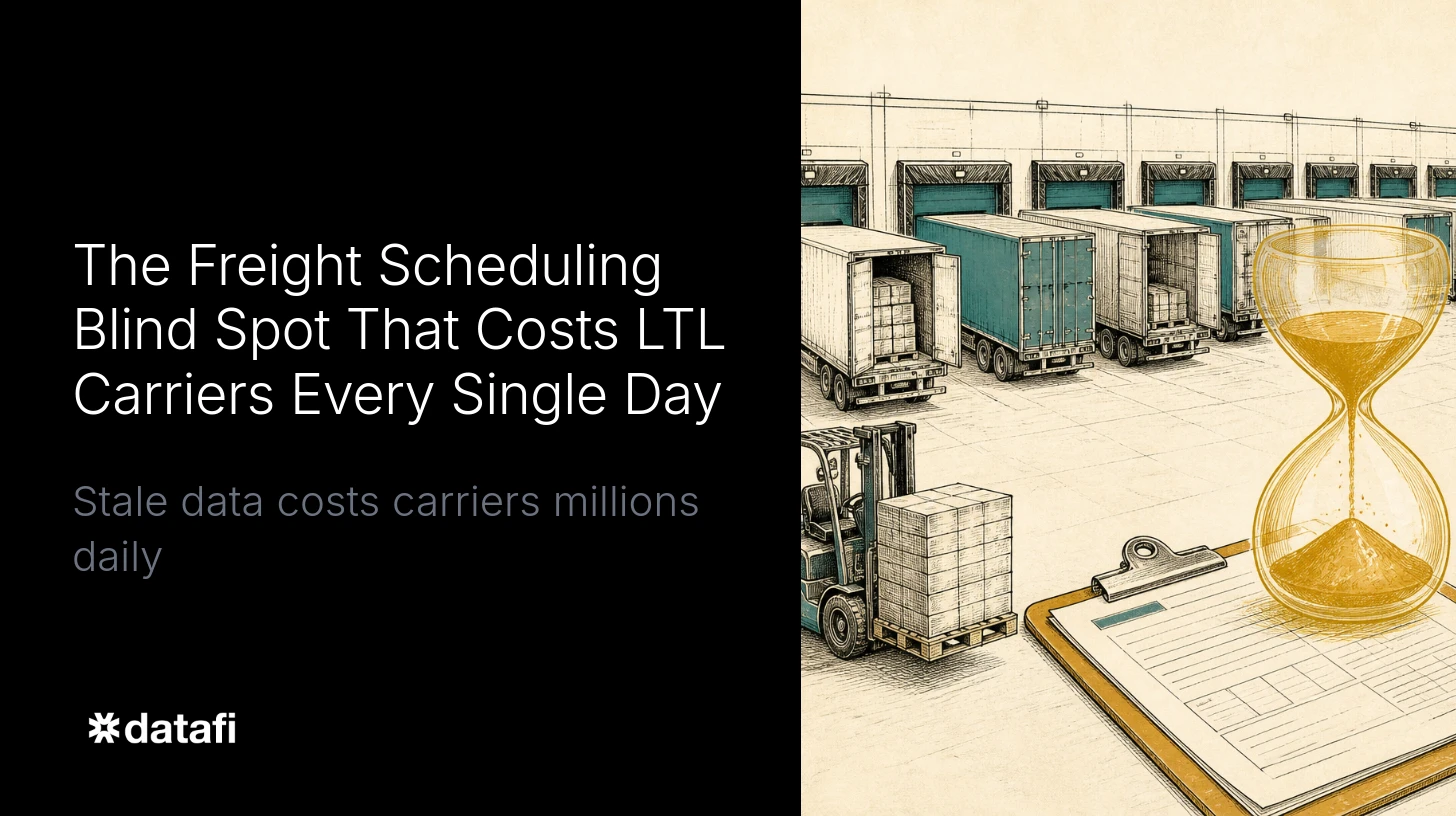
Freight arrives. Drivers hand over bills of lading. Those documents move through a manual data entry process that takes hours. And in those hours, the operations team making decisions about dock assignments, labor scheduling, and next-day planning is working from information that is already stale. They are scheduling workers to handle freight volumes they cannot fully see. They are allocating dock doors to shipments they cannot accurately count. They are making decisions that will cost them in overtime, in idle time, and in service failures because the data that should be guiding those decisions has not yet made it into their systems.
This is the freight scheduling blind spot. It is not a new problem. It is not a technology problem in the traditional sense. It is a data-timeliness problem, and it repeats itself every single day across the industry.
The freight scheduling blind spot is not an OCR problem or a visibility problem. It is a data-timeliness problem that requires AI capable of continuously processing, connecting, and surfacing freight information across the entire operational ecosystem before decisions are made on stale data.
The Hidden Cost of Lag
Most carriers understand their operational costs in aggregate. They know their cost per shipment, their cost per mile, their labor cost as a percentage of revenue. What is harder to quantify is the specific cost of decisions made on incomplete information.
Consider the labor scheduling decision that every terminal manager makes at the end of each shift. The inputs to that decision should include how much freight is inbound, what service commitments are attached to each shipment, what dock capacity is available, and what staffing level will handle the volume efficiently without generating unnecessary overtime. In theory, all of that information exists in the carrier’s systems. In practice, the most time-sensitive piece of that picture, the actual freight volume inbound from that day’s pickups, is sitting in a stack of paper bills of lading waiting to be manually entered.
The result is that terminal managers default to experience and intuition. They schedule based on patterns and averages, not actuals. When they are right, everything runs smoothly. When they are wrong, the carrier absorbs the cost in one of two directions: too many workers standing by while freight trickles in, or too few workers scrambling as freight volumes exceed what was anticipated.
Neither outcome is acceptable in an industry where operating ratios are measured in basis points. The best-performing LTL carriers in the country, operators like Old Dominion Freight Line, run operating ratios in the low-to-mid seventies, meaning that every dollar of unnecessary labor cost or overtime premium hits a margin that is already thin.
Why the Traditional Approaches Have Not Fixed It
The industry has tried to solve this problem before. Optical character recognition tools promised to automate data entry from paper documents. Electronic bill of lading initiatives promised to eliminate the paper problem entirely. Visibility platforms promised to give operations teams a real-time picture of their freight.
Each of these approaches moved the needle. None of them closed the gap.
OCR tools reduced manual keystrokes but still required human review and correction. eBOL adoption accelerated but remained inconsistent, particularly across smaller shipper relationships. Visibility platforms provided good data on freight in transit but could not always close the loop at the terminal level where the scheduling decisions were actually being made.
The underlying challenge is that turning raw freight documents into actionable scheduling intelligence requires more than reading a piece of paper. It requires understanding the context of the data, connecting it to existing systems, resolving inconsistencies, and surfacing the right insights to the right people at the right moment. That is not an OCR problem. It is not a visibility problem. It is an AI problem, and it requires an AI operating system designed to work across the full data ecosystem of the business.
What AI-Driven Freight Intelligence Actually Looks Like
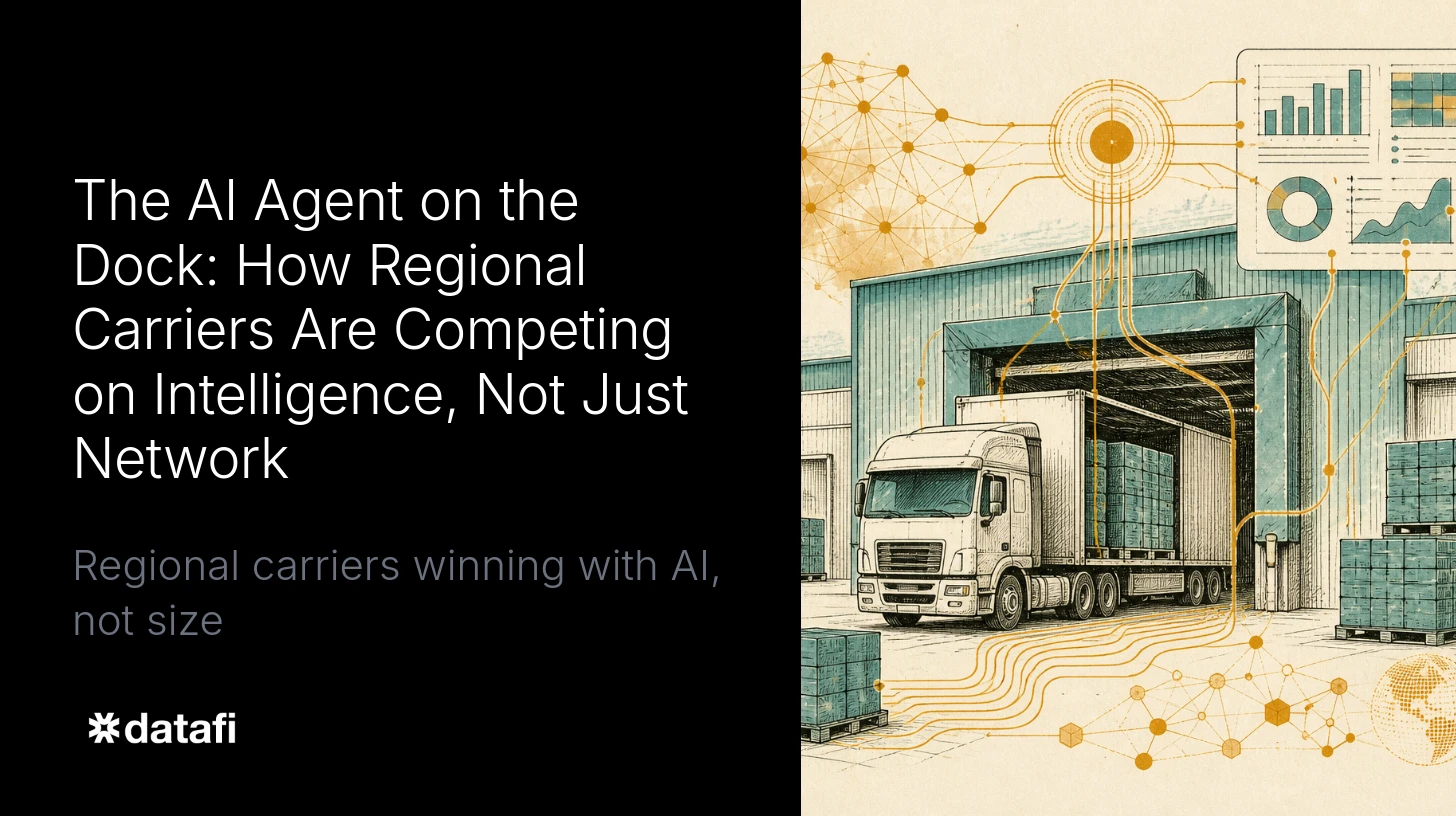
A regional LTL carrier operating across the western United States recently deployed an AI agent through the Datafi platform specifically to address this problem. The carrier ran a terminal network spanning dozens of locations with thousands of daily pickups generating a continuous stream of bill of lading documents that had historically flowed through manual data entry before becoming visible in operations systems.
The Datafi AI agent was built to process incoming freight documents, extract and validate the data, reconcile it against existing shipment records, and push accurate freight volume information into operations systems in real time, without manual intervention. The agent did not replace the bill of lading process. It transformed how quickly that process translated into actionable intelligence.
The operational impact was immediate and measurable across three dimensions.
Labor scheduling accuracy improved materially. Terminal managers gained accurate, real-time freight volume data hours earlier than they had previously received it. Scheduling decisions that had been made on averages and estimates were now made on actuals. The reduction in scheduling buffers that had previously been built in to compensate for data uncertainty translated directly into a measurable reduction in unproductive labor hours, with the carrier seeing overtime costs fall by an estimated 15 to 20 percent at terminals where the AI agent was fully deployed.
Data entry costs collapsed. The manual process of transcribing bill of lading data, with its associated labor cost, error rate, and delay, was largely replaced by autonomous AI processing. Industry benchmarks suggest that a carrier handling as little as 50,000 loads annually can eliminate more than 4,000 hours of annual manual labor by reducing just five minutes of processing time per load. For a carrier operating at this scale, that translates to the equivalent of two full-time positions redirected from data entry to higher-value operational work.
Downstream exception rates fell. When freight volume data enters operational systems late and inaccurately, the downstream effects cascade through dock management, driver scheduling, and customer service. The carrier deploying Datafi found that more accurate, timely freight data reduced the exception rate tied to scheduling mismatches, with measurable improvements in on-time dock processing that compounded through the service delivery chain.
The Broader Principle at Work
The blind spot problem is not unique to bill of lading processing. It is a pattern that shows up across freight operations wherever there is a gap between when information exists in the physical world and when it becomes usable in operational systems. Proof of delivery documents. Inspection records. Driver logs. Exception reports. Each of these represents a moment where valuable operational data is created but not yet actionable, and where decisions are being made in the absence of information that already exists.
Closing these gaps requires AI that can operate autonomously across the data ecosystem of the business, not AI that answers questions when asked but AI that continuously processes, connects, and surfaces the information that operations depend on. This is the distinction between AI as a tool and AI as an operating system, and it is the distinction that determines whether the blind spot gets narrower or disappears entirely.
The carriers who understand this distinction are not waiting for the next generation of visibility platforms or the next wave of eBOL adoption. They are deploying AI agents that operate at the intersection of their data, their systems, and their operations, and they are measuring the results in the cost and service metrics that matter most to their business.
The freight scheduling blind spot has cost the industry billions of dollars in aggregate over decades. It is finally solvable. The question is which carriers will solve it first.
Datafi is the Business AI Operating System for freight, logistics, and other data-intensive industries. Built on a vertically integrated data and AI technology stack, Datafi enables unified data experiences, autonomous AI agents, and embedded governance that transform how organizations use AI across the enterprise. Learn more at datafi.co.
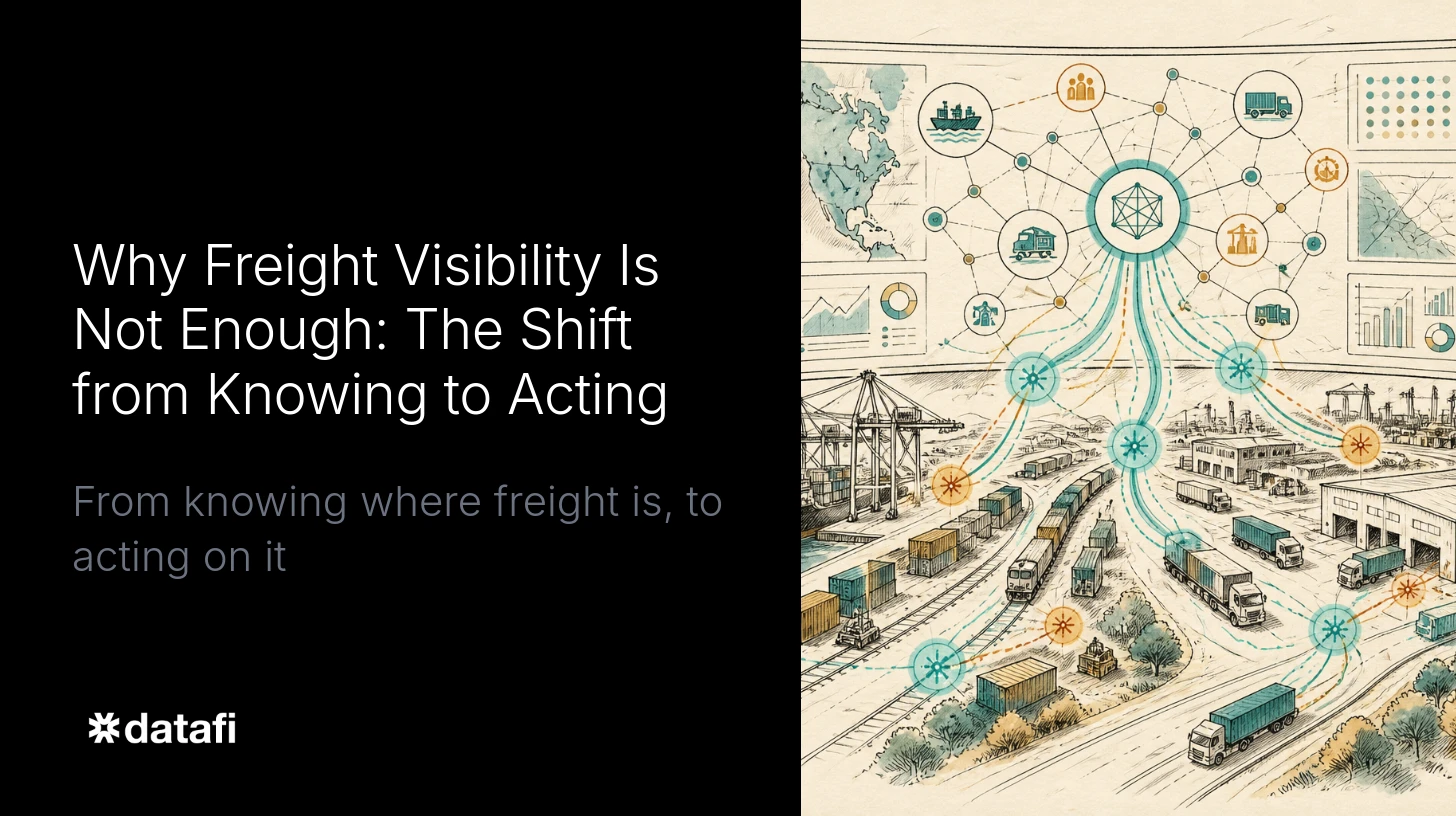
Next in the series: Why Freight Visibility Is Not Enough: The Shift from Knowing to Acting