


Every manufacturer knows the feeling. A quality alert fires. Production slows or stops. A room fills with people staring at dashboards that show something went wrong but offer no explanation for why. The clock is ticking, customers are waiting, and the people closest to the problem are spending the first two hours of a crisis not solving it but hunting for the data they need to begin.
This is not a technology failure. It is an architecture failure. And it is exactly the kind of problem Datafi was built to solve.
Quality investigations fail not because teams lack skill, but because the data they need lives across disconnected systems. Datafi connects your entire data ecosystem under a single governed AI layer, compressing hours of data gathering into a structured, evidence-driven investigation that begins the moment an alert fires.
The Anatomy of a Quality Investigation

Quality deviations in manufacturing and operations environments are rarely simple. A batch fails specification. A defect rate climbs outside control limits. A supplier component triggers a cascade of non-conformances across a production line. In each case, the investigation that follows touches virtually every corner of the enterprise data ecosystem: ERP systems holding production orders, material traceability, and supplier records; MES platforms capturing machine state, operator inputs, and process parameters; LIMS databases containing lab results and certificate of analysis records; SPC tools tracking statistical trends; and CMMS systems logging maintenance events and equipment history.
Each of these systems was designed to do one thing well. None of them was designed to talk to the others. And none of them was designed to answer the question that matters most in the middle of a quality crisis: why did this happen, and what do we do about it?
Root cause analysis has traditionally required a skilled quality engineer to manually gather data from each of these sources, normalize it into a common format, align timestamps across systems that often disagree on what time it is, and then apply structured analysis frameworks like Fishbone diagrams or 5-Why methodologies to work toward a cause. On a good day, with experienced personnel and accessible data, this takes hours. When data is siloed, permissions are fragmented, or the right person is unavailable, it can take days. In regulated industries like pharmaceuticals, medical devices, or aerospace, the documentation requirements on top of that investigation add still more time before corrective action can begin.
The cost of that latency is not abstract. Every hour of delayed root cause is an hour of continued exposure to a defect-causing condition, potential product in the field that may need recall evaluation, and yield loss that compounds on the production floor. The investigation process itself is a business problem, not just an operational inconvenience.
What Makes Quality RCA Hard for AI
The first generation of AI tools applied to quality management promised fast answers. In practice, most delivered fast responses to narrow questions. Ask a generic AI assistant about a batch failure and it will explain what a batch failure is. Ask it to help you investigate a specific non-conformance event and it immediately runs out of context. It has no access to your production data. It cannot see your MES logs. It does not know that the machine in question went through a scheduled maintenance window three days before the event, or that the raw material lot used in the affected batch came from a supplier who had two similar rejections in the prior quarter.
Generic AI answers questions in a vacuum. Solving a quality problem requires answers rooted in your specific data ecosystem, your specific production history, your specific supplier relationships, and the specific sequence of events that preceded the deviation. Without that context, AI is a sophisticated search engine, not a problem-solving partner.
This is the architectural distinction that defines Datafi’s approach. Datafi does not connect to a single source and summarize it. Datafi connects to your entire data ecosystem simultaneously, governed by the access and compliance rules your organization has already established, and brings full business context to every investigation. The result is not a faster way to answer the same narrow questions. It is the ability to answer questions that were previously impossible to ask without assembling a cross-functional team and spending a day on data preparation.
Generic AI answers questions in a vacuum. Solving a quality problem requires answers rooted in your specific data ecosystem, your specific production history, and the specific sequence of events that preceded the deviation.
The Datafi Approach to Quality Deviation Root Cause Analysis
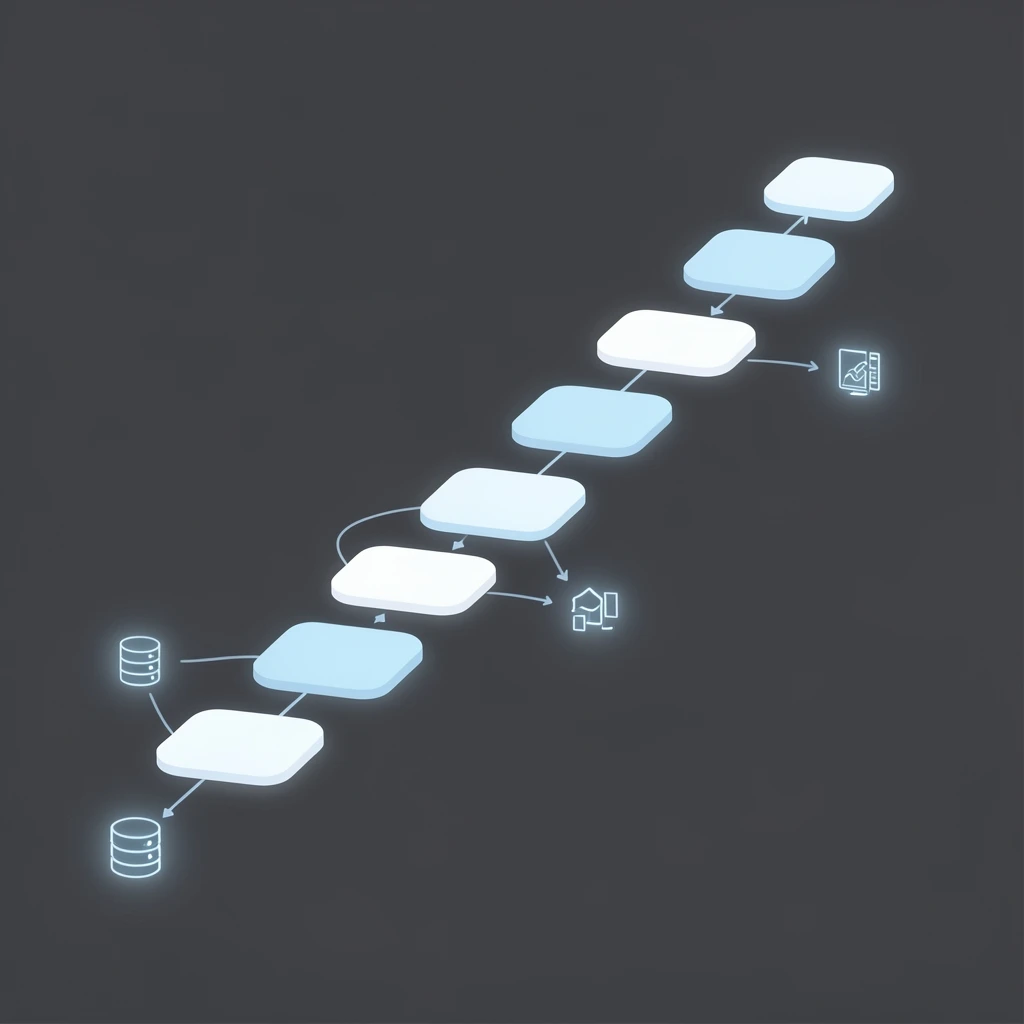
When a quality deviation event is initiated in Datafi, the platform does not wait for a human to start querying individual systems. It begins building context immediately, pulling together the connected data landscape that surrounds the event: the affected batch or production run, the equipment and process parameters active during that window, the materials and components consumed, the operator and shift data, the environmental monitoring records, and the inspection and test results that flagged the deviation in the first place.
This context assembly happens across all connected sources simultaneously. Datafi’s governed data access layer ensures that every data point surfaced respects the permissions and compliance boundaries your organization has configured. A quality engineer investigating a batch failure sees everything relevant to their role and nothing outside their authorized scope. A supplier quality manager investigating a component non-conformance sees their slice of the same investigation without exposure to internal cost data or customer-specific configuration details. Governance is not a barrier to investigation. In Datafi, governance is part of the investigation architecture.
With full context in place, the quality engineer engages Datafi’s AI in plain language. Not a structured query. Not a drop-down menu. A natural conversation that mirrors the way experienced investigators actually think through problems.
“Show me all process parameter deviations on Line 4 in the 72 hours before Batch 2241 was flagged.”
“Were there any maintenance events on the sealing equipment between the last conforming batch and this one?”
“Has this raw material lot been used in any other batches this month, and what were their quality outcomes?”
“Compare the environmental monitoring data for this batch against the last ten conforming batches from the same line.”
Each of these questions, in a traditional environment, would require a separate system login, a separate data pull, and manual reconciliation of formats and timestamps before the results could be compared. In Datafi, they are answered within a single governed conversation that draws on all connected sources simultaneously. The quality engineer is not switching between tools. They are investigating.
From Pattern Recognition to Probable Cause
What distinguishes Datafi’s approach from a faster data retrieval tool is the platform’s capacity to surface patterns across data sources that a human investigator might not think to check or might not have time to assemble.
Consider a scenario where a pharmaceutical manufacturer experiences an out-of-specification result on a granulation step. The obvious investigation paths are process parameters, raw material attributes, and equipment state. A Datafi-powered investigation covers all of these simultaneously, but it also draws correlations that span the full connected ecosystem. It might surface the fact that a calibration tolerance drift on a moisture sensor had been trending for eleven days before the OOS event, visible only when CMMS calibration records and MES sensor logs are read together against the same timeline. It might identify that three of the five previous batches run on the same equipment used the same secondary supplier for a specific excipient, while the two conforming batches in that window used a different supplier source.
These are not conclusions that require sophisticated statistical modeling. They are pattern recognitions that require connected data. The reason human investigators miss them is not a lack of skill. It is a lack of time and access to assemble the full picture. Datafi assembles that picture continuously, in the background, as the investigation conversation unfolds.
When a probable cause emerges, Datafi helps the quality engineer build the evidentiary record that supports it. Relevant data points, timeline reconstructions, cross-system correlations, and referenced records are all available within the same governed workspace. In regulated environments where investigation documentation must meet specific standards, including FDA 21 CFR Part 11 or ISO 9001 audit trail requirements, Datafi’s structured conversation and data lineage features support the documentation workflow directly, reducing the administrative burden of converting an investigation into a compliant deviation report.
Connecting Root Cause to Corrective Action
Root cause analysis is only valuable if it leads to action. In many organizations, the investigation and the corrective action process live in separate systems with a human handoff in between. The quality engineer finishes an investigation, writes a report, and hands it to a CAPA coordinator who begins the corrective action process with the investigation record as their only input. Context is lost at every handoff.
Datafi maintains continuity across the investigation and corrective action workflow. When a probable root cause is established, the platform can surface the historical record of corrective actions taken for similar causes in prior events, allowing the quality team to evaluate what has worked before and what has not. It can identify related open CAPAs that may already be addressing contributing factors, preventing duplicate effort and ensuring that systemic issues are addressed at the right level. It can flag whether a proposed corrective action requires supplier engagement, equipment modification, or procedural update, and surface the relevant supplier agreements, equipment specifications, or controlled documents from connected systems to support the action planning process.
This is what it means to solve problems rather than answer questions. The investigation does not end with a cause identified. It ends with a corrective action plan connected to the same data ecosystem that revealed the cause, with full traceability from event to resolution.
Scale, Governance, and the Organization That Benefits
Quality deviation root cause analysis is often perceived as a specialized workflow for quality engineers and regulatory affairs teams in large manufacturing organizations. In practice, the underlying challenge, connecting fragmented data sources quickly enough to diagnose problems before they compound, is universal across industries and organization sizes.
A medical device company with a field complaint investigation faces the same architectural problem as a food manufacturer dealing with a process deviation. A logistics provider investigating a fulfillment accuracy failure faces the same disconnected data landscape as a pharmaceutical company investigating a batch failure. In each case, the people responsible for resolving the problem spend the majority of their investigation time finding data rather than analyzing it.
Datafi’s platform is built for organizations that cannot afford to have that ratio remain inverted. The vertically integrated architecture that makes governed multi-source data access possible at enterprise scale is the same architecture that makes it accessible for mid-market organizations that lack the data engineering resources to build custom integration pipelines. Datafi removes the infrastructure barrier between a quality team and the full data context their investigations require, regardless of how many systems that context lives across.
The Standard Worth Setting
The benchmark for quality investigation should not be how quickly a team can gather data. It should be how quickly a team can reach a well-evidenced conclusion and act on it. Those are different problems, and only the second one creates business value.
Datafi exists to eliminate the data gathering problem entirely, so that the full cognitive capacity of quality professionals can be directed at the analysis and decision-making that only humans can provide. When an AI platform brings full business context to every investigation, connects root cause to corrective action without losing continuity, and does so within the governance boundaries an organization has already defined, root cause analysis stops being a fire drill and becomes a structured, fast, evidence-driven process.
That is the standard Datafi sets. Not AI that answers questions about quality deviations. AI that helps organizations solve them.
Datafi connects your entire data ecosystem to give your teams the context they need to investigate faster, act with confidence, and resolve problems at their source. Explore how Datafi can transform quality operations in your organization.