


What Is a Data View?
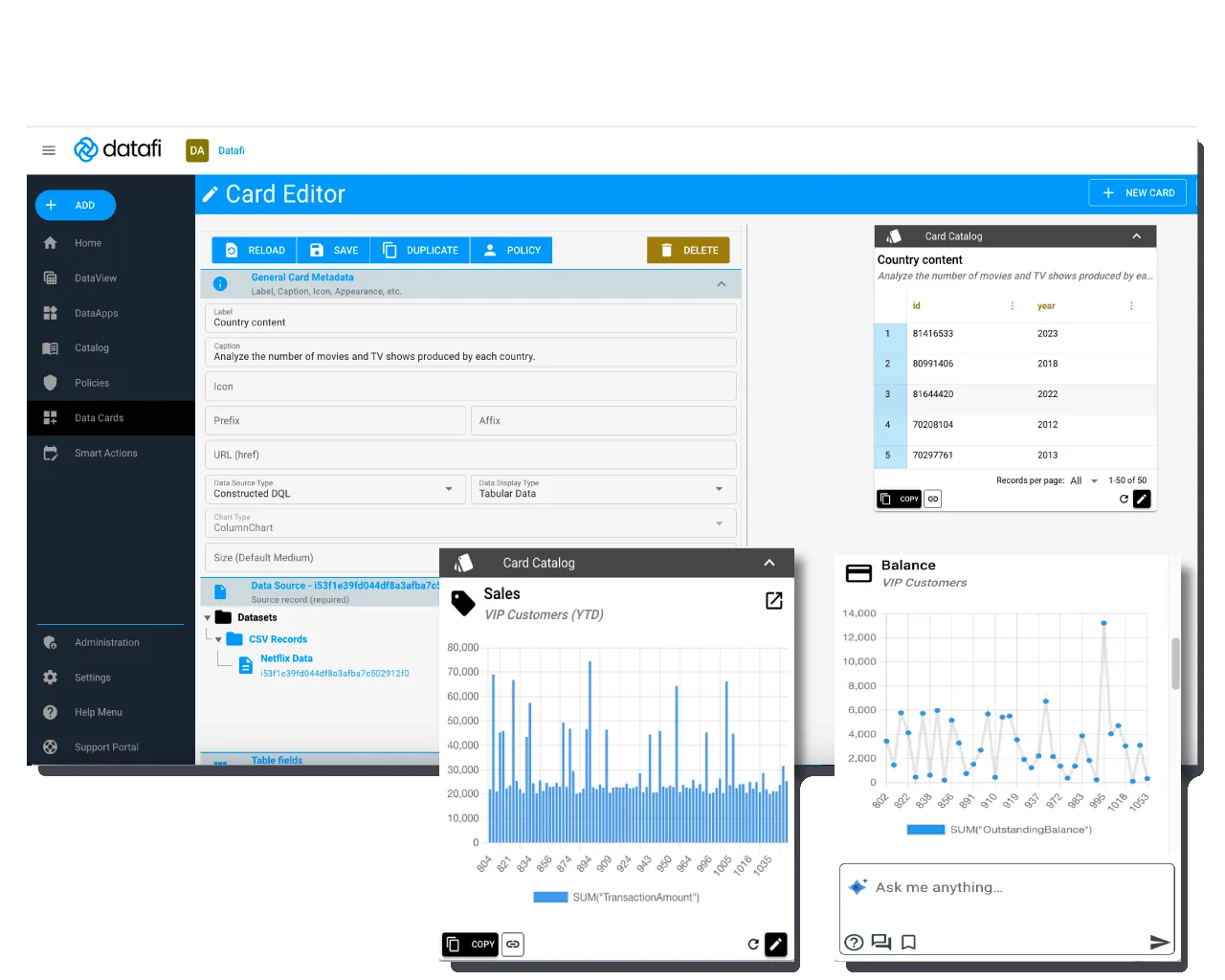
A data view functions as a virtual table, or curated subset, drawn from one or more databases. Rather than containing all records like standard tables, data views employ filters to reveal only pertinent information. These constructs store no actual data but provide a focused lens into underlying datasets.
Data views provide a focused lens into underlying datasets without storing actual data. They act as virtual tables that filter and curate information from one or more databases, letting teams access exactly the data they need without duplicating or modifying the source.
Key Benefits of Using Datafi Data Views
Data Simplification: Views eliminate unnecessary noise and highlight critical metrics, accelerating discovery of insights and exploration efficiency.
Improved Security: By restricting visibility to essential data subsets, views safeguard sensitive fields and help organizations comply with privacy regulations.
Faster Performance: Queries execute more rapidly since views retrieve only needed records, enhancing reporting and analytics capabilities.
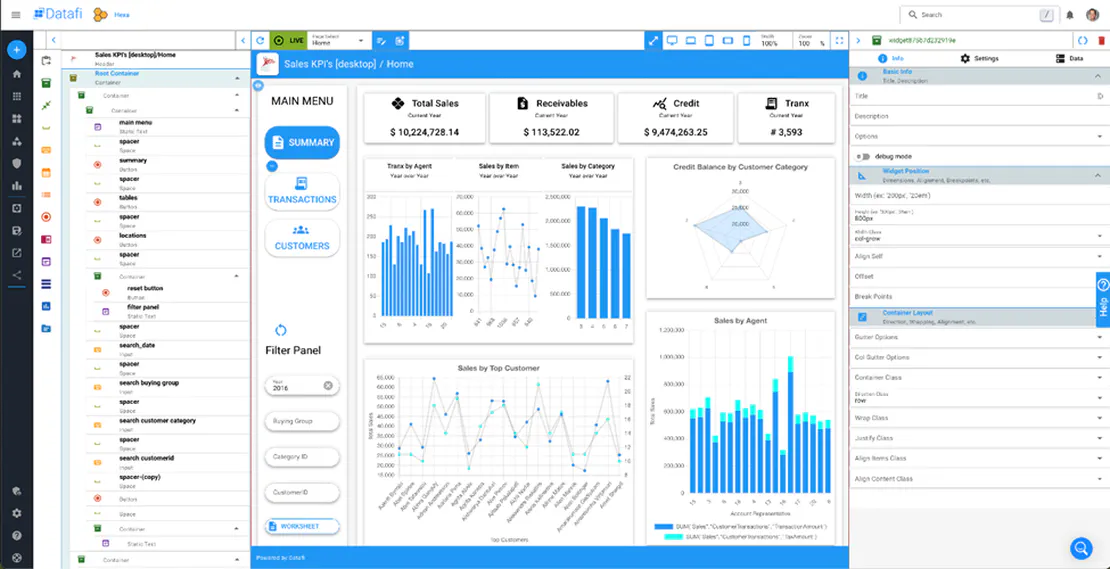
Flexibility and Customization: Different teams can customize views for their specific departments without modifying the core database architecture.
Best Practices for Implementation
Why Data Views Matter
Well-structured data views simplify understanding of complex information, strengthen security posture, and boost operational performance, enabling organizations to make informed business decisions.
The bottom line
Well-structured data views enable organizations to make informed decisions by simplifying complex information, strengthening security, and boosting performance. By investing in purposeful data views, teams gain reliable, focused access to the insights that drive better outcomes.