

A new operating model is emerging for HVAC distributors. The winners will be the ones who stop treating AI as a tool and start treating it as the operating system of their business.
The HVAC distribution industry sits at a fascinating inflection point. With over 450 wholesale locations across the U.S. and Canada and a product catalog spanning equipment, parts, and supplies for residential, light commercial, refrigeration, and facilities maintenance, a distributor like Johnstone Supply represents the connective tissue of an industry that touches virtually every building in North America. That position is both an enormous asset and, increasingly, a strategic vulnerability.
The same complexity that makes HVAC distribution indispensable — tens of thousands of SKUs, thousands of contractor relationships, volatile seasonal demand, and a service model that lives and dies on part availability — is precisely the complexity that traditional systems were never designed to manage intelligently. Spreadsheets, ERP islands, and reactive ordering cycles were built for a slower world. That world is gone.
Distributors who position themselves as the intelligence layer between manufacturers and contractors, by deploying a unified AI operating system across their full data ecosystem, will capture disproportionate market value. Those who remain order-takers risk being disintermediated entirely.
AI algorithms can reduce HVAC energy consumption by up to 20% by dynamically adjusting outputs based on real-time occupancy, weather data, and energy tariff rates. But that is only the beginning of what is possible when AI is given the full context of a business — not just a sensor feed, not just an order history, but the complete operational picture from demand signal to delivery.
The Problem with Point Solutions
Most AI conversations in the HVAC space focus on narrow applications: a chatbot for order status, a dashboard for inventory levels, an alert when a compressor anomaly is detected. These are useful. They are not transformative.
The reason is structural. Point solutions operate on fragments of the business. A predictive maintenance tool knows the equipment data. A procurement system knows the inventory data. A CRM knows the contractor relationship data. None of these systems know what the others know, and none of them can reason across the full picture to act on behalf of the business.
This is the core problem Datafi was built to solve.
What an AI Operating System Actually Does
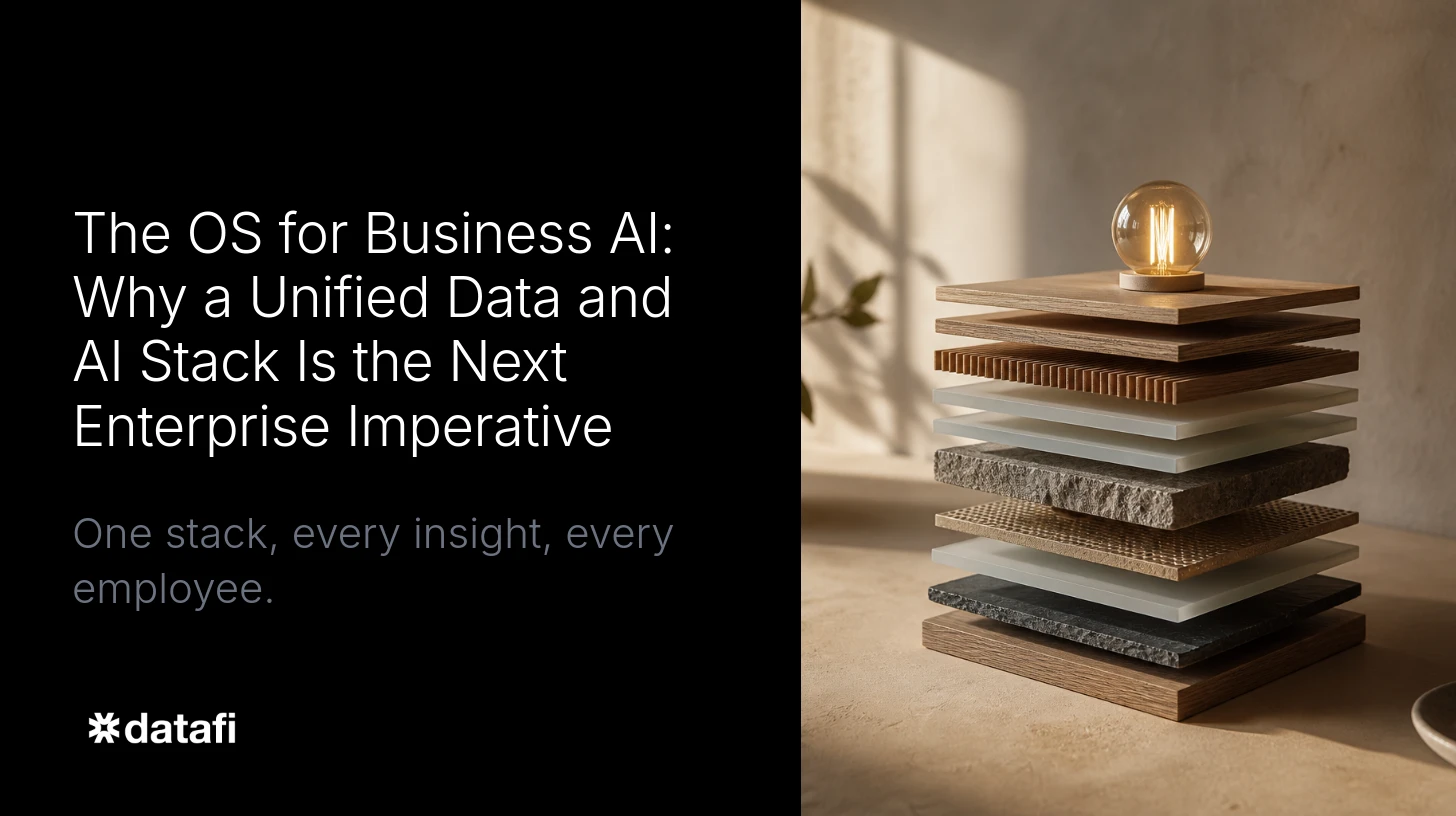
Datafi is a vertically integrated Business AI Operating System. That phrase carries specific meaning. It is not a data warehouse with an AI feature bolted on. It is not a workflow tool with a chat interface layered over it. It is a platform designed from the ground up to give AI agents the three things they require to move from answering questions to solving problems: full business context, access to the complete data ecosystem, and the capacity to operate autonomously across workflows.
For a distributor like Johnstone Supply, this means something concrete. Every contractor relationship, every purchase order, every equipment SKU, every service history record, every seasonal demand pattern — all of it becomes part of a unified contextual layer that AI agents can reason across in real time. When a contractor calls about a commercial rooftop unit showing unusual behavior, the system does not just surface a FAQ. It cross-references the unit’s service history, identifies the most likely failure mode, checks current branch inventory for the required components, flags if a substitution is needed, routes a proactive outreach to the contractor’s account manager, and drafts a purchase recommendation before the phone call ends.
That is not answering a question. That is solving a problem.
Predictive Maintenance Becomes a Marketplace Advantage
Predictive maintenance can help facility teams see patterns they might otherwise miss. Repairs can be planned before building users feel the impact. Parts can be ordered before an urgent failure. Managers can make replacement decisions based on real asset history rather than waiting for breakdowns to make the case obvious.
For a distributor, this dynamic is a commercial opportunity hiding in plain sight. The contractor who knows a heat exchanger is trending toward failure in the next 45 days is not a buyer in crisis mode. They are a buyer who can plan, budget, and order intelligently. Datafi’s AI agents can surface these signals across an entire contractor base simultaneously, generating proactive outreach, pre-staged parts orders, and demand forecasts that smooth out the wild seasonal swings that compress margins and burn out branch staff every summer.
The Chat UI That Changes Everything
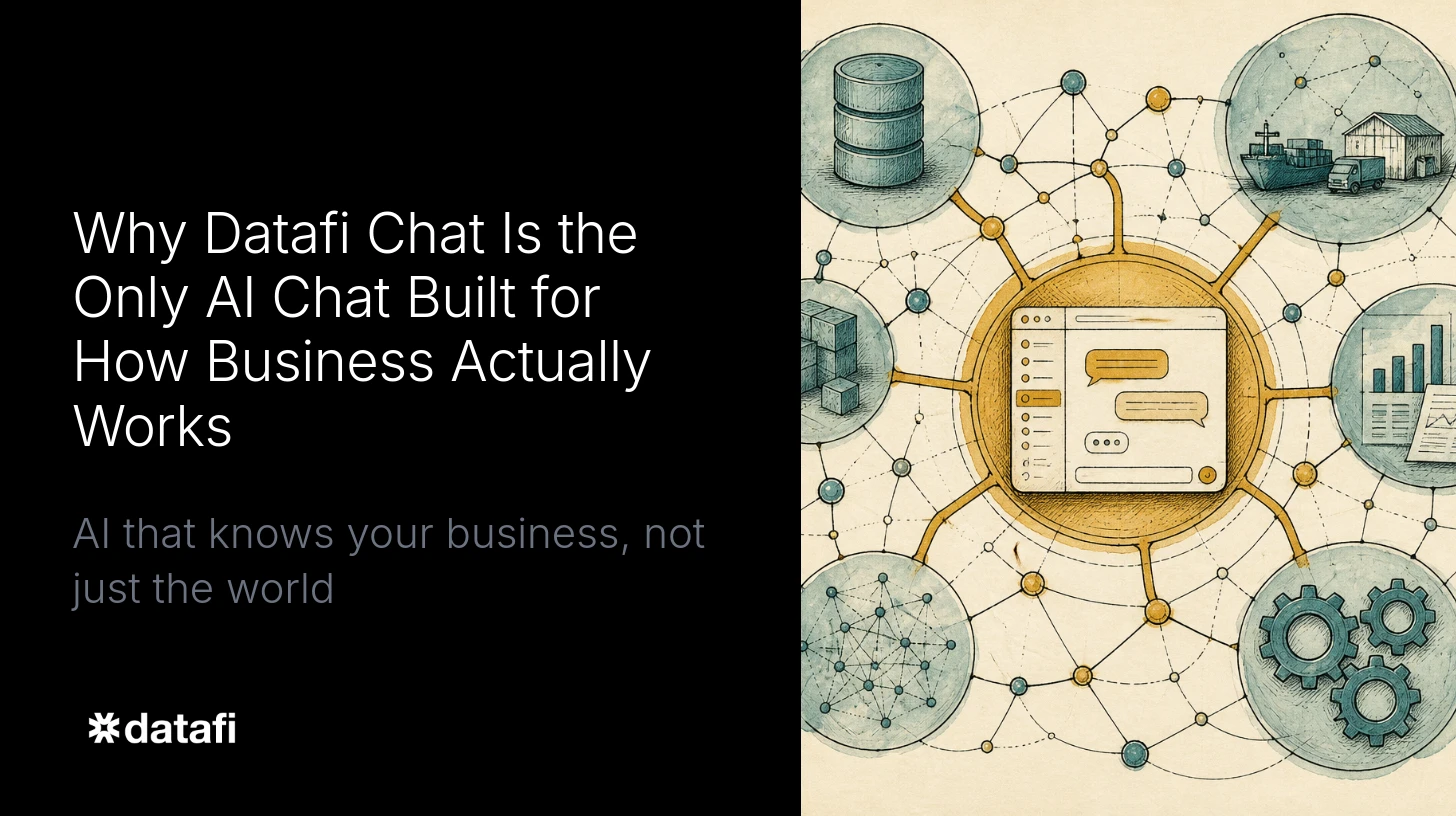
One of the most underappreciated barriers to AI adoption in distribution is the assumption that AI is for technical users. Datafi’s Chat UI is designed specifically for non-technical employees — the counter rep, the account manager, the branch operations lead. Any employee, at any level, should be able to ask a natural language question and get an answer that draws on the full data ecosystem of the business.
“What are my top ten contractors by revenue who haven’t ordered in the last 30 days?” is a question that used to require a BI analyst and a two-day wait. In the Datafi operating model, it is a five-second conversation. The rep gets the answer, the AI agent drafts a re-engagement message, and the workflow executes. That is how you achieve workflow efficiency for every employee — not by training everyone to use complex tools, but by making the intelligence accessible to everyone regardless of technical background.
From Distributor to AI-Enabled Marketplace
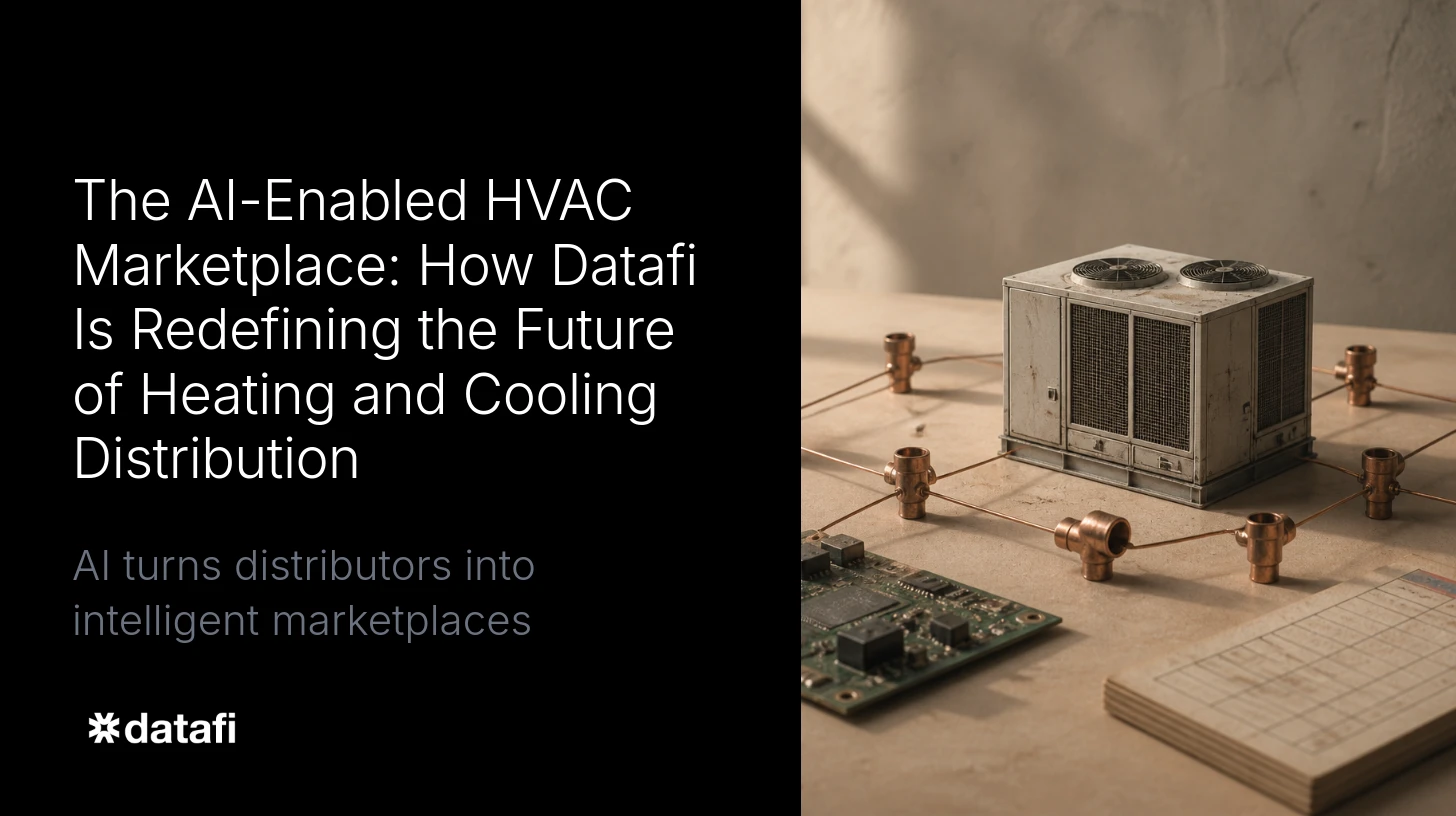
The most forward-looking implication of this shift is structural. When a distributor operates on a unified AI platform with full data context, predictive demand signals, autonomous agent workflows, and embedded governance, they stop being a parts warehouse with a website and become an AI-enabled marketplace — one that can match supply to demand before demand is even expressed, optimize logistics across a network of branches in real time, and give contractors the kind of responsive, anticipatory service that builds lasting loyalty.
AI that has real-time access to inventory, contractor pricing tiers, equipment compatibility databases, and order status across all branches can deliver what no human team at scale ever could: consistent, personalized, intelligent service to every contractor on the network simultaneously.
This is what Datafi means by the Business AI Operating System. Not AI that helps people work. AI that works — autonomously, contextually, and continuously — as a full partner in the operation of the business.
The HVAC marketplace of the next decade will be defined by who controls the intelligence layer. The infrastructure is already in place. The question is who builds the operating system on top of it first.
Datafi is ready to help Johnstone Supply be that company.
Datafi is a Business AI Operating System designed for enterprises that need unified data access, autonomous AI agents, embedded governance, and a Chat UI built for every employee. Learn more at datafi.co.