


Across industries, AI is moving from experimentation to durable leverage. Early wins come from tools that draft text or answer questions, but enterprises quickly hit constraints: disconnected data, inconsistent definitions, weak controls, and limited repeatability. The next phase requires an operating system that embeds AI into everyday work, with governance by design.
Studio gives non-technical teams the power to create governed, observable, and secure AI agents and apps grounded in real business data, turning AI from isolated experiments into repeatable, transformative enterprise outcomes.
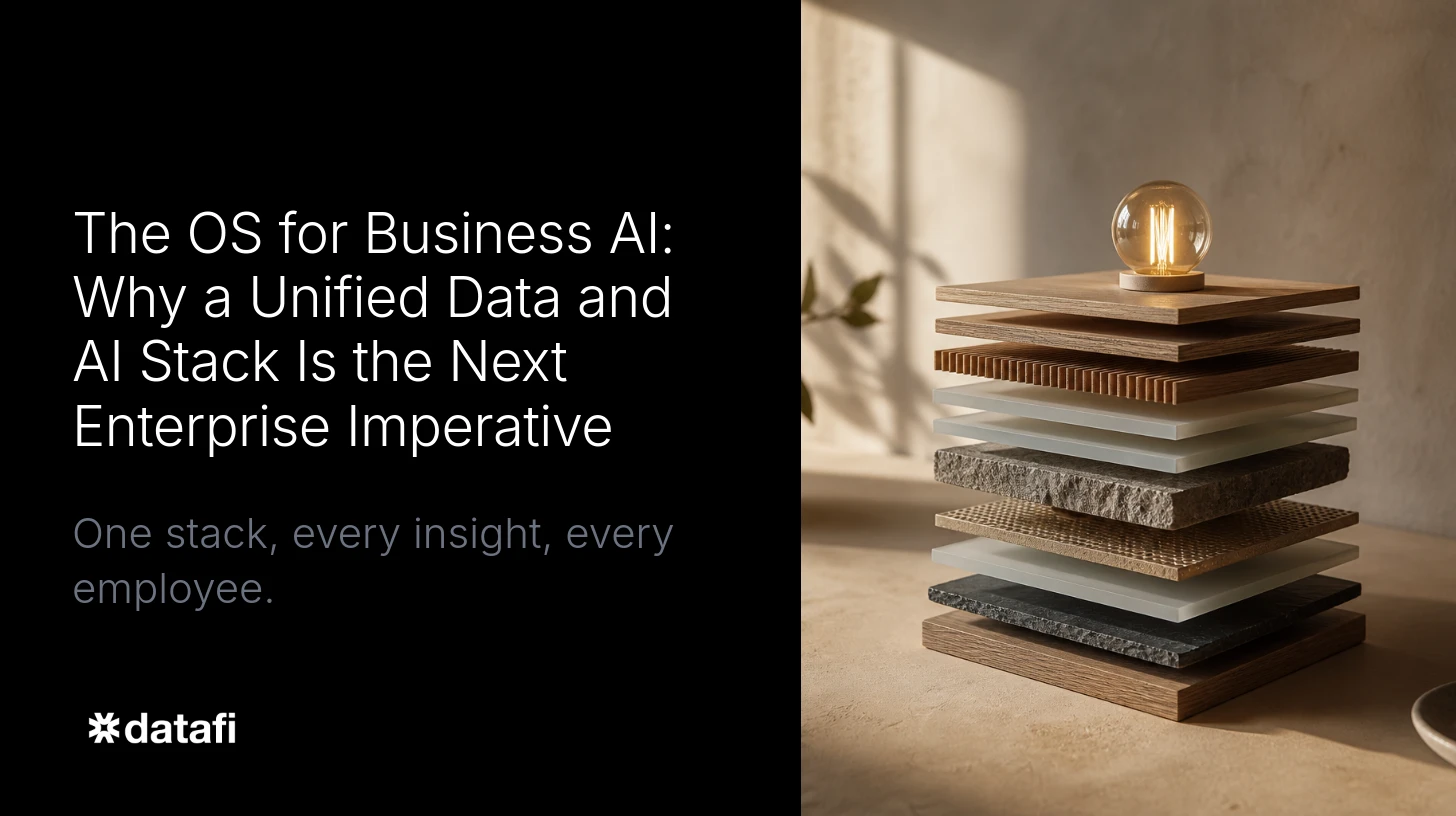
datafi is designed as an OS for business AI that vertically integrates building, governance, execution, and security. Studio is where teams build, with an Agent and App Builder plus a Chat and Workflows experience. Control Tower governs through policies and security, supported by observability and audit. Runtime executes AI through a control plane and orchestration. Cyber secures the system with a dedicated security layer and risk controls. Together, the platform provides a secure, observable foundation for deploying AI across enterprise workflows and faster time to value with lower risk versus tool sprawl.
Why Studio matters now
Organizations of any size want a unified data experience and workflow efficiencies for every employee. They want AI agents and workflows that reduce costs and improve productivity, without creating new compliance and security gaps. Studio is where those goals become achievable.
Studio is built for the people closest to the work. Analysts, operators, and domain experts know the process details that determine whether automation succeeds, but they should not need to write code or manage infrastructure. In Studio, non technical users create use case specific agents and apps using a visual builder. They connect to business data and systems, define workflow steps, and publish solutions that colleagues can reuse. Everything they create inherits global authentication and authorization controls, so agents operate within the same access boundaries that already govern the business.
From chat to repeatable workflows
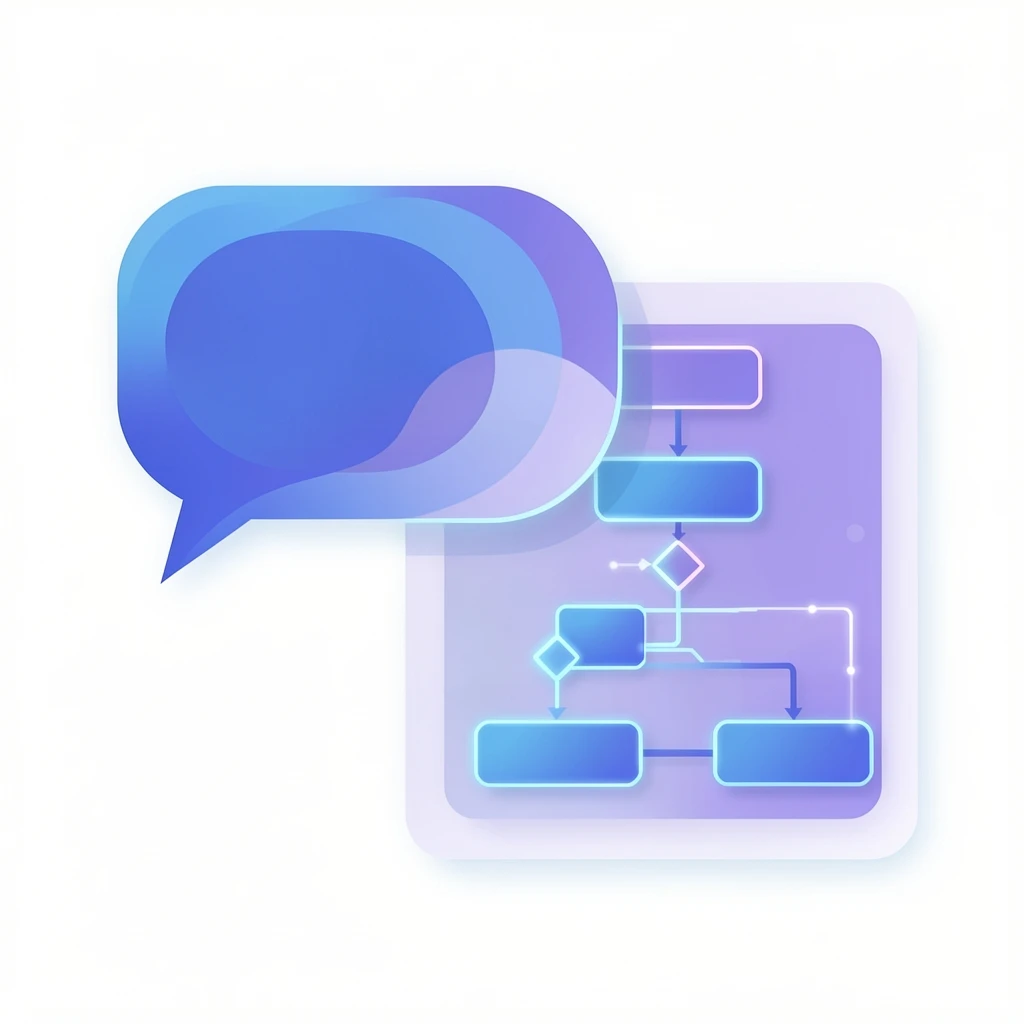
A chat interface is an effective starting point because it matches how people think. The limitation, in most generic tools, is that chat stops at advice. Employees still have to find the right data, run the analysis, and execute follow up actions across multiple systems. Studio pairs chat with workflows so conversations can become repeatable operating procedures.
Teams can design guided flows that gather inputs, retrieve live data, run reasoning steps, and produce outputs that can be acted on, including routing decisions for approval. Studio turns these patterns into reusable apps, so the organization does not re learn the same work every week.
A visual builder that democratizes agent creation
Studio’s agent and app builder is optimized for composition rather than coding. Creators can assemble the tools an agent can use, define which sources are authoritative, and specify when the agent should ask a human for confirmation. The most valuable business use cases are multi step sequences that combine retrieval, calculation, policy checks, and action, and Studio is built to model that reality.
By lowering the barrier to creation, Studio expands the set of people who can contribute solutions. This accelerates delivery because use cases do not queue behind scarce engineering cycles, and it improves relevance because the people designing the agent are the people accountable for the outcome.
Grounded intelligence through full business context
AI is only as reliable as the context it can access. Modern LLMs can reason fluently, but without grounding they will default to generic patterns, and in business settings that can produce wrong or unverifiable outputs. Studio is built around the idea that LLMs must know the full context of the business and access the complete data ecosystem.
That ecosystem includes warehouses, operational systems, and the documents and policies that shape decisions. When agents can retrieve evidence from authoritative sources, apply the right definitions, and show their work, adoption increases. This is how organizations develop the contextual layer required for complex agents and workflows that solve hard business problems rather than just answering questions.
Governance by default, not after the fact

As companies put AI into analytical and workflow automation roles, governance becomes a prerequisite. Studio benefits directly from Control Tower, which brings policies, security, observability, and audit into the same system where agents are built and used.
Authentication and authorization ensure an agent’s access mirrors the user’s permissions. Policies can constrain which tools an agent can invoke and which data classes it can touch. Observability and audit provide a record of how an output was produced: what data was accessed, what actions were taken, and which version of an agent was responsible. This transforms AI from a black box into a managed enterprise asset.
Production execution with Runtime
An agent that works in a demo is not the same as an agent that can be trusted in production. Runtime provides the run layer, with a control plane and AI orchestration to make Studio creations reliable at enterprise scale. Orchestration manages routing across models, cost and latency, scheduling workflows, and integration with enterprise systems of record.
Security and risk controls with Cyber
AI changes the threat landscape. Prompt injection, data leakage, and misuse of automation are not theoretical issues when agents have access to business systems. Cyber adds a dedicated security layer and risk controls so Studio can scale safely, with guardrails enforced consistently across every app and agent.
The outcome: speed with confidence
When Studio, Control Tower, Runtime, and Cyber work as one platform, organizations get what fragmented tooling cannot deliver. They accelerate time to value because business teams can create and iterate quickly, with governance and security already in place. They lower risk because access controls, auditability, and cyber protections are consistent.
At datafi, we see customers pushing AI beyond simple assistance into critical thinking roles: diagnosing operational issues, recommending actions, and automating workflows that require context and judgment. Studio is the core build experience that makes this shift possible. It gives non technical teams the power to create agents and apps that act on data, while the OS ensures those agents are governed, observable, orchestrated, and secure. That is how enterprises turn AI from experiments into transformative outcomes. It is a practical path to broad, trusted enterprise adoption.