


Business AI for Utilities Requires More Than a Copilot
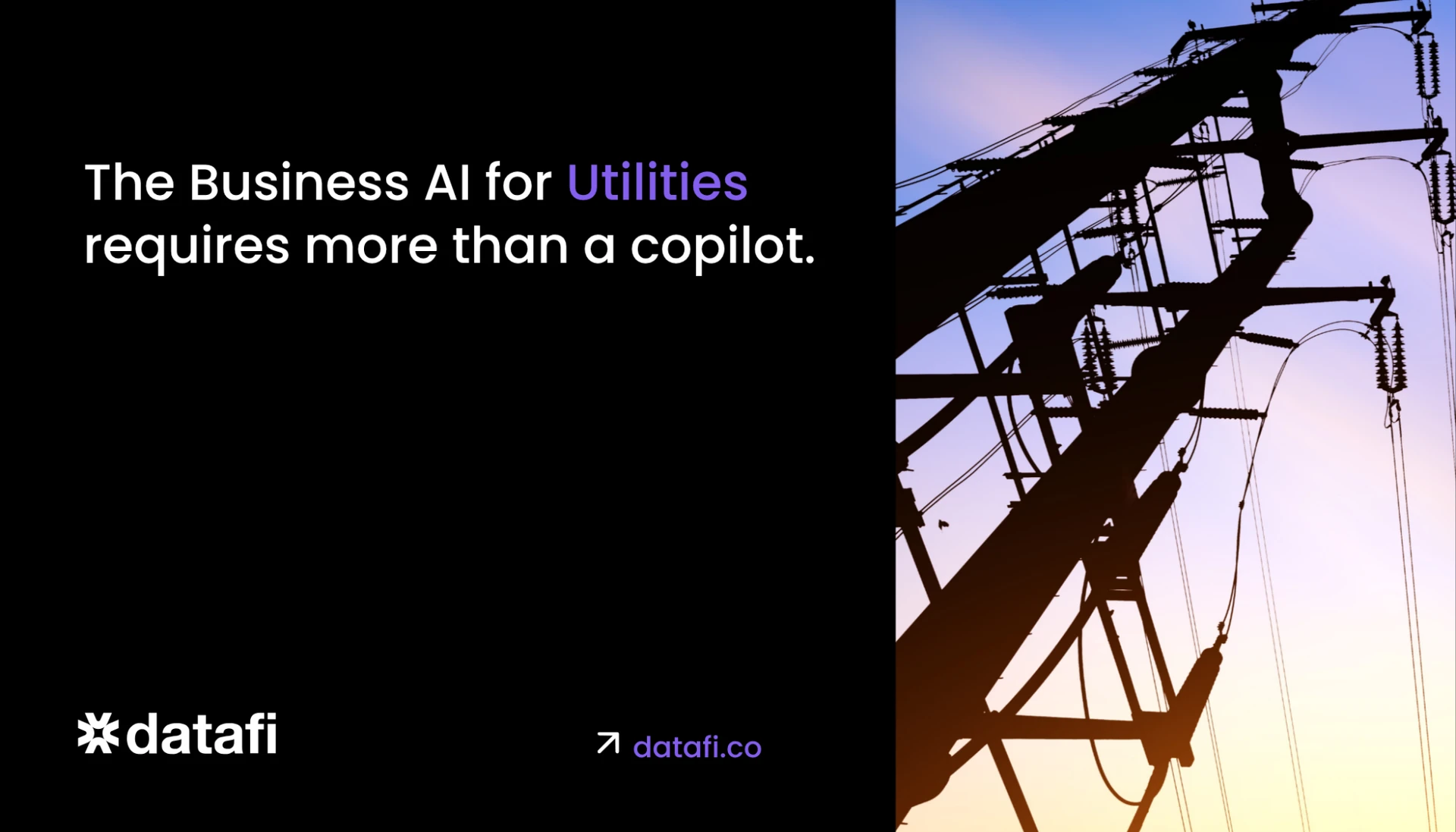
Utilities operate in one of the most demanding business environments in the economy. Electric, gas, and water providers manage critical infrastructure, highly regulated operations, asset-intensive networks, and round-the-clock service expectations. This is the operating environment that AI for utilities must actually serve; not a controlled demo, but a live, multi-system, multi-stakeholder enterprise. Teams make decisions across engineering, field operations, customer service, finance, capital planning, compliance, and executive leadership. Yet the information required to make those decisions is rarely unified. It sits across GIS, EAM, ERP, SCADA, AMI, OMS, CIS, data warehouses, documents, and institutional knowledge held by experienced employees.
This is why many AI for utilities deployments stall at limited productivity gains. Generic copilots and narrow chat tools can summarize documents or answer questions, but they do not solve the deeper operating challenge. They do not give AI the full context of the business, connect the complete data ecosystem, enforce policy and control across regulated workflows, or automate the work itself.
Large language models create durable business value in utilities only when they understand the full context of the enterprise, including asset records, outage events, work orders, customer data, regulatory filings, and the relationships between them. Without that contextual layer, AI remains shallow.
datafi’s operating system for business AI is built to close that gap. Rather than adding another isolated AI layer on top of fragmented systems, datafi provides a vertically integrated data and AI stack designed to support enterprise workloads, scale across functions, and bring governed AI into daily operations. For utilities organizations of any size, from municipal systems and cooperatives to large investor-owned providers, the result is a unified data experience, faster operational decision-making, and real workflow automation for every employee.
At the center of this approach is a simple belief: large language models create durable business value only when they understand the full context of the enterprise. In utilities, that context includes asset records, outage events, work orders, customer data, safety procedures, maintenance history, financial plans, regulatory filings, planning models, and the relationships between them. Without that contextual layer, AI remains shallow. It may answer questions, but it cannot reliably solve hard business problems.
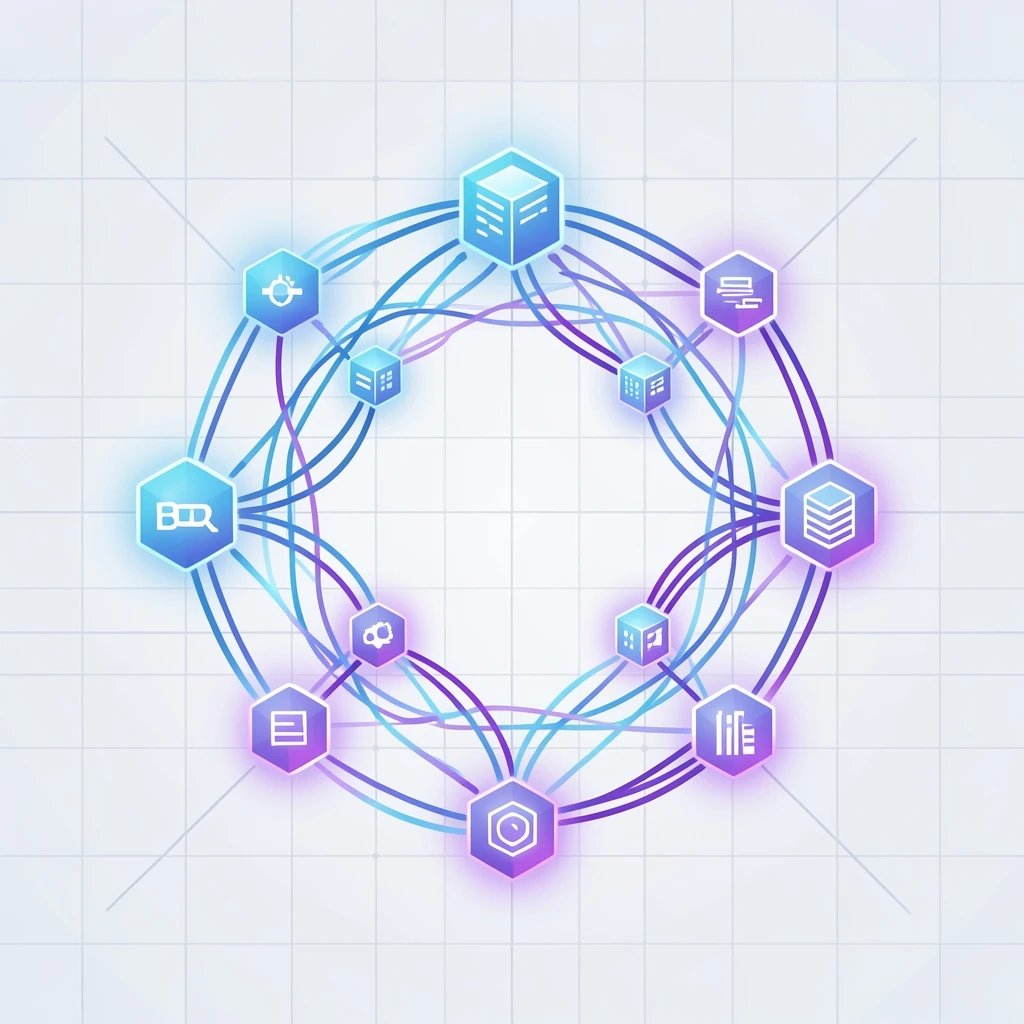
datafi addresses this by connecting the complete data ecosystem into a governed operating environment for business AI. Structured and unstructured data, enterprise applications, business policies, and operational logic are brought together so AI can work from the same reality as the organization. This creates a unified data experience that removes the burden of searching across disconnected tools, waiting on reports, or relying on technical teams to assemble information. Employees can move from question to analysis to action in one environment.
That shift matters because utilities are not just looking for better search. They are increasingly asking AI to support critical thinking, workflow automation, and analytical roles. They want systems that can help prioritize outage restoration, triage maintenance activity, surface operational risk, coordinate capital project inputs, prepare regulatory responses, optimize field operations, and accelerate planning cycles. These are not narrow tasks. They require reasoning across multiple data sources, business rules, and functional teams. datafi is designed for this level of orchestration, enabling AI agents and workflows that can operate across fragmented systems and help teams make faster, better decisions.
Just as important, the platform is built for the governance demands of regulated and critical infrastructure environments. In utilities, AI adoption cannot come at the cost of control. Access policies, security boundaries, auditability, compliance standards, and operational guardrails must be part of the system itself, not added later as an afterthought. datafi embeds policies and control into the core architecture so organizations can deploy AI with the governance required for real enterprise use.
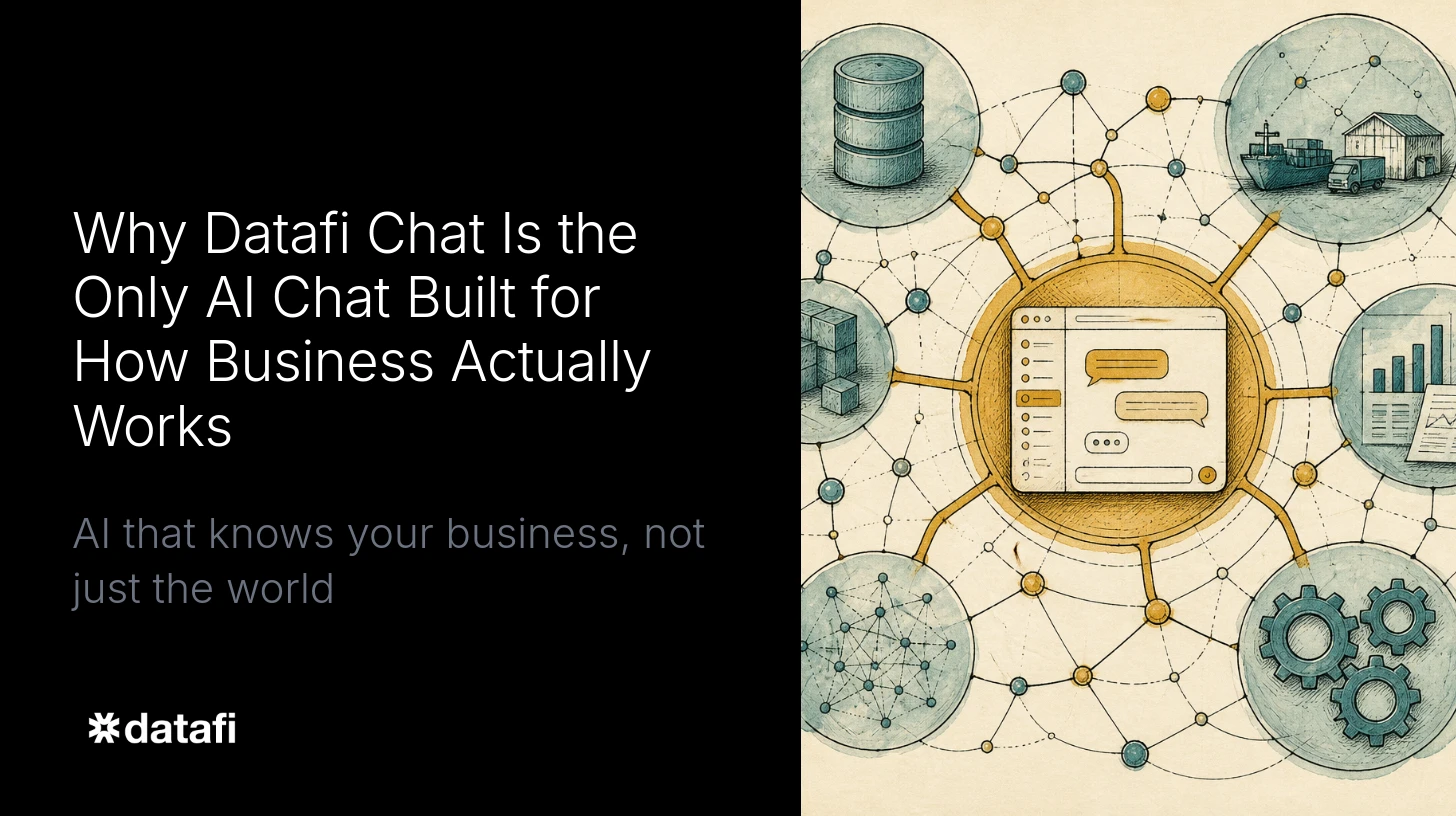
The user experience also matters. The value of AI is limited if only analysts or technical teams can use it effectively. Broad adoption requires an interface that is intuitive for non-technical users while still powerful enough to handle complex work. datafi’s chat UI is designed for that reality. Supervisors, planners, customer service leaders, engineers, operations managers, compliance teams, and executives can interact with AI naturally, while the platform handles data access, context assembly, workflow execution, and governance behind the scenes. That makes business AI usable across the enterprise, not just inside a center of excellence.
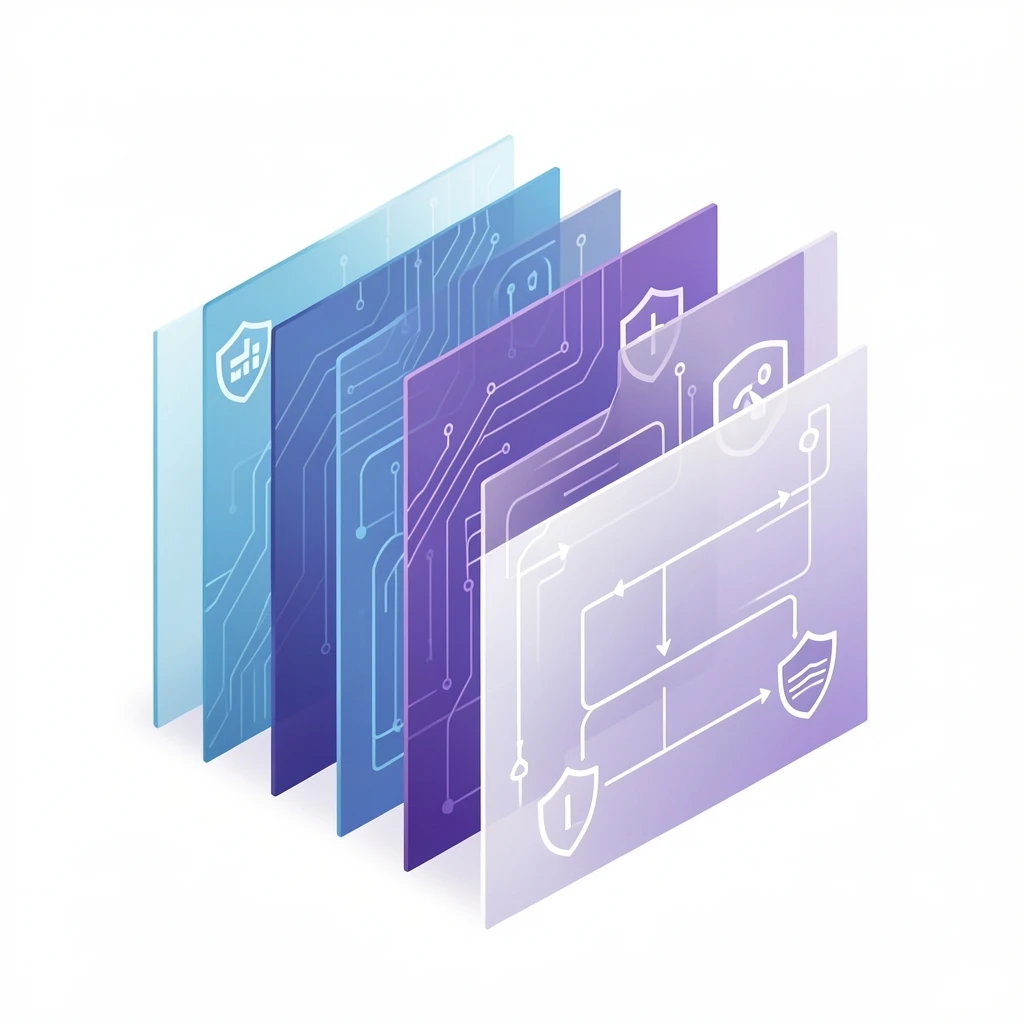
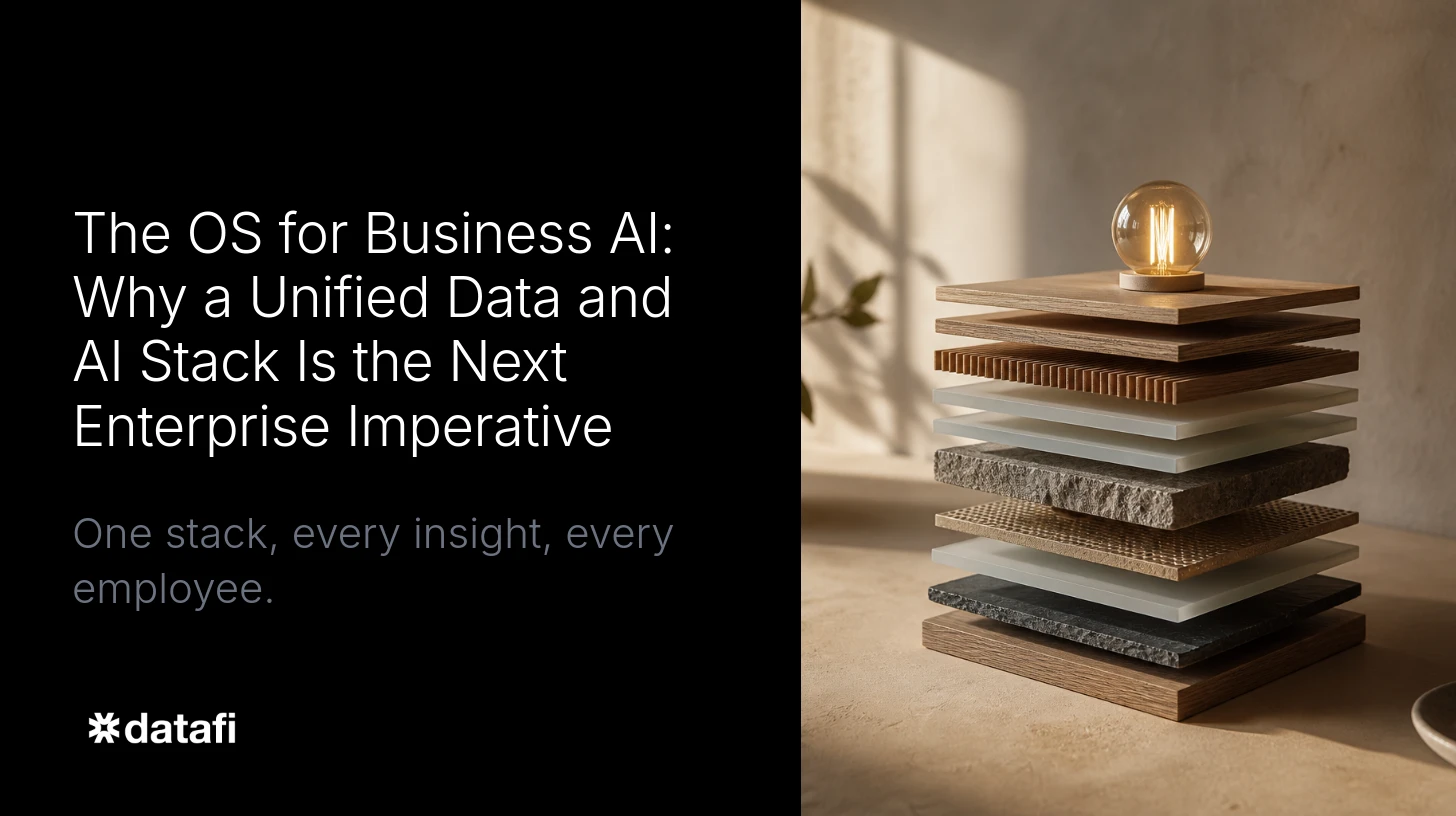
This integrated approach is what makes datafi an alternative to the cycle of isolated Copilot experiments and narrow-function tools. datafi takes a different path. It provides a full operating system for business AI, one that integrates data, orchestration, governance, agents, workflows, and user experience into a platform ready for enterprise scale.
That readiness is critical as AI moves from assistance to autonomy. The most valuable systems will not be the ones that simply respond to prompts. They will be the ones that can function in increasingly autonomous roles, learn from enterprise context, and execute business processes within defined guardrails. AI for utilities must be built for this reality: they need to address growing operational complexity, workforce transitions, regulatory pressure, and the demand to do more with existing resources. Building these kinds of complex agents and workflows requires a strong contextual foundation. datafi provides that foundation, enabling organizations to move from simple use cases to more advanced automation without rebuilding the stack each time.
Our perspective on this is shaped by deep experience working with data and AI in environments where outcomes matter more than demos. We have seen repeatedly that transformative results come from actioning data, not merely exposing it. The objective is not to create another interface for asking questions. The objective is to give organizations a system that can turn fragmented information into coordinated execution. In utilities, that can mean faster outage response, more informed asset decisions, less manual handoff between teams, stronger compliance readiness, improved workforce efficiency, and better use of institutional knowledge at the moment decisions are made. That is when AI starts solving problems instead of simply answering questions.
For utilities leaders, the implication is clear. The future of AI in the industry will not be won by isolated pilots or generic assistants alone. It will be won by platforms that can unify the enterprise data experience, govern AI in critical infrastructure environments, and support real workflow automation at scale. datafi’s operating system for business AI is built for exactly that mission. By combining a vertically integrated data and AI stack, full access to the enterprise data ecosystem, embedded policies and control, autonomous agents and workflows, and a chat experience designed for every employee, datafi helps utilities move beyond experiments and into operational transformation.