


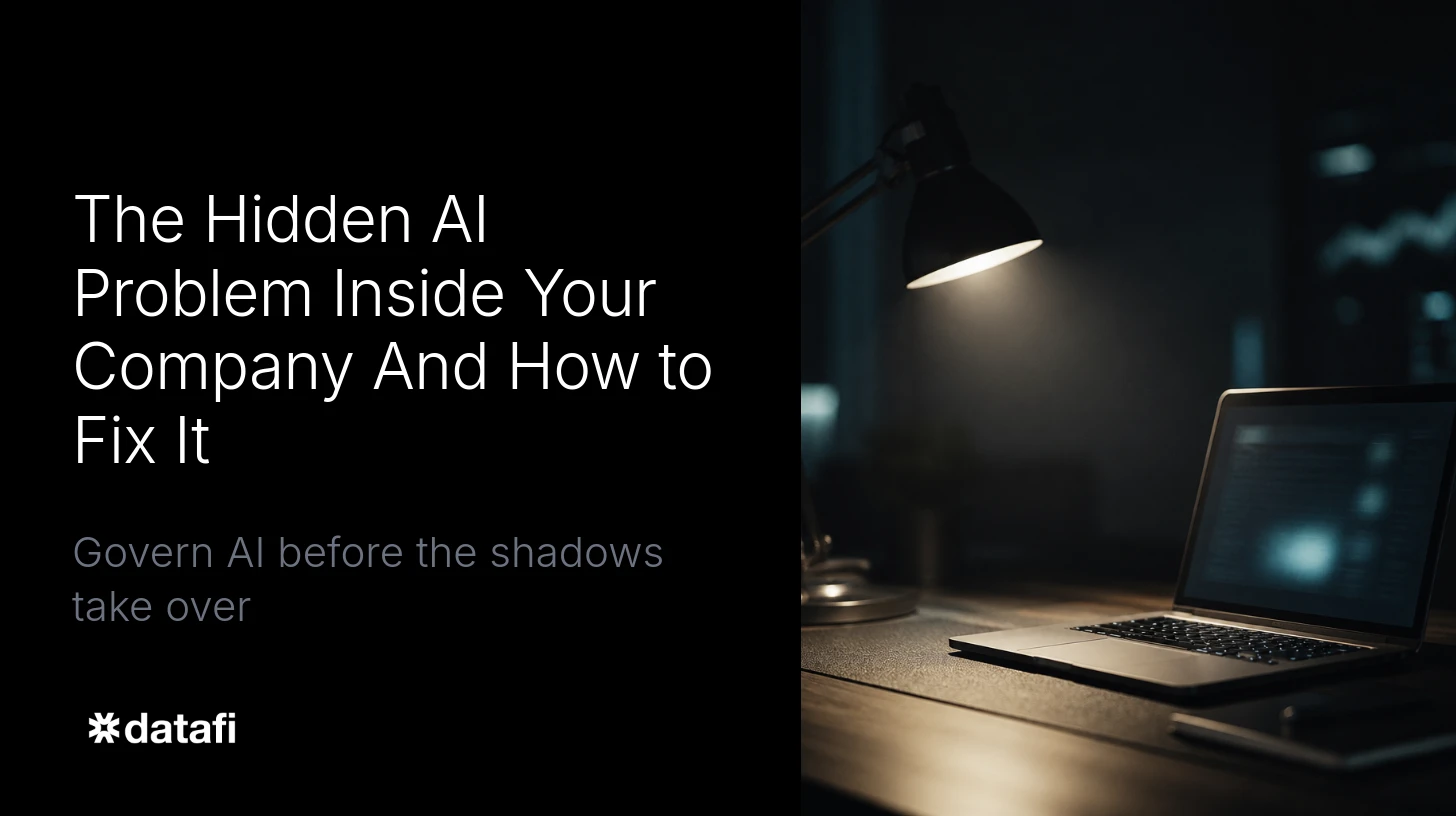
Imagine you hired a new employee. They are smart, fast, and seem to get a lot done. But here is the thing: nobody knows what tools they are using, what data they are sharing, or whether they are following company rules. That sounds a little scary, right?
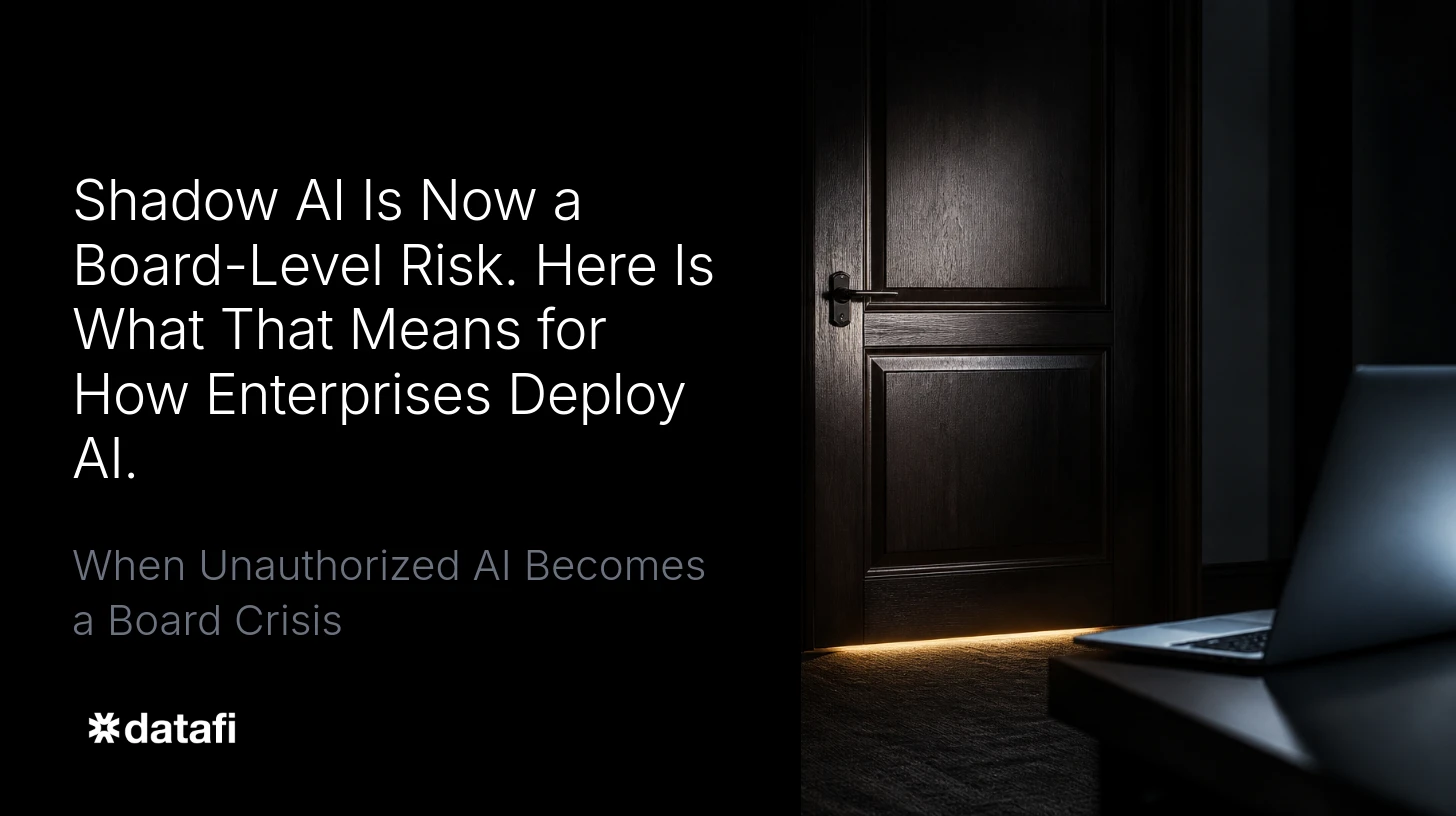
That is exactly what is happening in companies right now with something called Shadow AI.
Shadow AI grows not because employees are careless, but because approved tools fail to meet their needs. The real fix is deploying governed, context-aware AI that is genuinely better than anything found in the shadows.
What Is Shadow AI?
Shadow AI is when employees use artificial intelligence tools at work without their company officially approving or even knowing about them. Things like using a free AI chatbot to write emails, copying customer data into an AI tool to build a report, or running AI-powered browser extensions that nobody in IT has reviewed.
It is called “shadow” because it happens in the dark. The company does not see it, does not manage it, and definitely does not control it.
And here is the surprising part: most of the time, employees using Shadow AI are not trying to do anything wrong. They are just trying to do their jobs better and faster. AI tools are genuinely helpful, and people naturally reach for the most useful tool available. That makes total sense.
But there is a big difference between a helpful tool and a safe, governed, business-ready one.
Why Shadow AI Is a Real Problem
When AI is used outside of approved systems, a few things can go wrong quickly.
Data ends up where it should not. When someone pastes customer records, financial information, or internal strategy documents into a random AI tool, that data may be stored, used for training, or exposed to third parties. The company often has no way of knowing or stopping it. For industries like healthcare, finance, and logistics, this is not just a policy problem. It can be a legal one.
Nobody is accountable. If an AI tool gives bad advice and a business decision goes sideways because of it, who is responsible? If the tool was not approved and nobody knows it was being used, there is no clean answer. That creates real risk.
Results are inconsistent. When different employees use different AI tools with no shared context about the business, they get different answers. One person’s AI might tell them one thing while another person’s AI says something completely different. The business cannot trust those outputs because there is no standard.
Compliance becomes a nightmare. Regulated industries have strict rules about how data is handled, stored, and used. Shadow AI tools almost never meet those requirements. Auditors do not care that an employee was just trying to save time. The company is still on the hook.
The AI does not know your business. Free AI tools are built for general use. They know a lot about the world, but they know nothing about your company, your customers, your workflows, your policies, or your data. That means the answers they give are generic at best, and dangerously incomplete at worst.
The Real Cost of Shadow AI
Here is a way to think about it. Imagine you are a logistics company trying to reduce delivery delays. An employee pulls shipment data, copies it into a free AI chatbot, and asks it to find patterns. The AI gives a plausible-sounding answer. The employee acts on it. But the AI had no idea about your carrier contracts, your seasonal patterns, your customer commitments, or your system constraints. The recommendation was based on incomplete context.
Now multiply that across hundreds of employees, dozens of departments, and thousands of daily decisions. Shadow AI does not just create individual risk. It creates systemic noise across the entire business.
Shadow AI does not just create individual risk. It creates systemic noise across the entire business.
What the Right Answer Looks Like
The solution to Shadow AI is not to ban AI. That is not realistic, and frankly, it is the wrong instinct. Employees are right that AI makes them more productive. The answer is to give them AI that is actually built for business.
At Datafi, we have worked directly with data and AI long enough to know one hard truth: AI can only solve real business problems when it has real business context. An AI that cannot see your full data ecosystem, does not understand your policies, and cannot take action inside your workflows is not really solving problems. It is just answering questions. There is a big difference.
The Datafi Business AI Operating System is built around exactly this idea. It brings together a vertically integrated data and AI technology stack that connects every layer of a company’s information environment. That means AI agents and automated workflows that can see and use operational data across the business. It means governance and compliance controls built in from the start, not bolted on later. And it means a Chat interface designed for everyday employees, not just data scientists or IT teams.
When AI is deployed this way, every employee gets access to the same trusted, governed, context-aware intelligence. A warehouse manager, a finance analyst, and a marketing director can all ask questions and get answers that are grounded in the same complete picture of the business.
Removing the Conditions That Create Shadow AI
Shadow AI grows when employees feel like their official tools are not good enough. When approved AI is slow, hard to use, or gives irrelevant answers, people go looking for something better. That is human nature.
The way to stop Shadow AI is to replace it with something genuinely better: an AI operating system that has full context, real data access, proper governance, and a user experience that non-technical employees can actually use on their own.
When your AI knows your business the way a longtime colleague does, when it can take action and not just answer questions, and when every employee can access it through a simple chat interface, there is no need to go looking for something else in the shadows.
That is the future Datafi is building. Not AI as a chatbot. AI as a business operating system. One where every employee has the intelligence they need to make better decisions, move faster, and solve harder problems than they ever could before.
The shadow disappears when the light is bright enough.
Datafi is building the Business AI Operating System for mid-enterprise companies. Learn more at datafi.co.