


Every organization lives inside a web of contracts. Vendor agreements, customer commitments, partnership terms, licensing arrangements, employment conditions, regulatory compliance frameworks. Each one contains obligations. Deadlines to meet, deliverables to confirm, notices to send, thresholds to monitor, rights to exercise or forfeit. The sheer volume of these obligations, scattered across departments, systems, and document repositories, has made contract obligation tracking one of the most consistently mismanaged areas of enterprise operations.
The core problem with contract obligation tracking is not storage, it is context. AI that connects contracts to live business data across your ERP, CRM, and project systems transforms obligation tracking from a reactive manual process into a continuously active intelligence layer that protects value at every stage of the contract lifecycle.
The consequences are real and they compound quietly. A missed renewal window locks you into unfavorable terms for another cycle. A payment threshold goes unmonitored and a discount entitlement expires unclaimed. A notice period passes without action and a termination right is lost. None of these are catastrophic on their own, but together they represent a systematic leak of value from the business, year after year, hidden in plain sight across thousands of pages of legal text.
The traditional response has been to build processes around the problem: contract management software, spreadsheet trackers, calendar reminders, dedicated contract managers. These approaches help, but they share a fundamental limitation. They require humans to read, extract, interpret, and manually encode every obligation from every contract into a tracking system. That is not a technology problem. That is a capacity problem. And no amount of process discipline fully solves it when the volume of contracts exceeds the bandwidth of the people responsible for managing them.
Datafi approaches this differently. Not as a contract management tool layered on top of existing workflows, but as an AI platform that connects to the systems and data where your contracts already live, understands the full business context surrounding each agreement, and acts on obligations before they become missed obligations.
The Real Problem is Context, Not Storage
Most organizations already have a place where contracts are stored. A document management system, a shared drive, an enterprise content platform, a dedicated CLM solution. The contracts are not lost. The problem is that storing a contract and understanding what it requires of you are entirely different capabilities.
A contract is a structured document on the surface and an extraordinarily complex artifact underneath. The same clause can carry different implications depending on the counterparty, the jurisdiction, the commercial relationship it sits within, the history of performance against prior terms, and a dozen other factors that live outside the document itself. An obligation that looks routine in isolation may be critical in context, and vice versa.
This is where AI that merely answers questions fails. You can ask a document AI tool “what are the payment terms in this contract?” and receive an accurate answer. But that answer is inert. It does not know whether the payment has been made. It does not know whether the underlying conditions that trigger that payment obligation have been met. It does not know who in your organization is responsible for acting on it, what their current workload looks like, or whether a similar obligation in a related agreement was recently missed. It answers the question you asked and stops there.
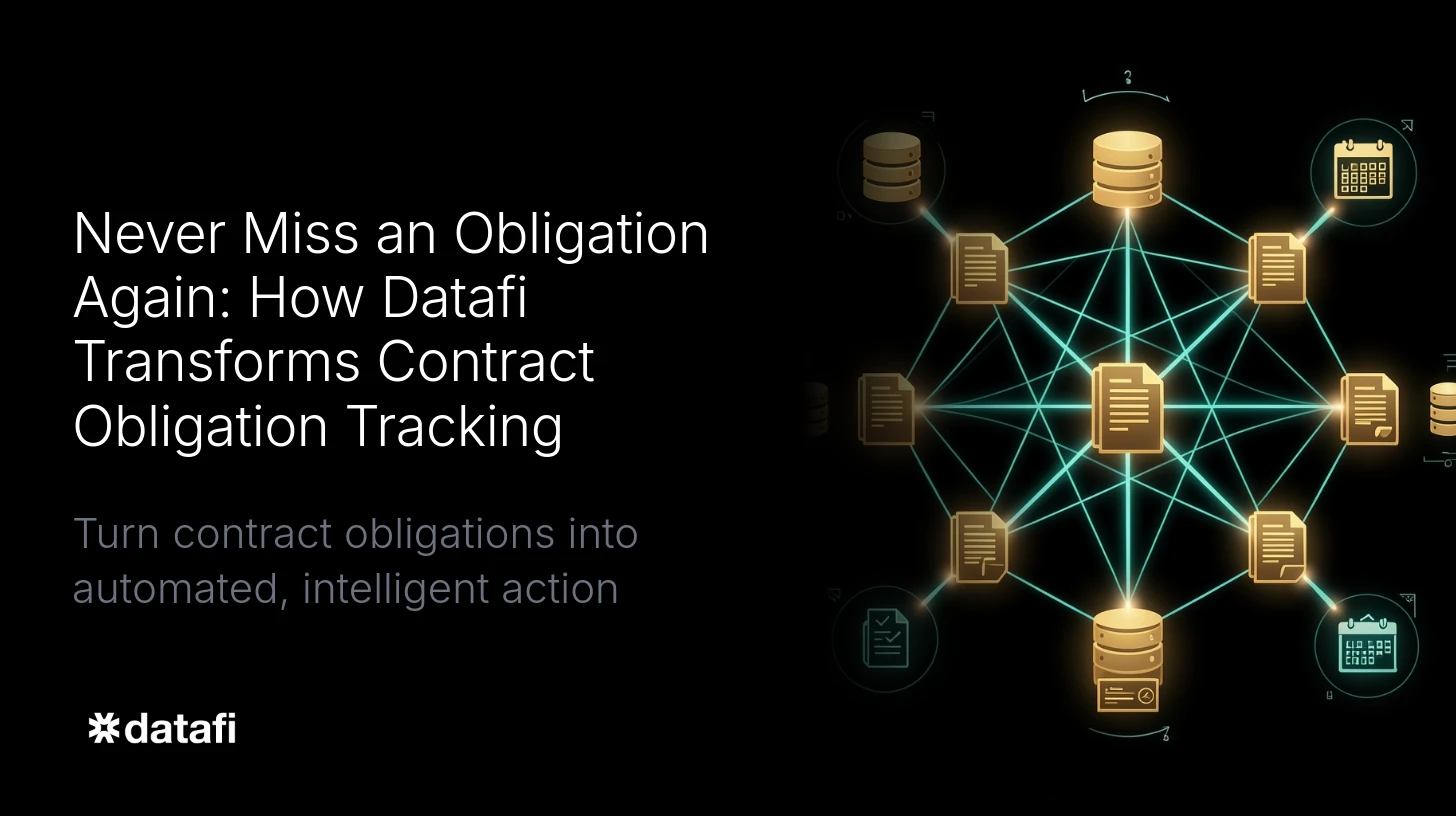
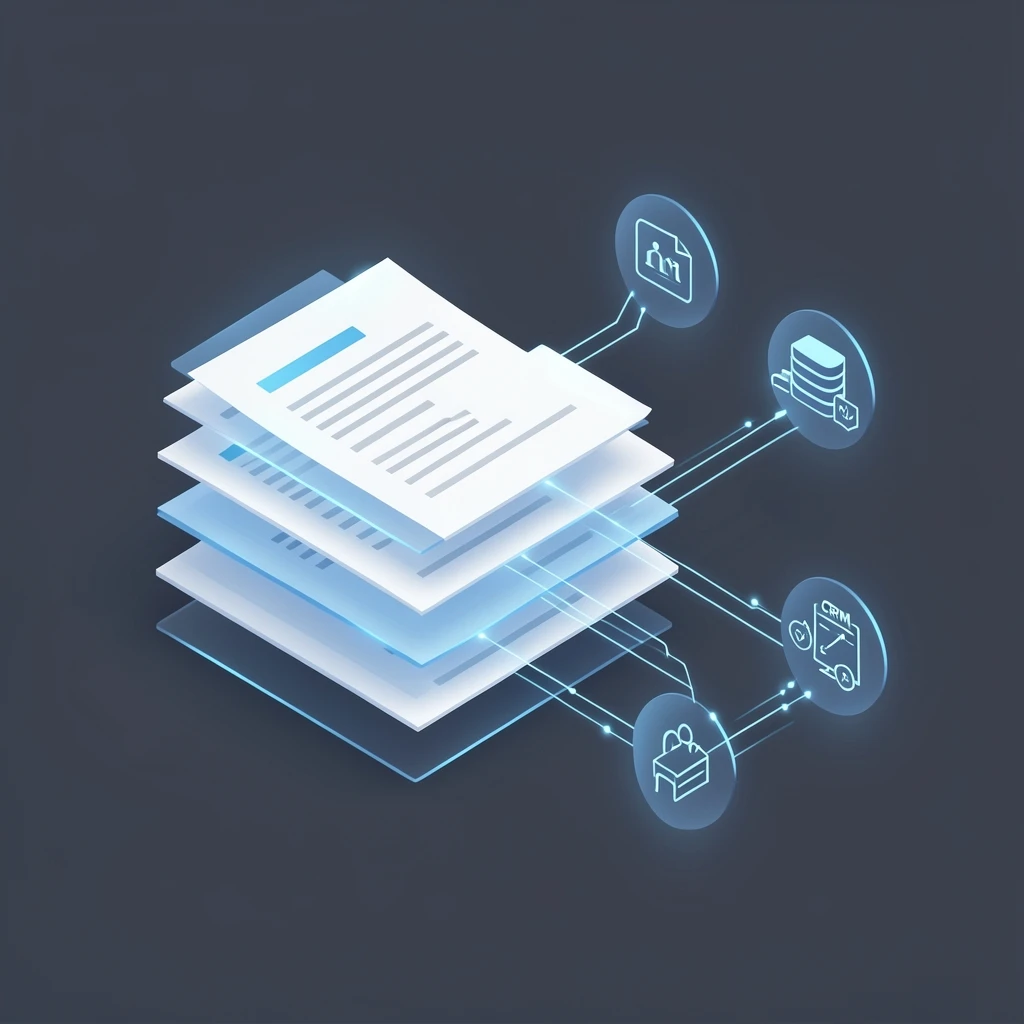
Datafi is built for a different standard. The Datafi platform is designed to give AI the full business context it needs to move from answering questions to solving problems. In contract obligation tracking, that means connecting the AI not just to the contracts themselves, but to the ERP where payment records live, the CRM where customer relationship history is captured, the project management system where deliverable status is tracked, the calendar systems where deadlines intersect with human capacity, and the communication records where commitments made in correspondence need to be reconciled against formal terms.
When the AI can see all of that together, it stops being a document reader and starts being an obligation intelligence system.
How Datafi Works for Contract Obligation Tracking
The Datafi platform ingests and indexes your contracts from wherever they currently reside. This is not a migration. Datafi connects to your existing repositories through governed data integrations, bringing your contracts into its context layer without forcing you to abandon the systems you already use.
From there, Datafi applies AI-driven extraction and interpretation to identify obligations across your entire contract portfolio. Not just dates and dollar amounts, but the conditions, triggers, responsible parties, counterparty rights, and interdependencies that determine whether an obligation is live, approaching, satisfied, or at risk.
What makes Datafi different is what happens next. Rather than delivering extracted obligations into a static dashboard for humans to act on, Datafi maintains an active, living understanding of obligation status by continuously reading against the connected data ecosystem. A payment obligation is not just tracked against its due date. It is tracked against actual payment records in your financial systems. A deliverable commitment is not just flagged as upcoming. It is cross-referenced against project completion status in your operational tools. An auto-renewal clause is not just added to a calendar. It is monitored in the context of the relationship value, the availability of alternatives, and any relevant signals in communication history that should inform whether renewal is the right course of action.
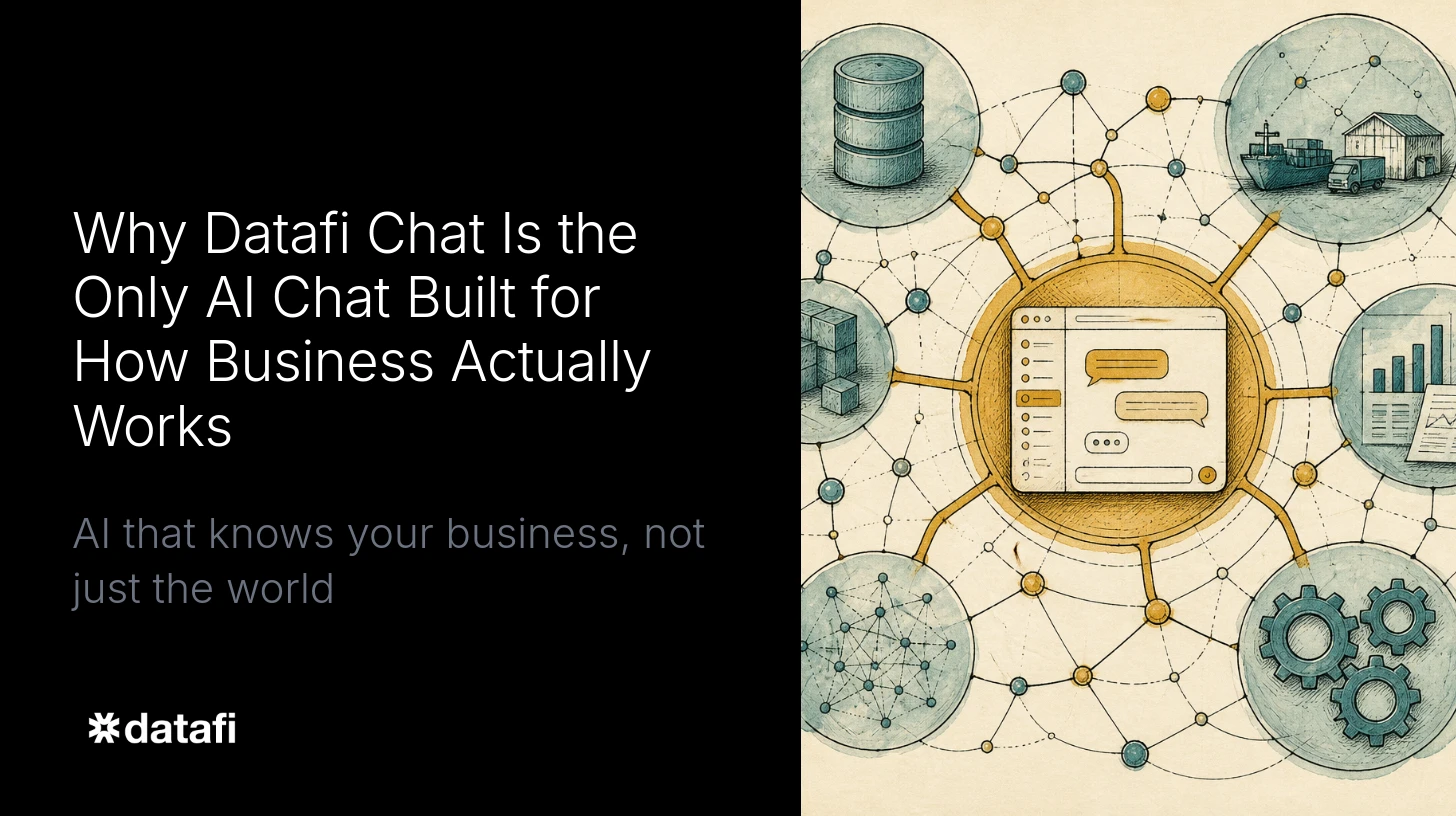
The Datafi Chat UI brings this intelligence to the people who need it, regardless of their technical sophistication. A contract manager, a department head, a procurement lead, or an executive can ask in plain language: “What contract obligations are coming due in the next sixty days that we have not yet taken action on?” or “Which of our vendor agreements contain volume commitment thresholds we are at risk of missing this quarter?” Datafi does not produce a list of raw data. It produces an answer that reflects what the data across all connected systems actually tells you about your current exposure and what needs to happen.
The goal is not to replace human judgment on consequential contract decisions. The goal is to ensure that human judgment is applied at the right moment, fully informed, rather than after the window has already closed.
The platform’s agentic capacity takes this further. Datafi can be configured to initiate workflows when obligation thresholds are met: alerting the right person with the right context, drafting a notice for review, flagging an upcoming right that requires a decision, or escalating an unresolved obligation through the appropriate chain.
What This Looks Like in Practice
Consider a mid-size technology company managing a portfolio of roughly three hundred active commercial agreements. These span customer contracts, software vendor licenses, infrastructure partnerships, reseller agreements, and professional services engagements. Across this portfolio there are thousands of discrete obligations: SLA commitments with financial penalties, minimum purchase commitments with tiered pricing implications, renewal windows requiring proactive notice, audit rights with defined exercise periods, data processing terms with regulatory deadlines.
Before Datafi, tracking this portfolio required a combination of a CLM tool with manual data entry, a shared spreadsheet maintained by the legal operations team, and a calendar reminder system that generated more noise than signal. Despite significant effort, high-value obligations still fell through the gaps. A $200,000 auto-renewal slipped past its opt-out window. A volume discount threshold was missed because the relevant data lived in a different system from the contract. A contractual audit right expired unexercised against a vendor that was subsequently found to have been overcharging.
With Datafi, the picture changes fundamentally. The platform connects to the document management system where contracts live, the ERP where vendor spend and customer revenue are tracked, and the project management tool where customer deliverables are managed. Datafi’s AI continuously reads across these data sources to maintain an up-to-date map of obligation status across the entire portfolio.
The legal operations team can now ask Datafi which renewal decisions need attention this quarter, and receive not just a list of upcoming dates but a view of each contract’s current commercial value, renewal terms, and any relevant history that should inform the decision. The finance team can query whether any vendor agreements contain volume thresholds that are at risk based on current spend trajectories. The customer success team can confirm whether all SLA obligations have been satisfied before a renewal conversation, or identify where performance gaps exist before they become formal disputes.
Datafi’s agentic workflows send proactive alerts when obligations cross defined thresholds, always with the contextual information needed for fast, informed action. Nothing is flagged in isolation. Every alert includes why it matters, what the current status is across connected systems, and what action is available.
The Governance Dimension
Contract obligations frequently carry compliance and regulatory dimensions that elevate the stakes beyond commercial risk. Data processing agreements under privacy regulations require documented compliance within defined timeframes. Financial contracts carry reporting obligations with regulatory deadlines. Employment agreements in certain jurisdictions require specific notice provisions. A missed obligation in these contexts is not just a commercial loss. It is a compliance failure with potential regulatory and legal consequences.
Datafi is built with governance and compliance readiness as foundational design principles, not add-on features. Every data connection operates under defined access controls. Every AI inference is traceable. The platform is designed for organizations that operate in regulated environments and require auditability alongside capability.
This means that Datafi’s contract obligation tracking is not just operationally useful. It is defensible. When a regulator or counterparty asks whether an obligation was met, the answer is supported by a verifiable record of what the system knew, when it knew it, and what actions were taken.
From Obligation Tracking to Obligation Intelligence
The shift that Datafi enables in contract obligation tracking is not simply from manual to automated. It is from reactive to proactive, and from isolated to contextual.
Every organization that manages contracts is, in a sense, already tracking obligations. The question is whether that tracking is keeping pace with the complexity and volume of the portfolio, and whether the intelligence being applied is sufficient to protect the organization’s interests at every point in the contract lifecycle.
Datafi brings the full weight of AI, connected to the full breadth of your business data, to bear on a problem that has historically outpaced the human capacity available to manage it. The result is not a better spreadsheet or a smarter calendar. It is a continuously active intelligence layer that ensures your obligations are understood, monitored, and acted upon, with the speed and consistency that the modern contract portfolio demands.
For organizations that are serious about transforming how they work with contracts, not just organizing them but genuinely mastering the obligations they contain, Datafi provides the platform to make that possible.