



Industry: Energy and Utilities | Function: Grid Operations, Asset Management, Field Services | Outcome: From anomaly signal to coordinated response in minutes, not hours
The Cost of Slow
Every electrical grid is a living system. Thousands of sensors, relays, substations, and distributed energy assets are generating signals continuously, each one a data point in an enormously complex picture of system health. On any given day, that picture includes anomalies: voltage deviations, unexpected load fluctuations, equipment performance degradation, unexplained outages, and the early signatures of failures that have not happened yet but will.
The question has never been whether anomalies exist. The question is how quickly an organization can see them clearly, understand what they mean, determine the right response, and execute that response before the problem compounds.
For most utilities and grid operators, the honest answer is: not quickly enough. Not because the data is absent. The data is abundant. The problem is that the data lives in fragments, spread across SCADA systems, asset management platforms, maintenance records, weather feeds, crew scheduling tools, and regulatory logs that were never designed to talk to each other. Extracting meaning from that fragmented landscape takes time. Routing that meaning to the right people takes more time. Coordinating a response across operations, field services, and customer communications takes more time still.
The gap between anomaly and response is where outages extend, assets degrade, and customer trust erodes. Closing that gap is not a technology problem in the narrow sense. It is a data and AI orchestration problem. And that is precisely what Datafi was built to solve.
The gap between anomaly detection and coordinated response is not a technology problem in the narrow sense. It is a data and AI orchestration problem. AI that operates on fragmented data without full operational context can only answer questions; it cannot solve problems.
What Grid Anomaly Response Actually Requires
Before understanding how Datafi transforms this use case, it is worth being precise about what grid anomaly response actually involves. It is not a single workflow. It is a cascade of decisions and actions that must unfold in coordinated sequence under time pressure.
The first challenge is detection. Anomalies must be identified from raw telemetry, distinguished from noise, and classified by type and severity. This requires not just real-time sensor data but historical baselines, asset condition profiles, and environmental context. An 8% voltage deviation means something different on a summer afternoon at peak demand than it does at 2 a.m. on a mild spring night.
The second challenge is diagnosis. Knowing that something is wrong is not the same as knowing why. Diagnosis requires correlating the live anomaly signal against equipment maintenance history, installation age, prior incident records, and peer asset performance. It requires asking the system questions that span multiple data domains simultaneously.
The third challenge is decision support. Operations teams need to understand their options, the likely consequences of each, the regulatory implications, and the resource requirements. They need that information now, surfaced clearly, not buried in six different applications.
The fourth challenge is execution. Once a response is determined, it needs to be coordinated across work order systems, crew dispatch platforms, customer notification channels, and executive reporting. Each of those actions has its own data dependencies and system handoffs.
Most technology approaches address one or two of these challenges reasonably well. What they rarely address is the connective tissue between them, the seamless, context-aware orchestration that transforms detection into coordinated response without the slow, manual handoffs that consume precious time and introduce errors.
How Datafi Enables Grid Anomaly Response Automation
Datafi’s vertically integrated data and AI platform is uniquely architected for exactly this kind of multi-system, time-sensitive, context-dependent operational challenge. Three capabilities combine to make the difference.
A Unified Data Ecosystem
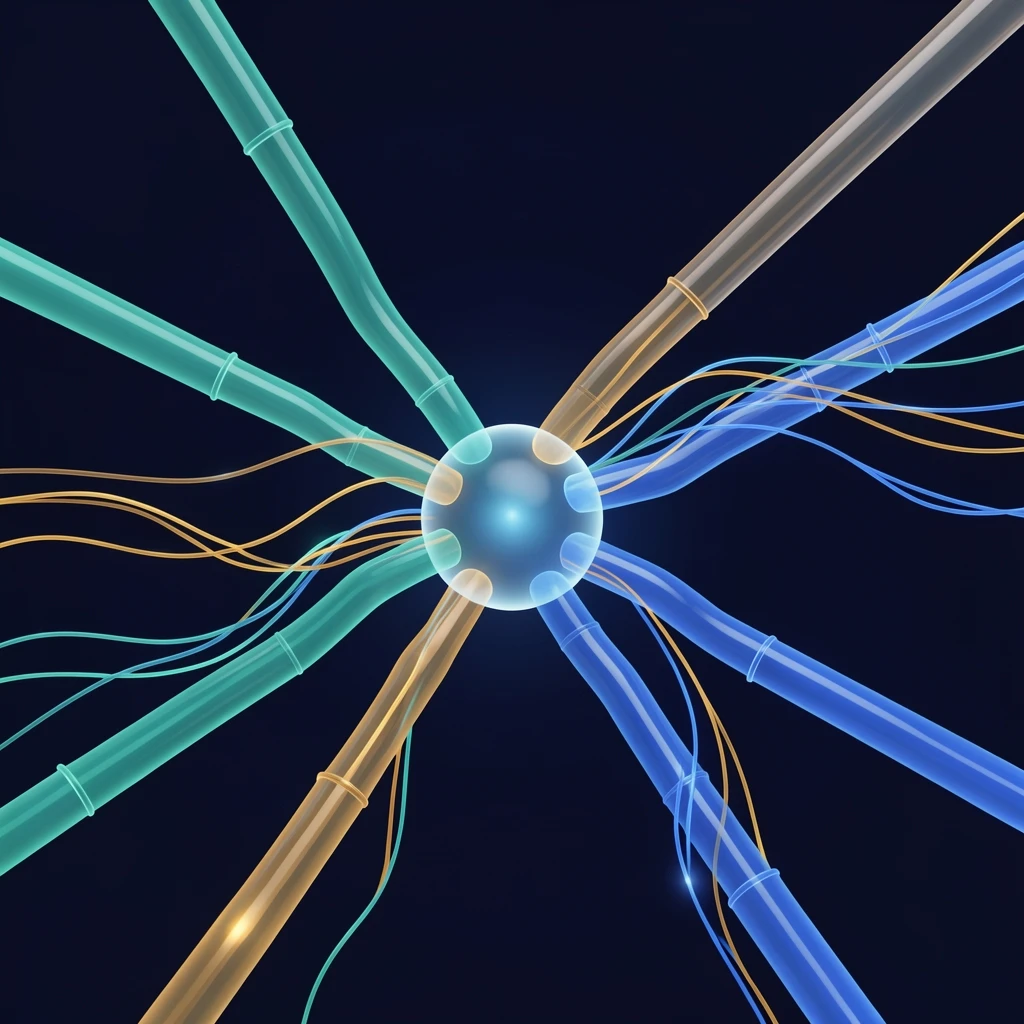
Datafi connects directly to the full landscape of grid operations data: SCADA and EMS telemetry, GIS asset registries, CMMS maintenance and work order histories, weather and environmental APIs, outage management systems, crew scheduling platforms, and customer information systems. This is not a data warehouse or a batch integration. It is live, governed access to the operational data estate in its native systems.
This matters because anomaly response decisions are only as good as the context behind them. When a transformer in Substation 14 shows a thermal signature outside its expected range, the question is not just “is this anomalous?” The question is: how old is this asset? When was it last serviced? Is it currently under a maintenance advisory? Are there active work orders related to adjacent equipment? What is the current load profile in this feeder zone? What is the weather doing? Has this asset shown similar signatures before, and what happened next?
Datafi assembles that full picture instantaneously, because all of those data sources are connected, governed, and accessible within a single AI-augmented experience. The LLM working on behalf of the operations team has the complete business context it needs to reason well, not a narrow slice of telemetry abstracted away from the operational reality it reflects.
Agentic AI That Acts, Not Just Answers
What distinguishes Datafi from conventional AI tools is agentic capacity. The platform does not simply surface information and wait for a human to act on it. It can initiate and execute governed workflows autonomously, within the boundaries defined by the operations team.
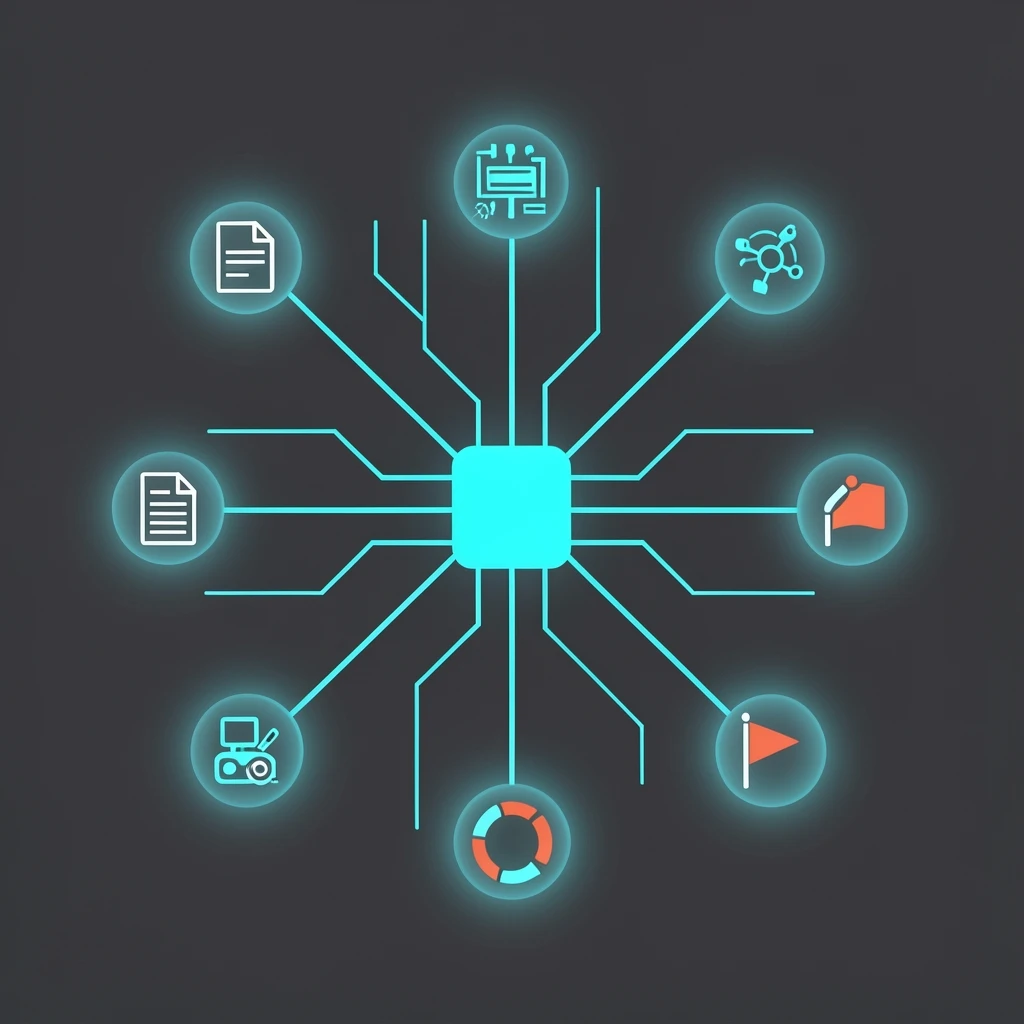
In the grid anomaly context, this means that when a qualifying anomaly is detected, Datafi can automatically initiate a structured response sequence. It can create and route a priority work order in the CMMS with pre-populated asset context, crew qualification requirements, and estimated response window. It can trigger a preliminary customer notification through the outage management system if the anomaly crosses a threshold that suggests service impact. It can escalate the alert to the relevant operations supervisor with a situation summary that includes the diagnostic context, not just the raw signal. It can flag the event for regulatory reporting if the anomaly type or asset classification requires it.
Each of these actions happens within a governed framework, with full auditability and human oversight at defined checkpoints. The platform does not replace operational judgment. It accelerates and amplifies it, removing the friction between decision and execution that currently costs utilities hours on every significant event.
A Chat Interface Built for Non-Technical Operators
One of the most consequential features of the Datafi platform is the most human one: a conversational interface designed for the people who actually run grid operations. Not data scientists. Not AI engineers. Dispatchers, operations supervisors, reliability engineers, and field coordinators who need answers in plain language and actions they can initiate with confidence.
When an anomaly alert surfaces, an operations supervisor does not need to query a database or interpret a visualization. They can ask, in natural language: “What is happening at Substation 14, and what should I do about it?” Datafi responds with a plain-language situation summary that draws on all connected data sources, a prioritized set of recommended actions with rationale, and the ability to initiate those actions directly from the conversation.
This is not a chatbot that returns a generic answer. It is an AI that has read the asset history, checked the maintenance schedule, pulled the live telemetry, reviewed the work order queue, and synthesized it all into a response that is specific to this substation, this anomaly, this moment. The difference in operational quality is not incremental. It is categorical.
A Scenario Walk-Through
It is 6:47 a.m. on a July weekday. Demand is rising quickly as residential air conditioning loads come online across the service territory. The overnight operations team is preparing for shift handoff.
Datafi detects a thermal anomaly on a 138kV transformer at a transmission substation serving a large commercial district. The signature pattern correlates with early-stage insulation degradation, a fault mode the platform has learned from seventeen prior incidents in the asset history across the fleet.
Within thirty seconds, the operations supervisor receives a structured alert through Datafi’s interface. It includes the anomaly classification, the asset’s full context (installed 2009, last SFRA test 18 months ago, one prior thermal event in 2021 that preceded a tap changer fault), the current load on the affected feeder, the weather forecast showing 97-degree peak temperature expected by 2 p.m., and a risk assessment that rates the probability of a service-affecting failure within the next six hours at elevated.
The supervisor asks Datafi: “What are my options here?”
The platform returns three response pathways with trade-offs clearly articulated: load transfer to an adjacent feeder to reduce stress on the asset while a maintenance crew is dispatched; immediate de-energization and reconfiguration, which avoids the failure risk but affects approximately 2,400 customers for an estimated 90 minutes; or continued monitoring with a 30-minute reassessment trigger if the thermal signature worsens. It flags that the second option requires regulatory notification under the applicable reliability standard and offers to draft that notification.
The supervisor selects the load transfer option with crew dispatch. Datafi initiates the work order, routes it to the available crew with the appropriate certification, pre-populates the job package with asset data and safety documentation, sends a heads-up notification to the field crew lead, and logs the decision sequence for the incident record. The entire orchestration takes under two minutes.
By the time the incoming shift supervisor arrives for handoff at 7:00 a.m., the situation is already in motion. The incident record in Datafi captures everything: the anomaly signal, the diagnostic context, the options presented, the decision made, and the current execution status. The handoff is not a verbal summary of a tense situation. It is a clear, documented, already-managed event.
The transformer does not fail. The 2,400 customers in that commercial district experience no outage. The reliability event that might have defined the morning instead becomes a footnote in the operations log.
Why This Matters Beyond the Use Case
Grid anomaly response is a high-stakes, operationally complex use case that illustrates what Datafi makes possible at a broader level. The core insight is consistent: AI that operates on fragmented data, without full operational context, and without the agentic capacity to execute real workflows, can only answer questions. It cannot solve problems.
Solving a grid anomaly problem requires knowing the asset, the history, the environment, the regulatory context, the crew availability, and the downstream customer impact, all at once, and then doing something with that knowledge before the window closes. That requires a platform designed for orchestration, not just query.
Datafi is that platform. The vertically integrated stack, the governed connections to live operational data, the agentic workflow engine, and the conversational interface for non-technical users combine to create something the energy sector has not had before: AI that genuinely closes the loop between signal and action.
For grid operators managing aging infrastructure under rising demand, increasing extreme weather frequency, and tightening reliability standards, that capability is not a competitive advantage. It is an operational necessity.
The question is no longer whether AI belongs in grid operations. The question is whether the AI you are using can actually close the gap between anomaly and response, or whether it is leaving your people to close it themselves, one fragmented system at a time.
Datafi is an applied AI software company building the vertically integrated data and AI platform for organizations that need AI to solve problems, not just answer questions. To learn how Datafi can be deployed for your grid operations team, contact us.